
The Leibniz Institute of Photonic Technology in Jena, Germany, in collaboration with the National Research Council of Canada and other international teams, has developed two complementary methods that make it possible to transition fiber-based quantum communication from the laboratory to practical real-world applications. One method significantly increases the amount of information carried by a single photon through "time-bin encoding," while the other enhances long-distance signal stability using the principle of "sum-frequency correlation." The two achievements have been published in *Nature Communications* and *Physical Review Letters*, respectively.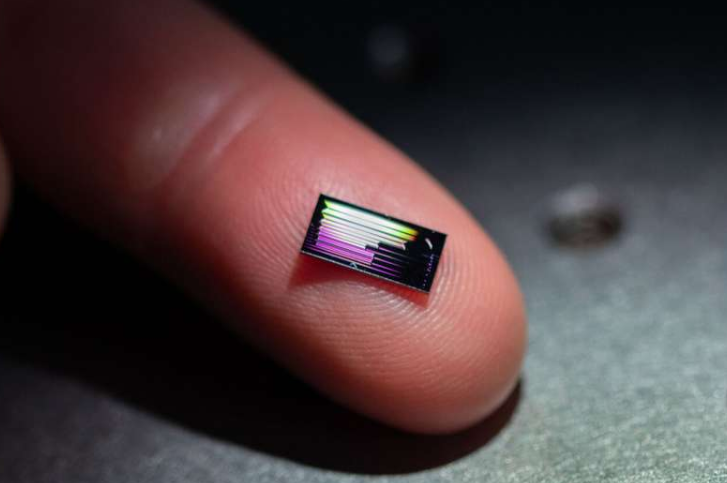
Quantum communication achieves secure transmission by encoding information in the quantum states of photons. Its core advantage lies in the fact that any eavesdropping attempt will disturb the quantum state and be detected by the system. However, current technologies face two major bottlenecks: low information density per photon limits data throughput, and signal distortion caused by chromatic dispersion in optical fibers. The "time-bin encoding" scheme proposed by the research team expands the traditional two time windows to eight, carrying information via the precise arrival time of photons. "It's like a drawer system — now multiple drawers can be opened simultaneously to deliver information," explained project leader Professor Mario Kues. In experiments, a system based on silicon nitride photonic chips successfully transmitted quantum information over 60 km of optical fiber, verifying its compatibility with existing telecommunications networks.
To tackle the challenge of long-distance transmission, the team employed "sum-frequency correlation" technology to track the joint arrival time of photon pairs, effectively canceling dispersion effects. Laboratory tests showed that this approach extends the secure quantum link range to the equivalent of 200 km of fiber while improving resistance to interference. "The first study addresses information packaging, and the second ensures reliable delivery — the two complement each other perfectly," Professor Kues emphasized. Both technologies rely on standard telecom components, providing feasible solutions for high-security scenarios such as hospitals and government agencies.
The research team is currently working to close the gap between fundamental research and practical deployment. "Our goal is to achieve quantum communication through systems that can be integrated into existing telecommunications infrastructure," said Professor Kues. His "Intelligent Photonics” group is exploring the intersection of nonlinear optics and artificial intelligence, which may drive future advances in ultra-fast diagnostics, energy-efficient optical computing, and other fields.
More information:
Hao Yu et al., Quantum key distribution with d-level time-entangled photons, *Nature Communications* (2025).Hao Yu et al., Dispersion-resilient quantum communication via nonlocal correlations, *Physical Review Letters* (2025).Journal information: *Physical Review Letters*, *Nature Communications*