
In the field of advanced equipment manufacturing, the drone industry has finally achieved a major breakthrough in traffic management after years of development — drone traffic management is now officially operational.
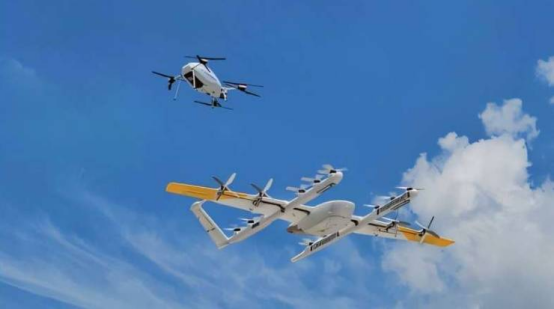
Recently, the Mid-Atlantic Aviation Partnership (MAAP) at Virginia Tech has enabled the United States to launch its first Unmanned Aircraft System Traffic Management (UTM) system. Designed to prevent drone collisions, the system was deployed in North Texas in March this year with support from NASA and the Federal Aviation Administration (FAA). It builds on years of testing and enables real-time flight data sharing to resolve drone flight conflicts.
MAAP Deputy Director John Coggin said this is the culmination of a decade of effort. The industry has now found a way for unmanned aircraft system operators to share data, significantly reducing the risk of drone collisions. Advanced and overlapping drone operations require companies to share data for safety, and the industry governance framework established this time provides the foundation for achieving that goal while offering a template for scaling drone traffic management services in the United States and worldwide. Currently, any entity — industry or government — can use these management systems to enhance drone operational safety.
The key to a successful UTM system lies in effectively leveraging UAS Service Supplier (USS) technology that facilitates communication between operators and retrieves nearby flight data to quickly and safely resolve conflicts. Multi-agency collaboration began in 2015 when NASA initiated research to support commercial drone needs, with MAAP participating in development and real-world testing. In 2018, the FAA Reauthorization Act granted the FAA authority to oversee implementation. MAAP continued assisting with testing and served as a bridge between industry partners, NASA, and the FAA, using industry insights to accelerate the creation of governance structures and data-sharing protocols that meet all parties' needs — including real-world testing requiring drone operations to coordinate across different software platforms.
These efforts led to the latest milestone in Texas: despite high operator demand and overlapping flight paths, the FAA has authorized drones to share airspace. FAA Administrator Chris Rochello called it a historic achievement for U.S. aviation, expressing hope to transition from one-off approvals or waivers to predictable beyond-visual-line-of-sight (BVLOS) operations under final rules that will provide the regulatory framework the drone industry needs.
The final governance agreement will guide participation of new service providers and operators, dispute resolution, and onboarding. The governance structure consists of an Operations Committee (overseeing administration and onboarding) and a Technical Committee (responsible for developing and integrating new features and services for the UTM platform).
In the summer of 2024, drone delivery operators Wing, Zipline, and DroneUp, along with service supplier ANRA Technologies, received the FAA's first letters of agreement to deploy the newly developed UTM services. MAAP subsequently drafted a report documenting years of efforts, marking the initial operational launch of the service.
As work continues to evolve within this framework, any company or government entity operating in the U.S. that completes the onboarding process can use it. Interested parties can visit the "Getting Started" page on GitHub for more information. MAAP Chief Engineer Robert Briggs said that unlike previous projects, this is an ongoing process: the traffic management system is now live and will continue to develop, becoming a model for future global implementation.