
A new UK-supported mission could reveal whether microscopic bacterial life exists in Venus's clouds. Over the past five years, researchers have detected two potential biosignatures—phosphine and ammonia—gases that on Earth are mostly produced by biological activity and industrial processes. Their presence in Venus's cloud layer cannot be explained by known atmospheric or geological phenomena, and Professor Jane Greaves' team at Cardiff University is working to determine the cause.
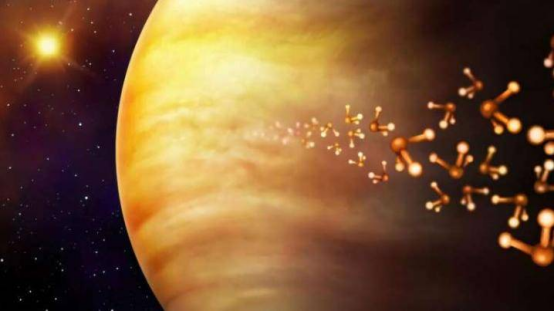
At the Royal Astronomical Society's 2025 National Astronomy Meeting in Durham, the team presented the new mission concept, which aims to search for and map the distribution of hydrogen-rich gases such as phosphine and ammonia that should not exist on Venus. The project will build a CubeSat-sized probe called VERVE, with a budget of €50 million, which will hitch a ride on the European Space Agency's EnVision mission launching in 2031. Upon reaching Venus, VERVE will separate and conduct its own investigation, while EnVision studies the planet's atmosphere, surface, and interior. Professor Greaves said: "The latest data provide more evidence of ammonia on Venus, and it may be present in the habitable zone of the clouds." She explained that no known chemical process can produce either ammonia or phosphine, and the only way to definitively identify their source is through in-situ measurements—to determine gas concentrations and origins, and investigate whether they come from volcanic outgassing or microorganisms in the atmosphere.
Phosphine was first detected in Venus's clouds in 2020, but subsequent observations failed to replicate the result, sparking controversy. However, the JCMT-Venus project team has tracked phosphine signatures and found that detections follow a day-night cycle on the planet, with gas abundance varying over time and location. Project leader Dr Dave Clements believes this may resolve conflicting studies and provide clues to phosphine production. Last year's National Astronomy Meeting revealed preliminary detection of ammonia on Venus, which also cannot currently be explained by known chemistry. Although Venus's surface temperature is around 450°C, at an altitude of about 50km the temperature is moderate and atmospheric pressure is similar to Earth's surface—conditions where "extremophile microbes" could potentially survive. They may have emerged when Venus had a milder climate and persisted in the clouds. The JCMT-Venus researchers state that launching a probe is the only way to settle the question. Papers on the new findings are expected to be published later this year.