
A research team led by Hiromi Shiraishi of Chuo University has achieved important results, published on June 13, 2025, in the journal Fisheries Science. The study focuses on the Japanese eel market and reveals new developments in the species composition of eels available on the market.
Although Japan is a major eel farming country, two-thirds of its eel consumption relies on imports of live adult eels and processed eel products. There are currently 19 recognized species/subspecies in the genus Anguilla, all facing multiple threats including changes in ocean currents and/or climate conditions, migration barriers, loss or degradation of freshwater habitats, disease, pollution, and unsustainable exploitation and trade. Populations are declining, with the European eel, Japanese eel, and American eel listed by the IUCN Red List as Critically Endangered (CR), Endangered (EN), and Endangered (EN), respectively.
Since commercial artificial breeding of Anguilla eels has not yet been achieved, eels currently consumed are primarily wild-sourced, with aquaculture relying on captured and raised juvenile eels (glass eels/elvers). East Asia (mainland China, Japan, South Korea, and Taiwan) is the most active region for eel farming, while Hong Kong serves as a major hub for international eel trade. Following the listing of the European eel in CITES Appendix II in 2007 (effective 2009) and the sharp decline in Japanese eel glass eel catches in the early 2010s, demand has shifted toward other species, increasingly concentrating on the American eel. However, large-scale illegal trade in European glass eels continues, with cases of laundering through farms outside Europe and re-entering the global market under different species names.
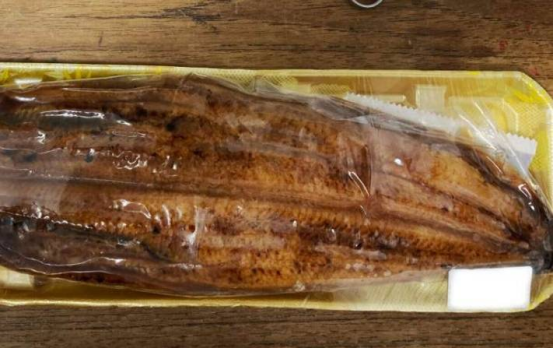
To clarify the species composition of eels on the Japanese market, the research team purchased 134 kabayaki (grilled eel) products from retailers in Tokyo, Osaka, Fukuoka, Okayama, Kagoshima, Sendai, Hakodate, and other cities during January–February and July 2024. All samples were collected from supermarkets and department stores, as 88% of eel consumption in Japan (by sales value) is distributed through retail channels. Total DNA was extracted, DNA barcoding performed, cytochrome b gene sequenced for species identification, and results compared with eel farming input data from Japan and China, Japanese import statistics for live and processed eels, and CITES European eel trade data.
Of the 133 successfully identified samples, the Japanese eel (Anguilla japonica) was the most frequently identified species, accounting for 61.7% (82 samples), followed by the American eel (A. rostrata) at 36.8% (49 samples) and the European eel (A. anguilla) at only 1.5% (2 samples). All domestically produced eel products were identified as Japanese eel, while among imported products, American eel from China was the most frequently identified.
The study also shows that Japan, once considered one of the largest markets for European eel, now has minimal consumption of this species, with the secondary dominant species shifting from European eel to American eel. Recent species identification studies of eel samples from Europe, North America, and Singapore similarly indicate that the American eel has strengthened its dominant position in the global eel consumption market in recent years — a trend now confirmed in Japan. The dramatic recent increase in glass eel fishing and trade has raised concerns about IUU fishing and illegal trade of American eels across their range states. CITES trade data and customs statistics show that around 2014, European eel accounted for an estimated 72.1% of China's imported eel volume, but this proportion has fallen sharply to just 3.9% by 2022; the low frequency (1.5%) of European eel found in this study is consistent with predictions based on Japanese customs import data and CITES trade data.
Although this study is a snapshot survey, it suggests that large-scale illegal entry of European eel into the Japanese market bypassing CITES regulations is unlikely. However, the scale and pattern of consumption of European eel raised from smuggled glass eels remain relatively unclear, leaving gaps in understanding the full scope of the issue. Therefore, continuous monitoring of eel species sold on the Japanese market is necessary, and further research on eel consumption in other countries and regions such as China and South Korea is also required.
As the world's largest importer and consumer of eel products, Japan is well-positioned to contribute to the sustainable use of anguillid species other than the Japanese eel. To prevent the import of European eel farmed with illegally smuggled glass eels from the EU, ongoing inspections remain essential.