
Engineers and researchers at UCLA have developed a new technology that can lower outdoor temperatures by 10°F while maintaining safety and an open-space feel.
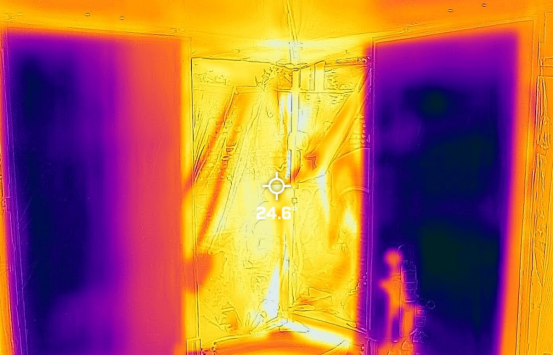
Published in Nature Sustainability, the UCLA-led study demonstrates a novel approach to radiative cooling. Traditional radiative cooling relies on dark, windowless enclosures (like tunnels), which pose safety concerns in public outdoor spaces. The new method combines water-cooled aluminum panels with a transparent infrared-reflective polymer film, achieving effective cooling while preserving excellent visibility—critical for urban community residents.
As climate change intensifies both the frequency and severity of extreme heat events, outdoor populations face growing risks. Active radiative cooling, which uses surrounding surfaces to absorb heat into space, is a promising strategy for outdoor thermal comfort because it cools from a distance without the inefficiency of conditioning unbounded air. However, for radiative structures to be effective, most interior surfaces must be actively cooled—typically with opaque panels—raising practicality and safety concerns. The UCLA team has solved this challenge.
Co-author Aaswath Raman, Associate Professor of Materials Science and Engineering at UCLA's Samueli School of Engineering, said the low-cost, scalable design is a practical step beyond shade alone, helping people who must remain outdoors in hot weather and easing the burden on places like subway stations, parks, and plazas that traditional air conditioning cannot reach.
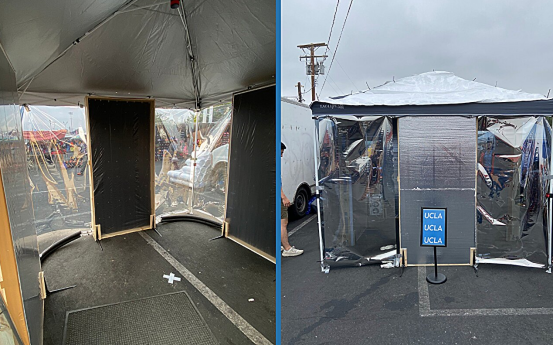
In field tests conducted on the UCLA campus and at the San Fernando Swap Meet—both with ambient temperatures above 80°F—the team built a nearly 10ft × 10ft "tent" featuring semi-transparent infrared-reflective walls made of semi-metallized thin polymer film, a roof of radiative cooling panels, and three hydraulically cooled aluminum panels with cold water flowing behind them. To maximize efficiency, the inner sides of the panels were painted black to absorb incidental heat (e.g., body heat), while the semi-transparent walls allowed unobstructed outward visibility.
The structure achieved an average radiant temperature of about 78°F (25°C)—lower than the surrounding air temperature of ~84°F (28°C) and more than 10°F (6°C) below the ~90°F (32°C) mean radiant temperature people typically feel from surrounding surfaces. Surveys of participants standing inside showed most felt noticeably cooler and more comfortable than when simply standing in shade.
"Radiant temperature" refers to the difference between perceived temperature and actual air temperature—e.g., moving from an asphalt parking lot to grass and trees under shade feels cooler even if air temperature is unchanged, because grass and shade block radiant heat from surrounding surfaces. This effect inspired the researchers' new heat-dissipation approach.
Co-author V. Kelly Turner, Associate Professor of Urban Planning and Geography and Associate Director of the Luskin Center for Innovation at UCLA, said cities must treat shade as infrastructure. This accessible design can supplement insufficient shade and help people feel comfortable outdoors during hot weather. The paper's lead author is David Abrahamian, a doctoral student in the Raman Research Group at UCLA Samueli.