
On July 14, Daqing Oilfield announced that the bio-environmental enzyme viscosity-reduction and blockage-removal technology trial conducted in the Xingnan Oilfield has achieved phased success. To date, the technology has been tested on 50 wells in the Fuyang reservoir, with an average daily oil increase of 0.9 tons per well and cumulative oil increase of 127 tons per well, demonstrating excellent application potential and adding a new tool for tapping potential and stabilizing production in the Fuyang reservoir.
The Fuyang reservoir is a low-porosity, low-permeability reservoir. During development, especially after reservoir contamination, well production drops sharply. To remove blockages and improve development performance, Daqing Oilfield independently developed the bio-environmental enzyme viscosity-reduction and blockage-removal technology to clear blockages in oil and water wells.
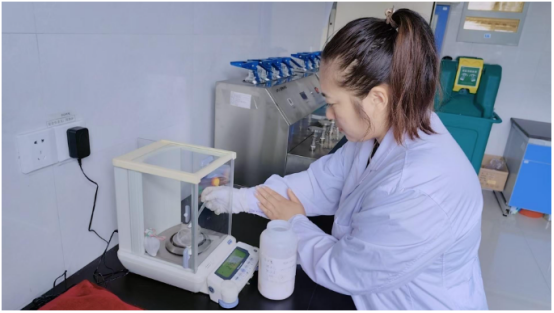
Wang Zhipeng, Deputy Director of the Production Enhancement and Injection Room at Xingnan Oilfield Technology Research Institute, explained that bio-environmental enzymes are biocatalysts extracted using genetic engineering, bioengineering, and cell engineering technologies. They alter reservoir rock wettability, reduce interfacial tension, decrease crude oil flow resistance, and effectively degrade wax, gum, and asphaltene components that easily clog rock pores. They simultaneously provide multiple effects: blockage removal, oil displacement, and enhanced oil recovery. Under laboratory conditions, bio-environmental enzymes can reduce crude oil viscosity by more than 48%.
"In field applications, the production enhancement effect of bio-environmental enzyme technology is very significant," Wang said. For example, well Xing 9-Ding 4-Xie P321, a typical low-production, low-efficiency well, produced only 0.9 tons/day before treatment. After bio-environmental enzyme treatment, daily production rose to 2.2 tons. The current average daily production in Xingnan Oilfield is 0.89 tons/well. "This well has not only been revived but has become a high-production well," Wang noted.
Another advantage of bio-environmental enzyme technology is its environmental friendliness. As a biocatalyst, it does not damage the original reservoir environment, has no impact on wellbores or surface production processes, is non-toxic, harmless, and non-corrosive, poses no environmental risk, and shows strong application prospects.
"From the phased trial results, this technology offers clear economic benefits," Wang said. The current input-output ratio for treated wells is 1:2.5, with an expected effective period per well of 100–150 days and a final input-output ratio of 1:2.7.