
An international study led by researchers at Michigan State University and its collaborators has made a major discovery: livestock manure around the world is harboring a dangerous threat to human health — antibiotic resistance genes (ARGs). The findings, published in the journal Science Advances, represent the most comprehensive survey to date of antibiotic resistance genes in livestock, spanning 14 years and analyzing over 4,000 fecal samples from pigs, chickens, and cattle across 26 countries.
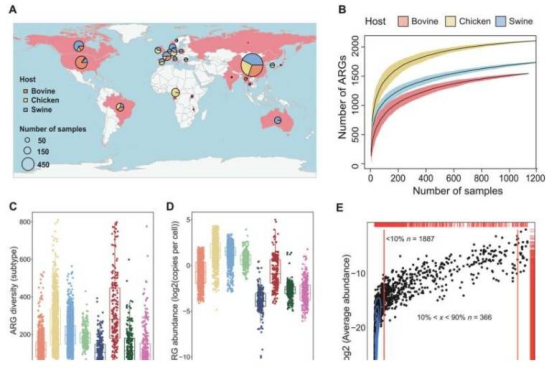
The study found that livestock manure serves as a major reservoir for antibiotic resistance genes, some of which have the potential to transfer into bacteria that infect humans. If these genes enter the human body through contaminated water, food, or air, they could make common infections much harder — or even impossible — to treat. James Tiedje, a Michigan State University microbiologist and co-author of the study, emphasized that pollution generated on farms does not stay confined to farms: the genes in manure can enter drinking water, food chains, and pathogenic bacteria.
To better understand the risks, the research team created a global map highlighting regions where the most concerning antibiotic resistance genes are most prevalent. They also developed a new ranking system to prioritize genes that pose the greatest threat to human health — particularly those that are mobile, difficult to treat, already present in — or easily transferable to — pathogenic bacteria. Tiedje noted that while previous studies had identified some resistance genes in soil, water, and manure DNA, this research goes further by determining which of these genes can actually move into harmful bacteria — the key factor that makes them truly dangerous.
Qian Xun, a professor at Northwest A&F University in Yangling, China, and a co-author of the study, stated that livestock manure could serve as an important environmental indicator for detecting early signs of proliferation of antibiotic resistance genes, offering public health systems an opportunity for timely intervention. He stressed that major livestock-producing countries need targeted monitoring and risk management of antibiotic resistance. For example, the United States — the world's leading beef producer — showed significantly higher abundance and diversity of antibiotic resistance genes in cattle manure compared to other countries; China, the world's largest pork producer, also exhibited high bacterial abundance, diversity, and overall resistance risk in pig manure.
Antibiotic resistance occurs when overuse of antibiotics leads to the selection of resistant genes, making infections harder to treat. The World Health Organization describes antibiotic resistance as one of the most urgent global public health threats. In 2019 alone, at least 1.27 million people died directly from resistant infections, with nearly 5 million deaths associated with them. Tiedje pointed out that antibiotic resistance is not only a medical issue but also an environmental one — its risk may surpass that of other pollutants. Once these genes enter pathogenic bacteria, they can directly cause life-threatening infections. However, the study also acknowledges that the responsible use of antibiotics is essential for protecting animal health; the problem arises from the additional use of antibiotics as growth promoters in livestock, which is a major driver of resistance.
Encouragingly, the study shows that efforts to reduce antibiotic use on farms are beginning to yield results. Countries such as Denmark in Europe, which were among the first to ban growth-promoting antibiotics, have seen declines in resistance levels. The United States introduced the Veterinary Feed Directive in 2017, and China has implemented similar restrictions — in all three regions, the levels of resistance genes in livestock manure have decreased over time, demonstrating that policy interventions are effective. Nevertheless, Tiedje stressed that much more work remains to be done. The United Nations is calling on governments to develop national action plans to combat antibiotic resistance, and the data from this study can help countries identify priorities and measure impact. Qian Xun added that the research provides a roadmap: by identifying high-risk genes and countries with high transmission potential, more targeted monitoring and policy-making can be implemented. Reducing the use of high-risk antibiotics on farms could bring about meaningful change. Tiedje concluded with a reminder: in a globalized world, resistant pathogens do not respect borders. Understanding and managing antibiotic resistance in livestock is essential to preserving the effectiveness of antibiotics for everyone.