
As urbanization accelerates and climate change intensifies, there is an urgent need for sustainable and space-saving building heating and cooling solutions. Energy piles, which combine concrete foundation systems with geothermal heat exchangers, show great promise. However, in high-density cities like Tokyo, Bangkok, and Manila, where buildings are often constructed on soft clay foundations, engineers face unique challenges in designing energy piles.
In response, a research team led by Professor Shinya Inazumi from the College of Engineering at Shibaura Institute of Technology in Japan has proposed an innovative framework to improve the design and performance of energy piles in soft clay. The study was published in the journal Case Studies in Thermal Engineering.
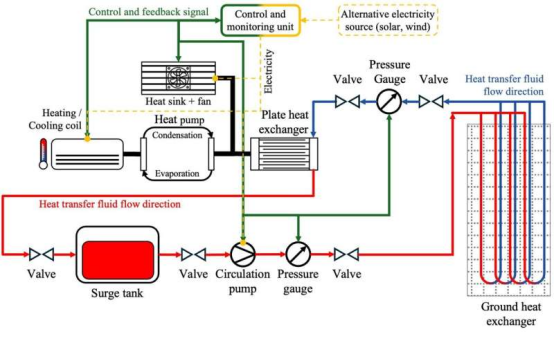
Energy piles are concrete foundation elements embedded with U-shaped pipes through which a heat transfer fluid circulates to exchange heat with the surrounding ground. When connected to ground source heat pumps (GSHPs), they efficiently provide heating and cooling for buildings using stable underground temperatures. GSHPs maintain high performance amid surface temperature fluctuations and are more efficient than traditional air-source heat pumps in extreme weather, making them ideal for harsh climates.
However, energy pile systems face challenges. Most urban buildings are built on soft clay with low permeability and low thermal conductivity, leading to long-term heat accumulation and thermal interference that reduces system efficiency.
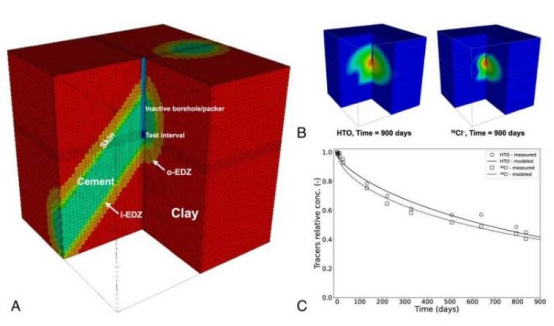
To address this, the researchers combined computational and experimental approaches to develop a three-dimensional heat transfer model. They used the physics-based simulation software COMSOL Multiphysics to create a finite element model (FEM) simulating heat transfer around energy piles embedded in soft clay, calibrated with actual data from a test site in Bangkok. The model analyzed the performance of pile groups ranging from 1 to 9 piles under different daily operating cycles (8 to 24 hours).
Professor Inazumi stated: “We developed a simplified predictive model to help engineers improve energy pile design without requiring expensive computational resources or specialized expertise.”
The results revealed several key issues in energy pile performance. Group configurations exhibit measurable thermal interference, with soil temperature rises around dense piles ranging from 2.18% to 15.43%. Estimating this interference during the design phase is critical to maintaining system efficiency. To this end, the study introduced practical multiplier factors that engineers can apply to single-pile simulations to predict thermal behavior. These multipliers range from 1.6498 to 2.9119, reducing the need for full-scale finite element analysis and providing a quick and convenient method for thermal performance estimation.
The study also found that reducing operating time can delay temperature saturation by 103 hours and lower peak soil temperature by 29% over five years. Additionally, central piles heat up more than edge piles, indicating a crowding effect. These findings suggest that multiplier factors and temperature maps can optimize energy pile group design to maintain structural integrity and extend system lifespan.
The model holds significant potential for practical application, especially for engineers working in rapidly urbanizing cities on soft soil foundations. Traditional heating, ventilation, and air conditioning systems are energy-intensive and climate-sensitive. This research provides a validated, easy-to-use simulation shortcut that lowers the barrier to adopting geothermal systems in Southeast Asia and other regions, paving the way for a cleaner, more sustainable future.
Professor Inazumi concluded: “Our research demonstrates the feasibility and affordability of geothermal systems in densely populated urban environments, addressing regional development challenges and contributing to the global climate agenda.”