
A study led by Macquarie University, published in the journal Royal Society Open Science, shows that chlorothalonil—a widely used agricultural chemical sprayed on fruits and vegetables to prevent fungal diseases—severely impacts the reproduction and survival of beneficial insects even at low concentrations, posing a threat to pollination and broader ecosystems.
Chlorothalonil is one of the world's most widely used agricultural fungicides. Although banned in the European Union, it remains extensively applied in Australia to control fungal diseases such as mold and leaf blight. Macquarie University's research found that even at the lowest concentrations commonly found in food, chlorothalonil has a profound effect on insects.
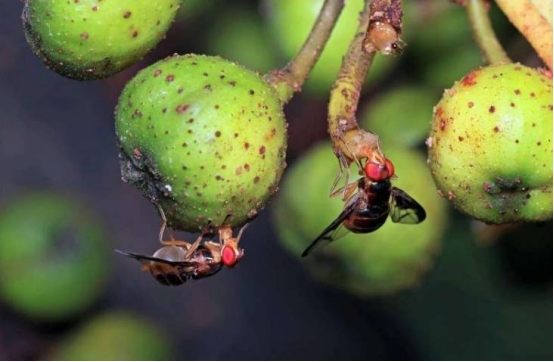
The study used the fruit fly (Drosophila melanogaster) as a laboratory model. This insect sits at the base of the food chain, serves as food for many other species, and plays a key role in nutrient cycling in agricultural environments, representing countless non-target insects in farming landscapes. When fruit fly larvae were exposed to chlorothalonil doses equivalent to typical residues in fruits and vegetables, the number of eggs laid by mature flies dropped by 37% compared to unexposed individuals—even at the lowest tested dose. Associate Professor Fleur Ponton, lead author from Macquarie University's Faculty of Science and Engineering, described the sharp decline as surprising, as the team had expected effects to increase gradually with dose, but found strong negative impacts even at minimal levels.
This finding further confirms the “insect apocalypse” phenomenon—where insect populations in some regions have plummeted by more than 75% in recent decades, becoming a global issue. Chlorothalonil has been detected in soils and water bodies near agricultural areas, with residue levels in fruits and vegetables ranging from trace amounts to 460mg/kg. Associate Professor Ponton noted that chlorothalonil is especially common in orchards and vineyards, often applied preventively even when no disease is present. It was assumed to target only fungal diseases, but it may have devastating, unintended consequences for other species.
The study showed that exposure to chlorothalonil during larval development causes severe reproductive damage in adult flies. Females exhibited significantly reduced body weight, fewer ovarioles, and dramatically lower egg production; males showed reduced iron levels, indicating disruption to metabolic processes essential for sperm production. The researchers ruled out taste aversion as an explanation, as larvae consumed contaminated food normally unless concentrations were very high, meaning the effects were caused by ingestion of chlorothalonil.
In agricultural landscapes where entire orchards and vineyards are treated with fungicides, insects have no escape from chemically contaminated food sources. Associate Professor Ponton emphasized that beneficial insects such as bees and flies are vital for pollination, and understanding chlorothalonil’s field impacts and addressing its use carries strong commercial motivation.
The research highlights a critical knowledge gap in pesticide regulation. Despite being one of the most widely used fungicides globally, fewer than 25 scientific papers have studied its effects on insects. The researchers call for more sustainable agricultural practices, such as reduced application frequency to allow insect populations to recover between treatments. Associate Professor Ponton stressed the need for field trials to explore various options and develop evidence-based guidelines that consider the cascading effects of fungicides on beneficial insects. Future research will examine whether reproductive damage persists in offspring and investigate the combined effects of multiple agricultural chemicals.