
Aquaculture and fisheries scientists have published a new paper in the journal Marine Policy, issuing a serious warning about a sweeping executive order aimed at relaxing regulations in the U.S. seafood industry. The researchers argue that the policy will not boost the sector but instead risks undoing decades of scientific progress and environmental protection, threatening the ecosystems that support sustainable seafood.
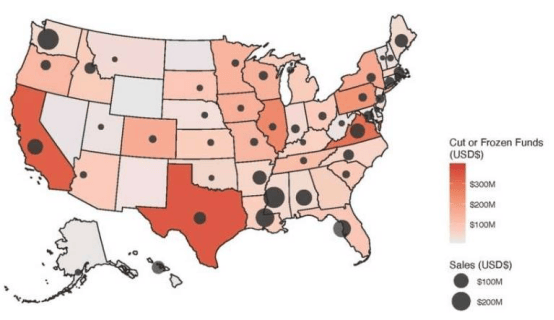
Professor Halley Froehlich of the University of California, Santa Barbara, and Professor Jessica Gephart of the University of Washington point out that the executive order represents a significant rollback of the federal regulatory framework, undermining scientific authority and aquaculture development. Froehlich emphasized that this is not reform but a rapid dismantling of regulations.
The executive order Restoring American Seafood Competitiveness, issued in April 2025, claims that overregulation and unfair trade practices have placed the U.S. seafood market at a competitive disadvantage. It calls for ensuring the integrity of the seafood supply chain, eliminating unsafe imported products, and reducing regulatory burdens. However, the researchers contend that rushing to fulfill these duties amid funding and staffing shortages will create chaos and ultimately weaken the competitiveness of the U.S. seafood industry. A clear example is the weakening of the National Oceanic and Atmospheric Administration (NOAA), which manages approximately 500 commercial fishery resources in the United States.
Significant cuts to NOAA's budget and workforce, along with restrictions on communications, will make coordinating and planning fish harvests far more difficult—especially for migratory species that cross international boundaries. Froehlich noted that NOAA plays a crucial role in fisheries management, from data collection and monitoring to enforcement.
Although deregulation aims to increase U.S. seafood production and profitability, the researchers warn that—with both U.S. and global wild fisheries production already near maximum sustainable levels—the outcome could be counterproductive. Froehlich pointed out that humanity has reached “peak fish,” and fish stocks are now in maintenance or recovery mode, with no additional resources to be extracted from the ocean.
Comparing the 2020 executive order with the new one, the researchers found that aquaculture received almost no attention. Amid budget cuts to federal agencies responsible for regulating aquaculture, this highlights a mismatch between the executive order’s intentions and the understanding, expertise, and funding needed to enhance the competitiveness of the U.S. seafood industry.
Furthermore, the researchers cautioned that many of NOAA’s databases and online resources could be taken offline, and research funding—especially in the area of climate change—could be reduced. This would hinder efforts to expand seafood production. Without the ability to monitor species and track climate trends, the seafood industry would lose its capacity to anticipate and respond quickly to emerging issues, increasing the risk of fishery collapses.
The researchers also highlighted contradictions in the executive order’s provisions on seafood procurement. The types of seafood typically produced in large quantities in the U.S. are not the ones most in demand domestically, which could undermine efforts to replace imports with domestic production. At the same time, potential tariffs on foreign seafood and on seafood landed in the U.S. but processed abroad could make seafood more expensive for Americans—particularly for high-demand species such as shrimp.
Froehlich stated that disrupting existing market dynamics—especially through trade wars with trading partners—is likely to backfire and fail to create long-term opportunities. The document has been submitted as evidence to the House Committee on Natural Resources’ Subcommittee on Water, Wildlife, and Fisheries for congressional hearings on fisheries management. Froehlich stressed that high levels of uncertainty in production are not good for the industry.