
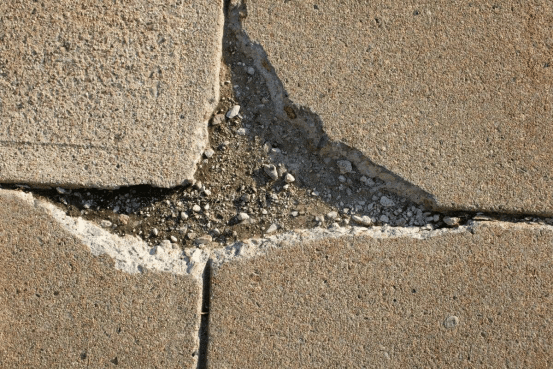
Scientists at Kabardino-Balkarian State University (KBSU, named after H.M. Berbekov) have developed an innovative superplastic concrete based on sulfonated melamine-formaldehyde resin (oligomer), solving a key construction challenge: the formation of voids and cracks when pouring concrete in densely reinforced structures.
The new formulation increases concrete fluidity without adding excess water, thereby preserving its strength and durability. This provides clear advantages in complex construction projects. KBSU experts have determined the key parameters of the composition: macromolecule length up to 5,000 units and optimal concentration up to 10% by mass. Experiments have shown that using sulfonated melamine-formaldehyde resin with specific properties allows precise control of the polymer bond structure, directly influencing the rheological properties of the concrete mixture.
This approach not only enables more accurate adjustment of the viscosity of the concrete mortar and improves its distribution in geometrically complex reinforced structures, but also maintains strength characteristics—critical for large-scale structures such as bridges, high-rise buildings, and thin-walled elements.
Professor Yusuf Markanduev, Head of the Department of Organic Chemistry and Macromolecular Compounds at KBSU and Doctor of Chemical Sciences, stated that these additives act at the molecular level, reducing interactions between cement particles and water. The lower water content results in a more durable and dense concrete structure. In practical applications, the development reduces the likelihood of cracking and improves waterproofing performance.
The scientists employed a targeted synthesis of oligomers (medium-molecular-weight compounds) and precise parameter control, creating a new raw material base for producing modern high-performance superplasticizers. Professor Markanduev added that the use of high-performance superplasticizers allows environmental and economic factors to be considered and optimized during construction, with selection tailored to the specific requirements and characteristics of each project.
The next stage of the KBSU scientists’ work involves in-depth study of the properties of the developed materials and testing under real production conditions. For large-scale production of the new additive, the plan is to use oligomer compounds suitable for industrial synthesis.