
Over the past decade, the efficiency of commercial silicon-based solar cells has risen significantly, from about 15% in 2015 to nearly 25% in 2025. Now, a new breakthrough by a Chinese research team has opened a fresh pathway for further improving solar cell efficiency.
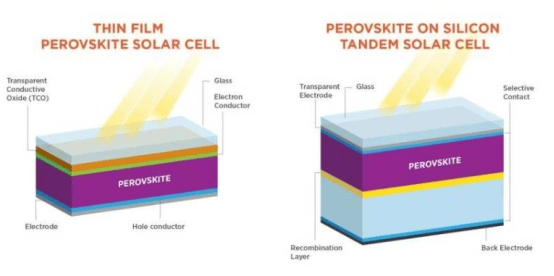
To surpass traditional efficiency limits, researchers have shifted focus from pure silicon designs to tandem architectures that stack a perovskite self-assembled monolayer (SAM) on conventional silicon solar cells. While this design holds enormous potential, precisely controlling the thickness and orientation of the SAM material has remained a major challenge.
Recently, a team of Chinese researchers published a new paper in Nature, detailing an innovative method for controlling the properties of self-assembled monolayer (SAM) materials. Using this approach, the team achieved a power conversion efficiency of 34.58% in a silicon-perovskite tandem solar cell design—an accomplishment widely regarded as a major breakthrough.
The innovation centers on a key technology: enabling perovskite molecules to self-assemble on a transparent oxide layer. The team developed a self-assembled monolayer module named HTL201, which offers distinct advantages: low parasitic absorption allows more photons to be used for energy generation, while its rapid extraction capability ensures efficient charge collection. In practice, this process forms a denser and more uniform monolayer on the transparent conductive oxide layer, enhancing the interaction between HTL201 and the perovskite thin film.
Under standard illumination conditions, testing on a one-square-centimeter sample demonstrated a power conversion efficiency of 34.58%. The perovskite-based material performed exceptionally well, showing strong absorption of sunlight—particularly in the blue and green wavelength ranges—outperforming silicon in these bands while offering relatively lower production costs.
However, the research remains at the laboratory stage. The team has not yet explored methods for scaling up the process, nor have tests accounted for real-world environmental factors such as humidity and temperature—known to limit the efficiency of silicon-based solar cells due to heat.
Despite these limitations, as more efficient and stable perovskite/silicon tandem solar cells (TSCs) continue to develop, this innovative approach holds tremendous potential. It could reduce the cost of solar energy and accelerate the widespread adoption of renewable energy alternatives. The researchers concluded in the paper with confidence: “Our study provides a critical technical solution for developing novel SAM materials and further improving the efficiency of silicon-perovskite tandem solar cells.” This achievement undoubtedly injects new vitality into the global green energy manufacturing sector and propels the industry toward higher efficiency and lower costs.