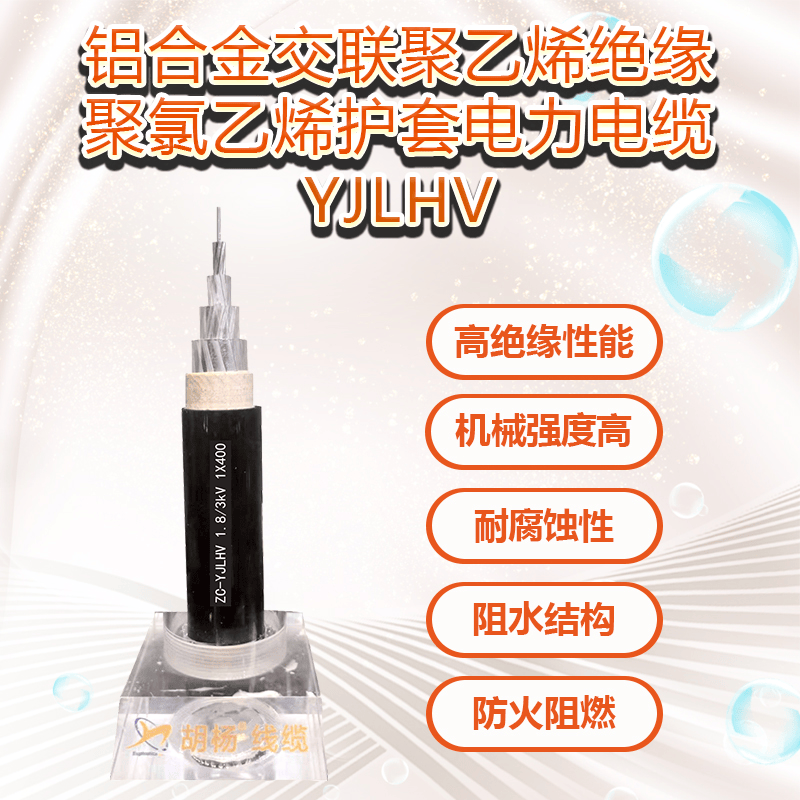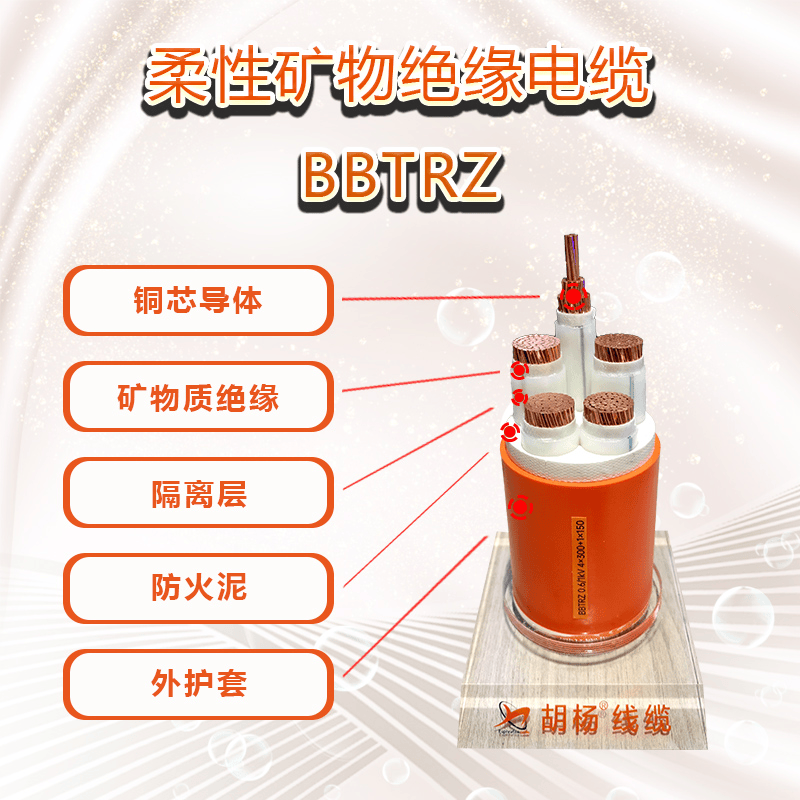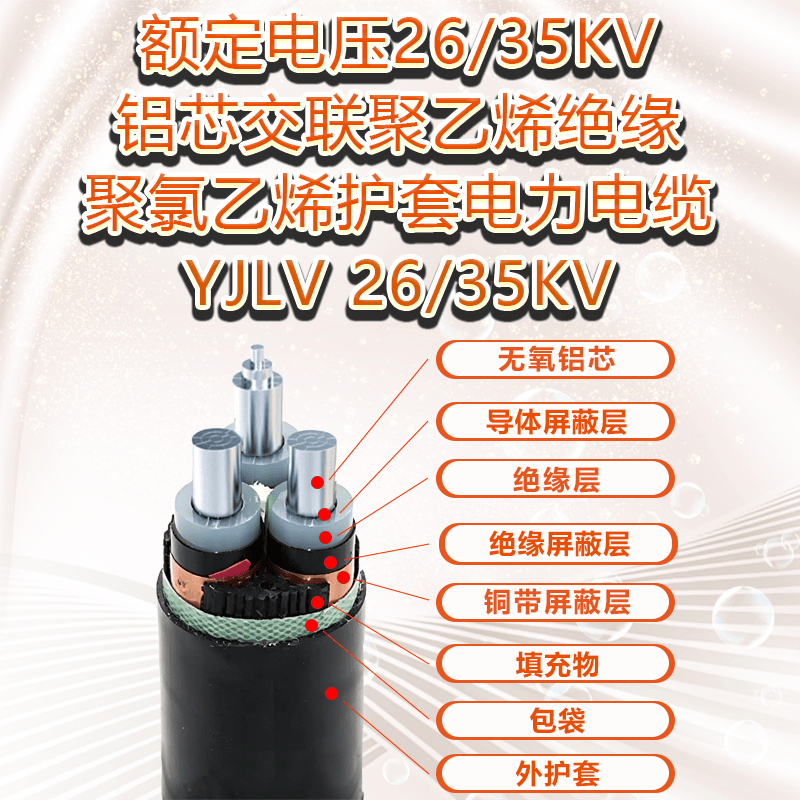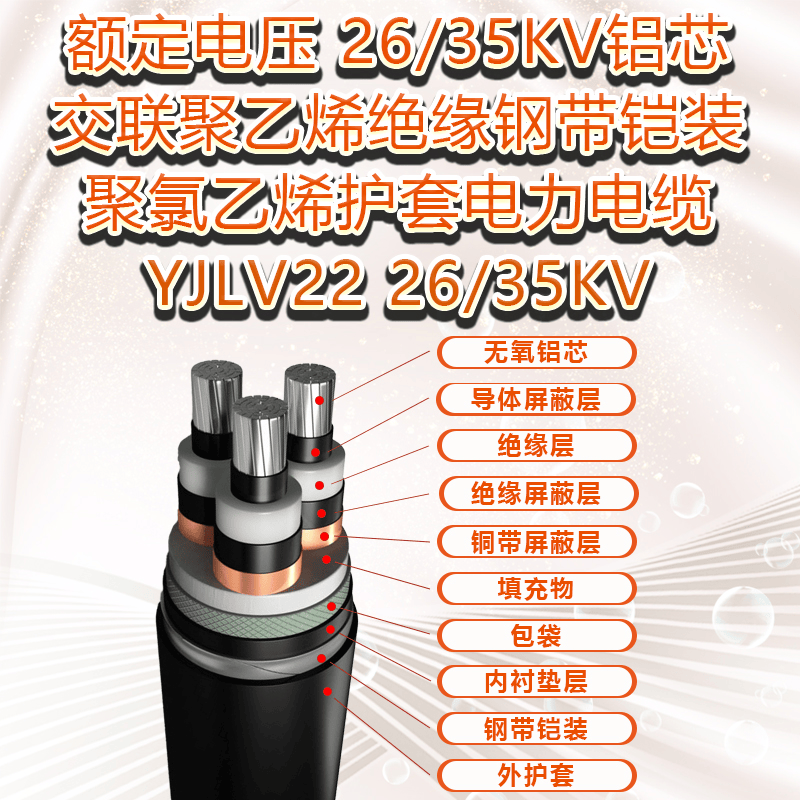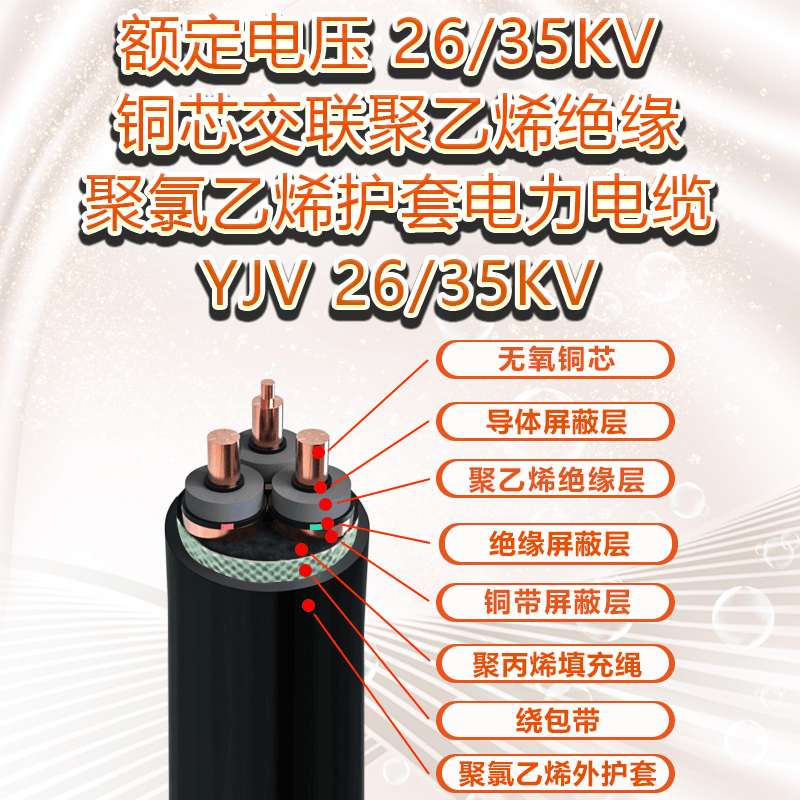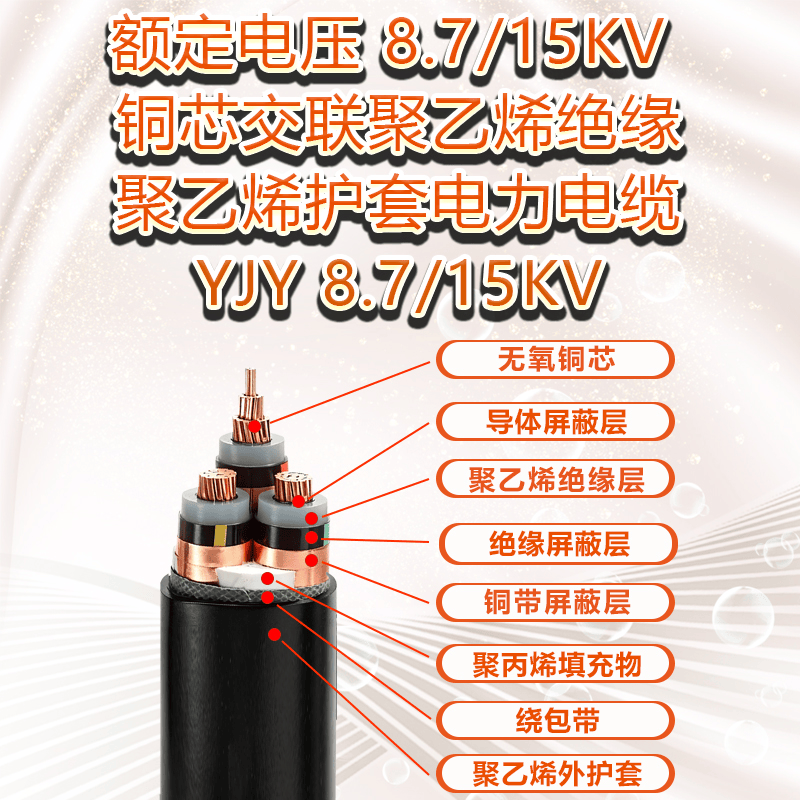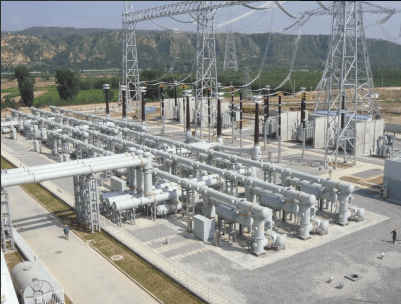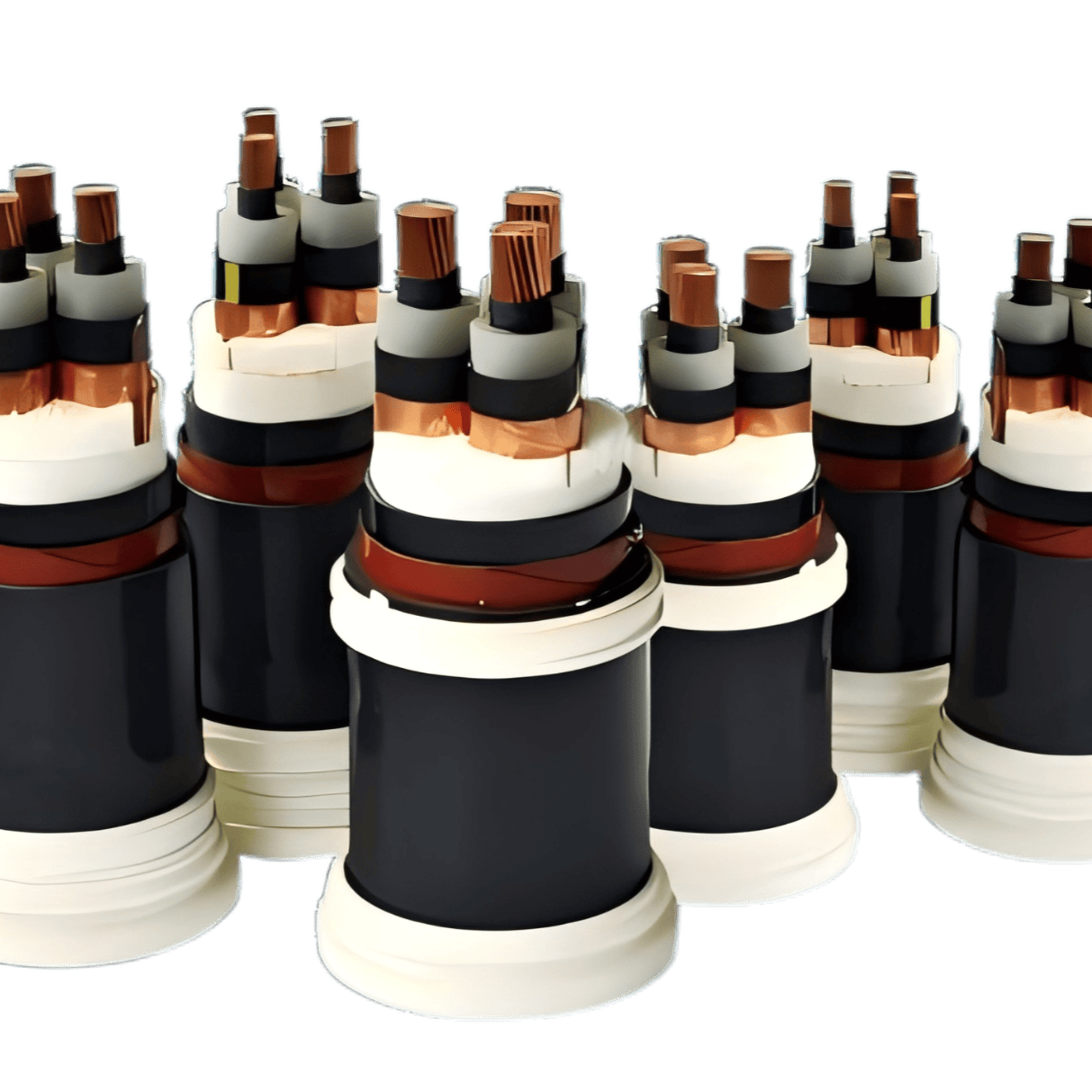


YJV22 26/35kV cable is an armored cable for high-voltage power transmission, widely used in urban power grids, industrial facilities, wind farms, and other scenarios with high requirements for power supply reliability. It features excellent electrical performance, mechanical strength, and environmental adaptability, making it particularly suitable for complex laying conditions such as direct burial, tunnels, and cable trenches.
I. Model Designation Explanation
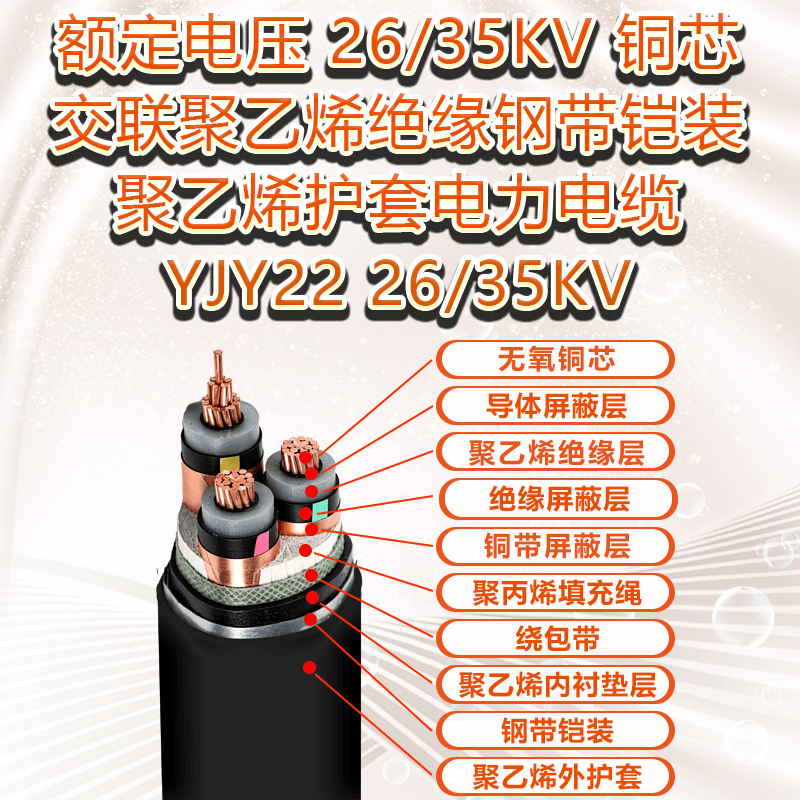
The letters and numbers in YJV22-26/35kV represent the following:
YJ: Cross-linked polyethylene (XLPE) insulation, offering advantages such as high-temperature resistance, electrical aging resistance, and chemical corrosion resistance
V: Polyvinyl chloride (PVC) inner sheath
22: Steel tape armor + PVC outer sheath, providing excellent resistance to compression, impact, and animal gnawing
26/35kV: Rated voltage level
26kV is the conductor-to-ground voltage (U₀)
35kV is the conductor-to-conductor line voltage (U)
It falls within the high-voltage cable category and is suitable for power transmission and distribution systems of 35kV and below
II. Core Structural Composition
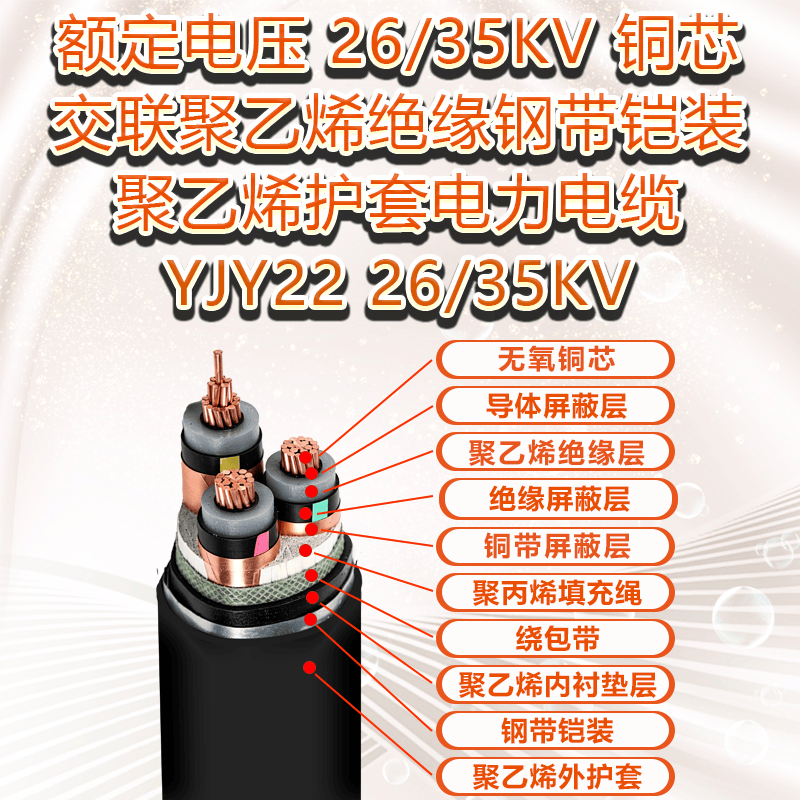
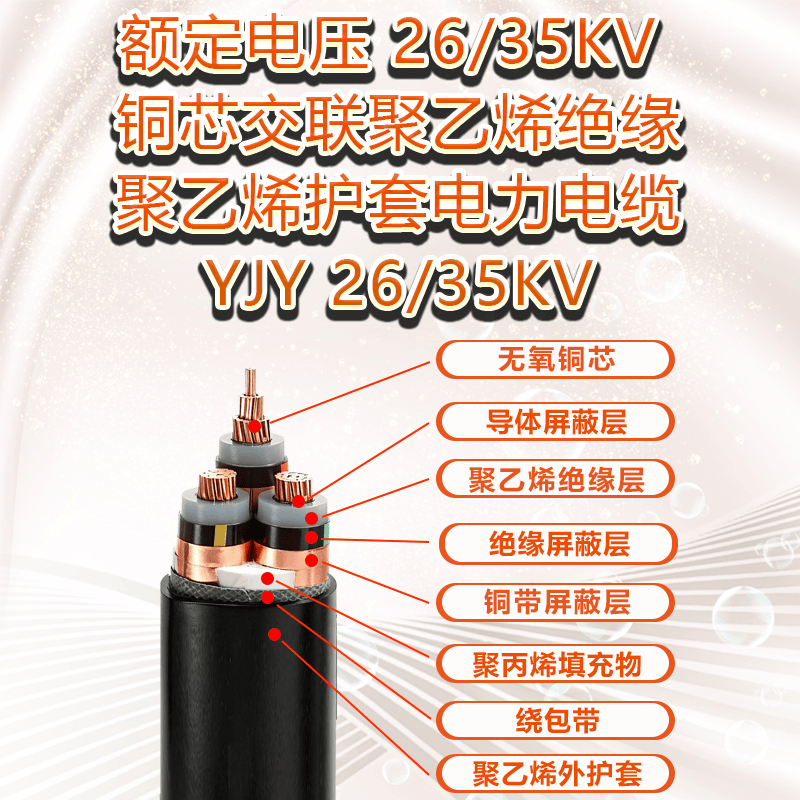
The cable consists of the following from inside to outside:
Conductor: High-purity copper core (oxygen-free copper) with excellent conductivity; common cross-sections range from 3×50mm² to 3×400mm²
Conductor screen: Semi-conductive material that evenly distributes the electric field and prevents partial discharge
Insulation layer: Cross-linked polyethylene (XLPE), with a long-term temperature resistance of up to 90℃ and short-term (≤5s) withstand capability of 250℃
Insulation screen: Also a semi-conductive layer, ensuring electric field stability
Metallic screen: Copper tape or copper wire braid, providing grounding protection and electromagnetic shielding
Filler and wrapping tape: Polypropylene filler rope + non-woven wrapping tape, maintaining cable roundness and buffering stress
Separation sheath: Polyvinyl chloride (PVC) or polyethylene (PE), protecting the internal structure
Armor layer: Double-layer galvanized steel tape, significantly enhancing resistance to compression and mechanical external forces, suitable for direct burial
Outer sheath: Flame-retardant polyvinyl chloride sheath, featuring moisture resistance, termite resistance, and corrosion resistance
III. Key Performance Parameters
Rated voltage: U₀/U 26/35kV (Um=40.5kV)
Maximum long-term conductor operating temperature: ≤90℃
Maximum short-circuit temperature (≤5s): ≤250℃
Laying ambient temperature: ≥0℃ (preheating required below this temperature)
Minimum bending radius: Single-core: 12D; three-core: 12D (D is the actual outer diameter of the cable)
Power-frequency withstand voltage test: 70kV/5min without breakdown
Impulse withstand voltage test: ≥170kV
Applicable standard: GB/T 12706.3-2020 "Extruded Insulation Power Cables and Their Accessories for Rated Voltages from 1kV to 35kV"
Flame-retardant performance: ZR and ZC flame-retardant models available, meeting the GB/T 19666 standard
IV. Main Application Scenarios
Urban underground utility tunnels and main power grids
Serving as the "main artery" of regional power supply, undertaking high-capacity power transmission from substations to distribution centers.
Wind farm collector lines
Connecting wind turbines to booster stations, adapting to complex terrain and frequent voltage fluctuations in the field, making it a key supporting cable for renewable energy projects.
Dedicated lines for industrial parks and large factories
Providing stable high-voltage power to heavy equipment (such as rolling mills and electric furnaces); the steel tape armor can withstand mechanical external damage within the plant area.
Power supply systems for mines and transportation hubs
Ensuring highly reliable uninterrupted power supply in critical infrastructure such as subways, railways, and airports.
Direct burial and high-drop environment laying
The steel tape armor makes it suitable for scenarios prone to compression and impact, such as rocky areas, road crossings, and hillside laying, without the need for additional protective conduits.