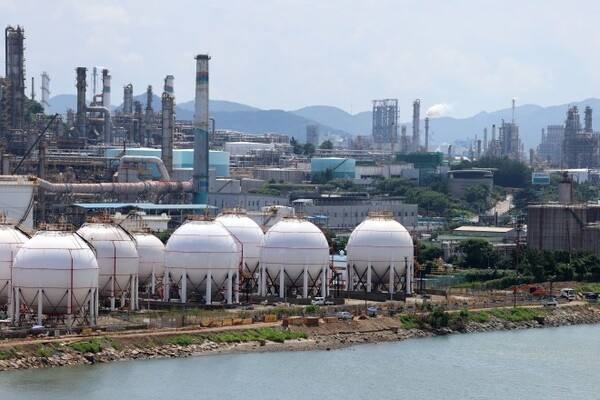
Official data shows that South Korea's petrochemical product exports in February decreased by 15.4% year-on-year to $3.33 billion.
The Ministry of Trade, Industry and Energy (MOTIE) stated in a March 1 announcement: "Despite stable production, the global oversupply has led to a decline in petrochemical product prices." South Korea is a major exporter of aromatics such as benzene, toluene, and styrene, and the global oversupply has significantly impacted its petrochemical exports.
The country's total exports in February increased by 29.0% year-on-year to $67.5 billion, while imports grew by 7.5% to $51.9 billion, resulting in a record trade surplus of $15.5 billion. Driven by the expansion of AI investments, semiconductor exports in February more than doubled to $25.2 billion, as aggressive infrastructure spending by tech companies pushed memory prices sharply higher.
However, due to the Lunar New Year holiday being shifted from January 2025 to February this year, reducing the number of working days by three, automobile exports in the same period fell by 20.8% to $4.81 billion. Exports to the United States in February grew by 29.9%, primarily driven by triple-digit growth in semiconductor and computer exports, alongside steady growth in the bio-health, petroleum products, and secondary battery sectors.
Despite the reduced working days due to the Lunar New Year and Spring Festival, exports to China increased by 34.1% to $12.75 billion, fueled by a surge in semiconductor and computer exports. Semiconductor exports also boosted shipments to ASEAN, contributing to an overall growth of 30.4% in the region. Exports to the EU in February rose by 10.3%, while exports to Japan saw a slight increase of 0.6%.
Late last month, the South Korean government announced it had approved a comprehensive business restructuring plan involving HD Hyundai Oilbank, HD Hyundai Chemical, and Lotte Chemical's petrochemical operations in Daesan. Facing operational losses due to global oversupply and weak demand, South Korean petrochemical companies have received government support for their restructuring plans to address challenges posed by the global oversupply.
As part of the restructuring, Lotte Chemical's 1.1 million tons/year naphtha cracking center (NCC) in Daesan will be shut down for three years. The Ministry of Trade, Industry and Energy is expected to expedite the review of restructuring plans submitted by other petrochemical companies in locations like Yeosu and Ulsan in the first half of 2026, aiming to mitigate the impact of global oversupply on the industry.