Wedoany.com Report on Mar 3rd, VOCUS GmbH, headquartered in Augsburg, Germany, a supplier of components for the aerospace and automotive industries, has recently successfully implemented a manufacturing process for an aircraft exhaust component certified by EASA. This component features a sliding design, offering a service life ten times longer than traditional welded parts. It addresses quality issues such as welding distortion, dimensional scattering, and stress concentration, while also optimizing production efficiency and quality traceability.
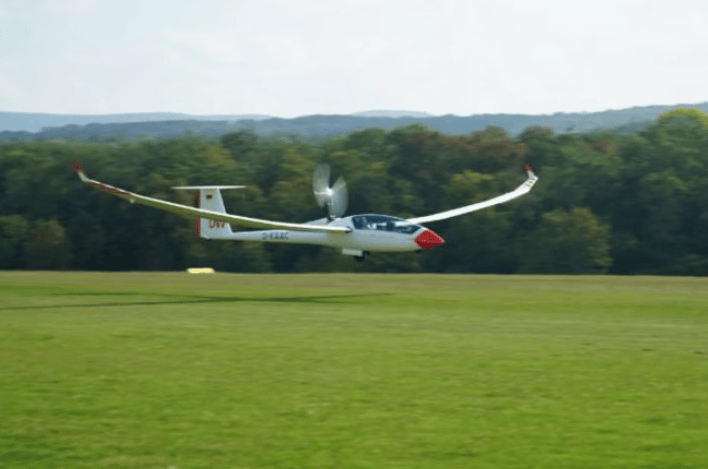
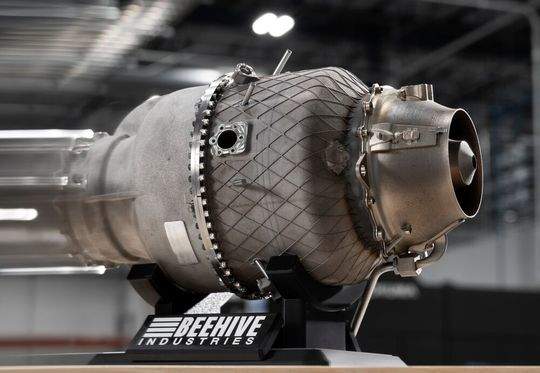
To develop a digitally driven manufacturing process, VOCUS collaborated with Materialise to build a digital process chain covering design data preparation, build strategy, and production traceability. The process was developed based on aerospace certification standards. Through reverse engineering, a precise digital model was generated, and the component was redesigned to eliminate weld transition zones, reinforce stress areas, and reduce weight. Polymer 3D printing technology was used for prototyping. After verifying dimensional accuracy, metal 3D printing technology was employed to produce the final component, using EOS NickelAlloy IN718 material selected for its melt pool stability and printing consistency.
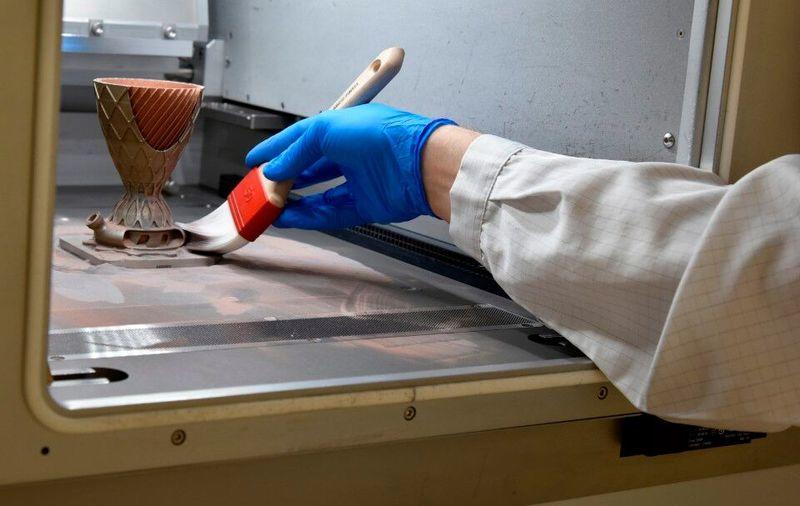
During the 3D printing production process, the print shell supported the fabrication of six components in a single build, along with material test samples. Post-processing included heat treatment, support removal, and shot blasting. Components were marked with batch and serial numbers to enhance traceability. The Streamics system integrated machine parameters, material information, and inspection results through a "central data backbone," ensuring process transparency. After undergoing 20 hours of ground testing and 35 hours of flight testing, the 3D-printed component received approval under an EASA Supplemental Type Certificate (STC) and complies with EN 9100/ISO 9001 standards.
VOCUS's digital production chain not only improved component performance and precision but also achieved predictability and traceability in the manufacturing process. Tim Domagala, R&D Engineer at Materialise, stated: "The powerful capabilities of a structured digital workflow demonstrate that combining engineering expertise with software-driven quality assurance can achieve certification goals."