Wedoany.com Report on Mar 18th, Carbon dioxide utilization technologies are continuously expanding, from carbon-based battery materials to polyurethane applications, with the latest progress focusing on new methods to convert CO₂ into industrial products.
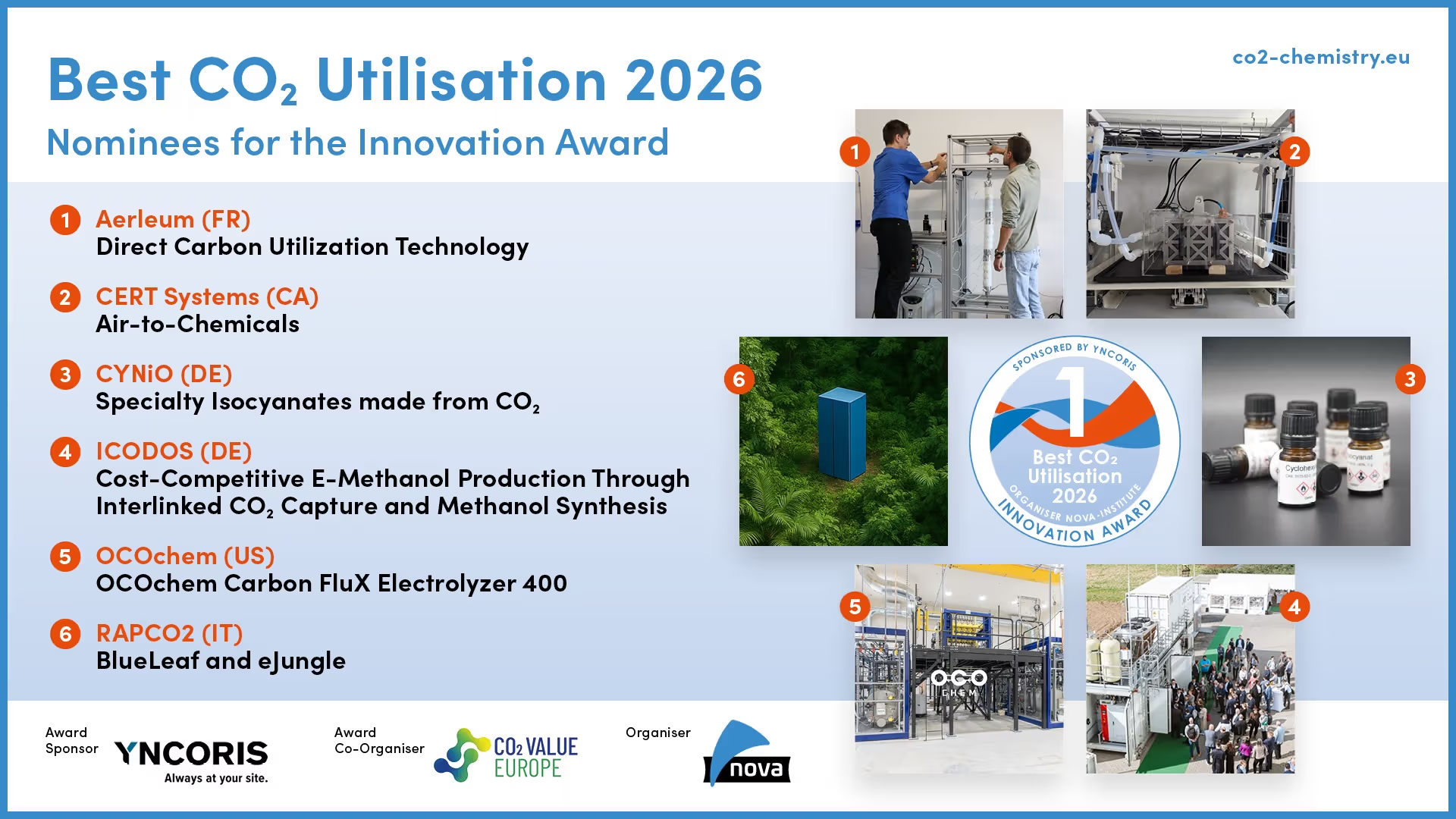
The "Best CO₂ Utilisation 2026" innovation award, organized jointly by the nova-Institute and CO₂ Value Europe, aims to recognize innovative technologies that use CO₂ as a raw material. Nominated companies showcased various CO₂ conversion solutions, covering electrochemical conversion, integrated capture and synthesis processes, and direct air capture systems coupled with chemical production.
The French company Aerleum developed a direct carbon utilization technology that converts atmospheric or industrial CO₂ directly into products like e-methanol. E-methanol, as a versatile fuel and chemical feedstock, is suitable for aviation and shipping sectors and can also serve as a sustainable building block for chemical production, offering a scalable decarbonization pathway. The German company ICODOS combines CO₂ capture with methanol synthesis through a patented hybrid process, reducing energy consumption by over 70%, achieving a CO₂ utilization rate exceeding 95%, and utilizing modular design to shorten project timelines.
Canada's CERT Systems' "Air-to-Chemicals" process captures atmospheric CO₂ in an integrated system and directly converts it into ethylene for producing sustainable aviation fuel. Germany's CYNio developed a production process for specialty isocyanates based on CO₂, replacing toxic phosgene and providing sustainable raw materials for adhesives, coatings, and pharmaceuticals. The US company OCOchem's FluX Electrolyzer 400 converts CO₂ and water into formate, with an annual production capacity of 60 tons, delivered to a customer in October 2025.
Italy's RAPCO₂ introduced indoor direct air capture products BlueLeaf and eJungle, which convert captured CO₂ into acetic acid and further process it into isopropanol fuel. Conference discussions emphasized the challenges of transitioning CCU technologies to industrial scale, including the supply of renewable hydrogen, the development of reliable CO₂ sources, and methods for product certification and sustainability assessment.