Lei Jun: Xiaomi Plans R&D Investment of Over 200 Billion Yuan in Next Five Years, Over 60 Billion Yuan in AI Field in Three Years
en.Wedoany.com Report on Mar 23rd, At a seminar held during the China Development Forum 2026 Annual Conference on March 22, Xiaomi founder and CEO Lei Jun stated that Xiaomi's cumulative R&D investment over the past five years exceeded 100 billion yuan, with plans to invest over 200 billion yuan in the next five years. This R&D investment plan reflects Xiaomi's long-term strategic determination in core technology fields such as chips, automobiles, and AI.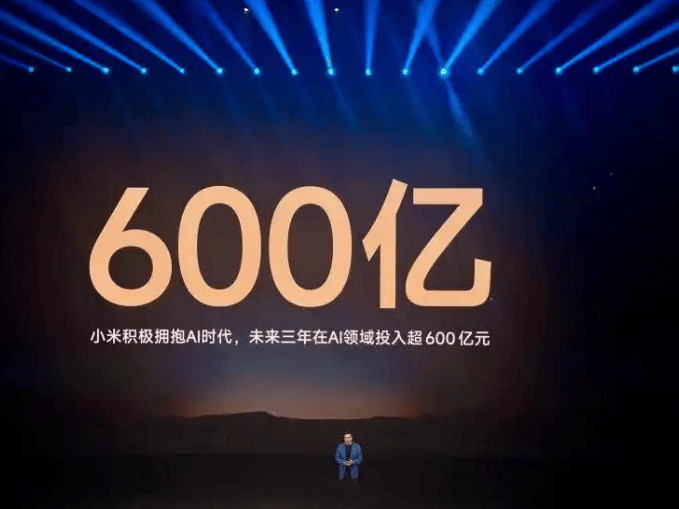
Lei Jun pointed out that Xiaomi will strengthen innovation around future industrial development, focusing on tackling core technologies, and investing in key directions such as chips, automobiles, and AI; simultaneously, it will build an open ecosystem to promote collaborative innovation. Currently, Xiaomi's "Human x Car x Home" full ecosystem has connected over 1 billion smart devices globally, with 742 million monthly active users. This scale provides a large-scale and diversified innovation validation environment for the early application of 6G technology.
Investment in the AI field is particularly noteworthy. Lei Jun revealed that Xiaomi plans to invest over 60 billion yuan in the AI field in the next three years. At the Xiaomi Spring New Product Launch on the evening of March 19, he further disclosed that Xiaomi's R&D and capital expenditure on AI this year will exceed 16 billion yuan.
Parallel to the R&D investment push is the intensive rollout of Xiaomi's AI products. On the day of the launch event, Xiaomi's first phone-based lobster product, Xiaomi miclaw, officially began closed beta testing. This product is equipped with the newly released Xiaomi MiMo-V2-Pro large model, enabling deep integration with the operating system and the "Human x Car x Home" full ecosystem. Users do not need complex command instructions; the AI can autonomously seek optimal solutions and execute them safely.
On the morning of March 19, Xiaomi announced the launch of three self-developed large models, including Xiaomi MiMo-V2-Pro, Xiaomi MiMo-V2-Omni, and Xiaomi MiMo-V2-TTS. Among them, MiMo-V2-Pro and MiMo-V2-Omni have officially opened API services. According to Xiaomi's official introduction, MiMo-V2-Pro is a flagship text-based foundation model, specifically designed for high-intensity Agent work scenarios, focusing on reasoning, planning, and tool calling; MiMo-V2-Omni is a full-modal Agent foundation model, natively integrating text, vision, and audio perception, connecting the complete chain from understanding to execution; MiMo-V2-TTS is a large speech synthesis model, aiming to endow Agents with warm, emotional voice expression capabilities, forming the final link of the full stack.
In addition to AI products, Xiaomi also launched the new generation SU7 car during the same period. The standard version starts at 219,900 yuan, the Pro version starts at 249,900 yuan, and the Max version starts at 303,900 yuan. Furthermore, Xiaomi introduced the all-new Xiaomi Book Pro 14 notebook and the Xiaomi Watch S5 46mm smartwatch. Among them, the Xiaomi Book Pro 14 is the first Xiaomi-branded notebook released by the company after a four-year hiatus, with a retail price starting from 8,499 yuan and a post-national-subsidy starting price of 6,799.15 yuan.
While Xiaomi increases its R&D investment, other domestic tech giants are also intensifying their efforts in the AI field. Tencent's latest financial report shows that its full-year 2025 capital expenditure reached 79.2 billion yuan, with R&D investment at 85.75 billion yuan, both setting new company records. Tencent President Martin Lau stated at the earnings conference on March 18 that last year, constrained by factors such as GPU supply, the group's capital expenditure did not meet expectations. If conditions permit this year, there is an intention to increase capital expenditure, while investment in AI and models will at least double. According to Lau, Tencent invested 18 billion yuan in new AI products last year.
Alibaba announced as early as February 2025 that it plans to invest at least 380 billion yuan over the next three years to build cloud and AI infrastructure, an amount exceeding the total investment in cloud and AI infrastructure over the past decade. Financial reports show that Alibaba's full fiscal year 2025 R&D expenses reached 57.15 billion yuan, accounting for 5.7% of total revenue, with investment related to chips and AI exceeding 90 billion yuan.
From Xiaomi's 200-billion-yuan five-year R&D plan, to Tencent's doubling of AI investment, to Alibaba's 380-billion-yuan infrastructure investment, the arms race among Chinese tech giants in the AI field is accelerating comprehensively. This R&D investment competition centered on AI is reshaping the competitive landscape of China's technology industry.
Related Products


GYTA Type Non-Self-Supporting Aerial/Duct Optical Cable
TONGDING INTERCONNECTION INFORMATION CO., LTD.
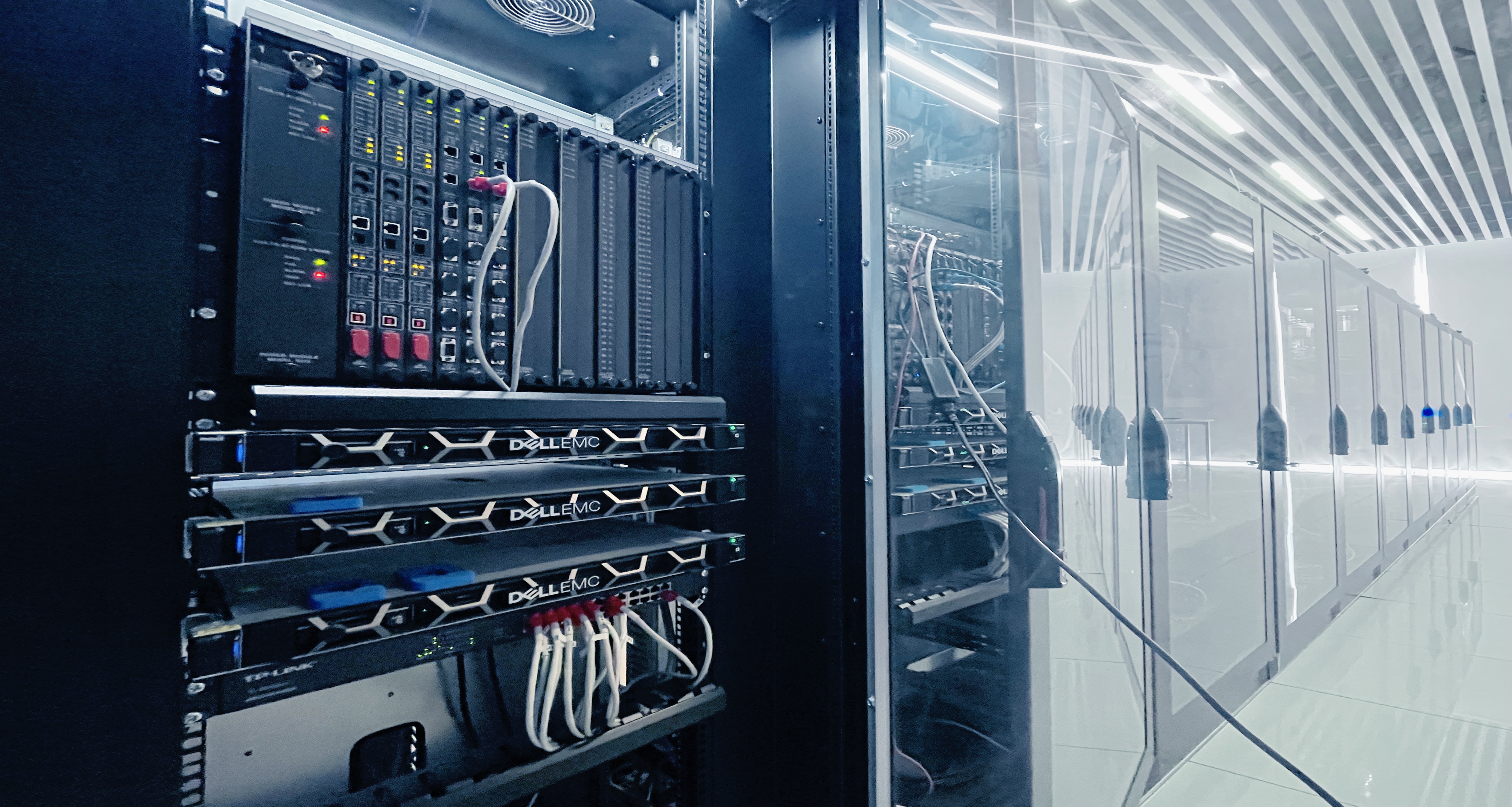
MUX Series Communication Interface Device for Security and Stability Control System
Nanjing NR Electric Co., Ltd.

Automatic Aiming Laser Remote Obstacle Removal Robot
Pinggao Group Weihai High-Voltage Apparatus Co., Ltd.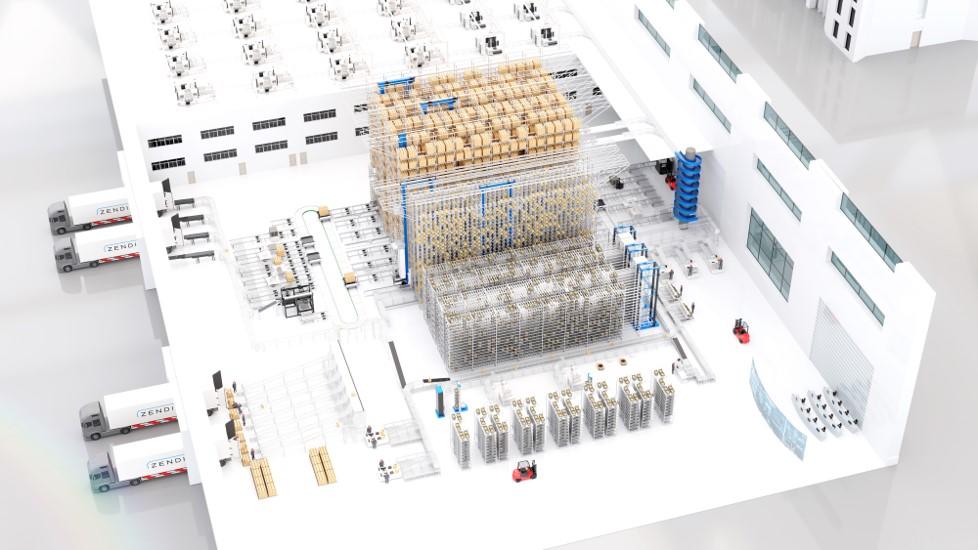
One-Stop Steward Service for the Entire Logistics System Integration Chain
Zhongding Intelligent (Wuxi) Technology Co., Ltd.


Comprehensive Mining Automation Control System
Beijing Tianma Intelligent Control Technology Co., Ltd.