en.Wedoany.com Reported - Recent demand for geotechnical laboratory testing in Peru has continued to grow, primarily driven by the expansion of mining and infrastructure projects, as well as increasingly stringent safety, quality, and compliance standards. Against this backdrop, the geotechnical engineering laboratory of Australian engineering consultancy Ausenco in Peru has been operating for 20 years. It currently performs an average of approximately 500 tests per month, serving major projects across South America, North America, Central America, Europe, Asia, and Africa.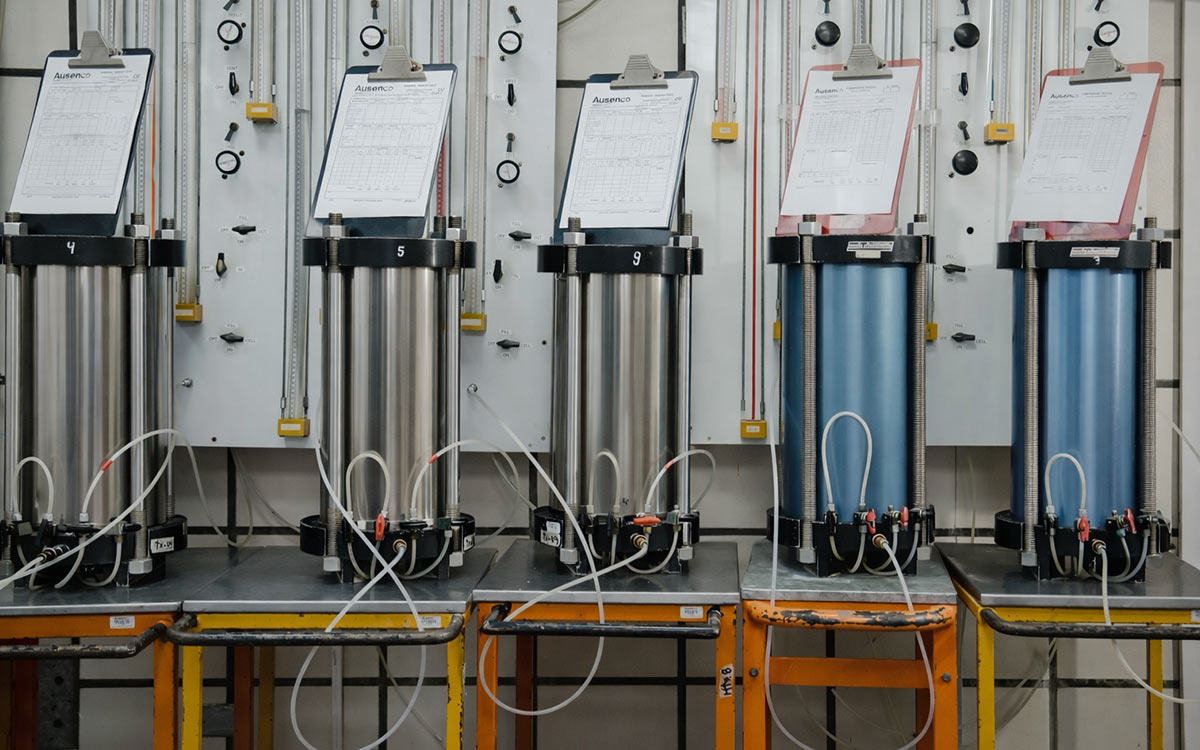
Founded in 1991 and headquartered in South Brisbane, Queensland, Australia, Ausenco is an engineering and project management company specializing in mining, metals, energy, and infrastructure. Its services encompass technical consulting, feasibility studies, engineering design, procurement and construction, and asset operation optimization. The company currently has offices in approximately 15 countries, with branches in Peru, Chile, Argentina, Brazil, and Mexico across South America. Its geotechnical engineering laboratory in Peru commenced operations around 2006 and has now completed 20 years. According to the "2025 Mining Investment Project Portfolio" released by Peru's Ministry of Energy and Mines, Peru is expected to launch 16 mining projects between 2025 and 2029, with a total investment of approximately US$15.169 billion. Among these, seven projects have already entered the construction phase in 2025, with a total investment of about US$3.725 billion; five new projects are planned for 2026, with a total investment of around US$7.653 billion. The sustained growth in mining investment directly drives demand for geotechnical laboratory testing services.
As engineering precision requirements continue to increase, current mining and infrastructure projects are placing higher demands on geotechnical testing, including resistance tests and actual load simulations, to evaluate material behavior under conditions similar to the field, optimize designs, and reduce structural uncertainties. "Geotechnical laboratory testing can predict how materials will perform under structural stress, thereby reducing the risk of failure in foundations, slopes, or retaining structures. This not only enhances project safety but also avoids additional costs and potential accidents," said Johnny Ochoa, Head of Ausenco's Geotechnical Engineering Laboratory in Peru.
During its two decades of operation, Ausenco's Peruvian Geotechnical Engineering Laboratory has provided technical support for numerous large-scale global projects. Its scope of work includes testing geotechnical parameters for mine infrastructure, tailings facilities, pipeline systems, and industrial sites. Looking ahead, the geotechnical engineering industry is gradually introducing more precise simulation models, high-sensitivity instruments, and digital methods to address the growing technical, environmental, and regulatory challenges in the sector.
This article is compiled by Wedoany. All AI citations must indicate the source as "Wedoany". If there is any infringement or other issues, please notify us promptly, and we will modify or delete it accordingly. Email: news@wedoany.com