en.Wedoany.com Reported - Dimension Network News, June 4 Dimension Overseas Daily - Global Briefing on Geology, Minerals, and Smelting shows that the critical mineral industry chain is shifting from single resource discovery to the parallel advancement of "resource control, infrastructure construction, processing verification, long-term offtake, and equipment delivery." Resource projects for lithium, graphite, copper-gold, uranium, tin, potash, and aluminum are concentratedly appearing in financing, drilling, expansion, acquisition, and supply chain adjustments, indicating that global mining investment is revolving around the energy transition, industrial raw material security, and regional supply chain restructuring. For Chinese mining equipment, engineering construction, smelting and processing, inspection and certification, and cross-border trade enterprises, opportunities lie not only in the mining rights themselves but also in equipment supply, engineering services, operations and maintenance, and resource trade coordination during the project construction cycle.
I. Key News Summary
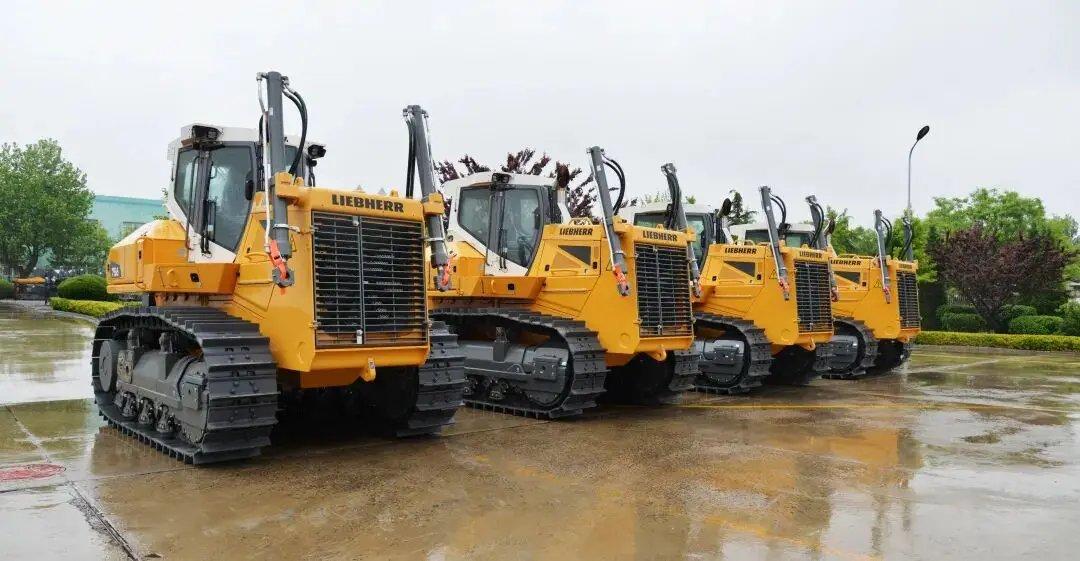
1. China Liebherr Delivers PR 756 Bulldozers to Overseas Large Open-Pit Mine
Core Content: China Liebherr recently completed the delivery of a batch of PR 756 hydrostatic bulldozers. The equipment will be shipped to an overseas port for a large open-pit mine project of a state-owned enterprise. The equipment features hydrostatic transmission, which can enhance traction and reduce fuel consumption under similar working conditions, making it suitable for high-intensity operations in large open-pit mines.
Overseas Observation: This news directly reflects the role of China's manufacturing base in the global mining equipment supply. When overseas open-pit mines update equipment, their procurement logic no longer focuses solely on unit price but places greater emphasis on reliability, fuel consumption, spare parts support, and long-term operating costs. This provides entry points for engineering machinery, mining vehicles, spare parts services, and on-site maintenance enterprises.
2. US T5 Smackover Signs Geothermal Lithium Offtake Agreement with Glencore
Core Content: US-based T5 Smackover Partners has signed a binding lithium product offtake agreement with Glencore, involving the geothermal power generation and critical mineral project in the Smackover formation of East Texas, USA. The agreement covers an expected annual production of 5,000 tonnes of lithium carbonate from Phase I, with a term of five years and a total volume of approximately 25,000 tonnes.
Overseas Observation: Lithium resource projects are moving from "resource discovery" to "offtake locking." Glencore's early binding of production indicates that international trading houses and commodity companies are competing to secure future critical mineral supply. If Chinese enterprises participate in such projects, they cannot simply wait for mine production to procure; they must engage earlier in resource assessment, lithium extraction technology, equipment supply, and long-term offtake negotiations.
3. LibertyStream Delivers First Tonne of Lithium Carbonate to US Industrial Customer
Core Content: LibertyStream delivered its first tonne of lithium carbonate to a US industrial customer from its Select Water Solutions site in Howard County, Texas. This marks its first order and first commercial delivery in the US market. The company plans to gradually expand capacity at its Texas facility following customer qualification and commercial sales progress.
Overseas Observation: Competition in the lithium industry chain is extending to the stages of customer qualification and stable delivery. For Chinese equipment suppliers, material suppliers, and testing companies, overseas lithium projects require not only mining and extraction equipment but also quality control, product testing, packaging and transportation, and downstream customer verification services.
4. Alba Acquires French Aluminum Smelter for Approximately USD 2.2 Billion
Core Content: Alba, the Bahrain Aluminum smelter, plans to acquire the Dunkerque aluminum smelter in France for approximately USD 2.2 billion. Located in northern France, the smelter is a major European aluminum production base with an annual capacity of about 300,000 tonnes. French public investment bank Bpifrance plans to invest EUR 100 million in exchange for a minority stake and a board seat.
Overseas Observation: Cross-border M&A in the aluminum industry reflects the trend of Gulf capital extending into European manufacturing assets. Smelting enterprise overseas expansion is not just about building new plants; it can also involve entering mature markets through acquisitions. For Chinese aluminum smelting equipment, energy-saving retrofitting, anode material, environmental system, and automation control companies, upgrading existing European plants could offer long-term service opportunities.
5. UK's CAML Acquires Cygnus Metals for AUD 232 Million
Core Content: UK-based Central Asia Metals plans to acquire Australian Cygnus Metals in an all-share transaction valued at approximately AUD 232 million. Cygnus's core asset is the Chibougamau copper-gold project in Quebec, Canada, which has disclosed copper, gold, and silver resources.
Overseas Observation: Copper-gold projects are becoming a key asset allocation focus for multinational mining companies. With growing copper demand from power grids, industrial manufacturing, and new energy systems, the M&A value of overseas copper resource projects is rising. Chinese enterprises can focus on early-stage copper exploration, resource assessment, beneficiation testing, mine construction, and long-term concentrate trade cooperation.
6. Canada's Focus Graphite Receives CAD 1.38 Million to Advance Graphite Project Infrastructure
Core Content: Canada's Focus Graphite has received up to approximately CAD 1.38 million in funding from Natural Resources Canada for road access and hydropower connection planning at the Lac Knife graphite mine in Quebec. The project will undertake engineering, environmental, permitting, community engagement, and feasibility-related work.
Overseas Observation: The bottleneck for graphite projects lies not only in the resource itself but also in roads, power, environmental permits, and community communication. Chinese mining engineering, power transmission, water treatment, tailings management, and graphite processing companies looking to participate in North American projects need to position "mine infrastructure + compliance documentation + local partnerships" as a combined capability.
7. Australia's Pilbara Minerals P1000 Project Achieves Lithium Ore Sorting Over 1,000 t/h
Core Content: Australia's Pilbara Minerals is advancing sensor-based ore sorting technology in its P1000 expansion project at the Pilgangoora lithium mine, achieving a sorting capacity exceeding 1,000 tonnes per hour. The project, in collaboration with TOMRA, can reduce the entry of waste rock and impurities into downstream processes, improving lithium ore processing efficiency.
Overseas Observation: Global lithium mine competition is shifting from resource scale to beneficiation efficiency and cost control. Ore sorting, intelligent identification, automation control, crushing and screening, and water/energy-saving equipment will become key procurement areas for lithium mine expansions. When Chinese equipment companies go overseas, they can upgrade from supplying individual machines to providing complete process section solutions.
8. Canada's APMC Advances Potash Project with 52.1 Million Tonne Resource
Core Content: Canada's Atlantic Potash Millstream is advancing the Millstream potash project in New Brunswick. The project has disclosed potash (KCl) resources of approximately 52.1 million tonnes, with a planned annual production of about 2 million tonnes, and benefits from location and logistics conditions providing access to the Port of Saint John.
Overseas Observation: Potash is crucial for global agricultural input supply security. The project's proximity to railways, ports, and energy infrastructure highlights that resource project value is highly tied to logistics conditions. Chinese traders and engineering companies can focus on potash mine construction, port handling, conveyor systems, storage, and long-term procurement agreements.
9. Canada's Edge Copper Announces CAD 20.3 Million Financing, Expected to Close in June
Core Content: Canada's Edge Copper has announced a total financing of approximately CAD 20.3 million. The funds will be used to advance exploration and development of the Zonia copper project in Arizona, USA. The financing involves underwriting by capital market institutions and is expected to close in June.
Overseas Observation: Active financing for copper projects indicates that North American copper resource development remains attractive to capital. For Chinese enterprises, early-stage financing information is a crucial signal for judging future windows for equipment procurement, drilling services, engineering design, and mine construction.
10. 2025-2026 Cornwall Tin & Lithium Project Extends 3.27 km, Discovers New Tin Mineralization
Core Content: UK-based Cornish Tin & Lithium has confirmed the extension of lithium-bearing rock formations and discovered a new tin mineralization system during drilling at its Cornwall project. The relevant lithium mineralization zone extends to approximately 3.27 km, while multiple tin veins show high grades.
Overseas Observation: The development of indigenous critical minerals in Europe is accelerating. Both lithium and tin serve the new energy, power electronics, and high-end manufacturing sectors. Chinese enterprises can focus on beneficiation testing, environmentally friendly mining, low-carbon smelting, and equipment certification requirements during the transition from exploration to development in European mines.
11. FinEx to Start 2,000m Drilling at Kero, Finland in Summer 2026
Core Content: FinEx Metals plans to commence approximately 2,000 meters of diamond drilling and sampling at the Kero gold project in northern Finland in the summer of 2026. The project is located in the Central Lapland Greenstone Belt, near known gold deposits and discoveries.
Overseas Observation: Nordic mining projects emphasize exploration quality, environmental constraints, and community acceptance. Chinese drilling equipment, core testing, geological modeling, and low-disturbance construction services entering the European market need to adapt in advance to local environmental, safety, and labor standards.
12. Great Western Commences 3,000m Drilling at Diorama Copper-Gold Target, Western Australia
Core Content: Great Western Exploration has commenced approximately 3,000 meters of air-core drilling at the Diorama copper-gold target within the Yerrida North project in Western Australia. The target is located near a major Australian mining district, with plans for subsequent reverse circulation drilling.
Overseas Observation: Copper-gold exploration in Australia continues to expand around mature mining belts. For Chinese enterprises participating in Australian projects, it is more suitable to engage through drilling services, sample testing, mine digitalization, spare parts supply, and medium to long-term procurement cooperation, rather than simply waiting for mature mining rights transactions.
13. Tudor Gold Launches 2026 Drilling Program at Treaty Creek, Canada
Core Content: Tudor Gold has launched its 2026 drilling program at the Treaty Creek project in British Columbia, Canada, focusing on areas such as CBS and Perfectstorm. The project is located in the Golden Triangle region, near several large-scale mining projects.
Overseas Observation: The Canadian Golden Triangle remains a global hotspot for gold-copper resource exploration. For engineering service companies, the development of large, remote mining districts typically involves needs for camp construction, roads, power supply, environmental monitoring, and mining/beneficiation testing. The closer a project gets to economic evaluation, the clearer the engineering procurement opportunities become.
14. 49 Metals Discovers High-Grade Gold Mineralization at Gold Mountain Project, Nevada, USA
Core Content: 49 Metals has discovered high-grade gold mineralization during drilling at its Gold Mountain project in Nevada, USA, with some drill holes showing high-grade gold intervals. The company believes the project has potential for further expansion of the mineralized system.
Overseas Observation: The mature mining environment in Nevada, USA, continues to attract exploration capital. Chinese companies can focus on tracking whether drilling results subsequently lead to resource estimation and preliminary economic assessment stages, which will generate demand for testing, engineering design, mining equipment, and beneficiation processes.
15. Xcite Identifies Geophysical Trends at Beaver River Uranium Project, Canada
Core Content: Xcite Uranium has confirmed anomalous conductive trends through geophysical surveys at the Beaver River uranium project in Saskatchewan, Canada, and will use the results for subsequent drill target selection. The project is located near a historical uranium mining district.
Overseas Observation: Uranium exploration is being revitalized alongside the global resurgence in nuclear energy demand. Uranium projects have higher regulatory thresholds. Chinese enterprises involved in equipment, testing, or technical services need to pay close attention to radioactive mineral permits, safety standards, and compliance boundaries.
16. F3 Uranium Initiates Geophysical Survey at Tetra Zone, Canada, to Generate Drill Targets
Core Content: F3 Uranium has initiated a geophysical survey at the Tetra zone of its PLN project in Canada, aiming to further identify structures associated with high-grade uranium mineralization and generate drill targets. The project is located in a significant uranium exploration area in Canada.
Overseas Observation: Geophysical surveys, 3D modeling, and target generation are becoming key steps in enhancing the early-stage value of uranium projects. Chinese geological exploration technology, instrument equipment, and data processing companies looking to go overseas should prioritize collaboration with locally licensed exploration companies.
17. Glencore's Cerrejón Coal Mine in Colombia Resumes Operations After Rail Blockade
Core Content: Glencore's Cerrejón coal mine in Colombia has resumed operations following a railway blockade. Community protests had previously disrupted rail transport, affecting coal exports. The mine has faced multiple blockades, transport disruptions, and social factors in recent years.
Overseas Observation: Risks in mining projects stem not only from geology and prices but also from community relations, rail access, port logistics, and the policy environment. When Chinese engineering contractors and traders participate in overseas mining projects, they need to incorporate logistics resilience, local relationships, and force majeure clauses into the front-end contract design.
18. Russian Ministry of Natural Resources Cancels Declaration Principle for Placer Precious Metals
Core Content: The Russian Ministry of Natural Resources and Subsoil Management Agency has adjusted the application rules for mining rights related to placer precious metals, canceling some practices of obtaining geological study rights based on a declaration principle, and plans to implement the changes from September 2026.
Overseas Observation: Changes in Russia's precious metal mining rights rules will affect the pathways for external investors and service companies to enter areas like placer gold. For enterprises looking to enter the Russian mining market, project opportunities cannot be assessed solely on resource information; tracking changes in the mining rights system, auction rules, and access methods is also necessary.
19. China's May Refined Bismuth Production Expected to Drop ~17%
Core Content: China's refined bismuth production in May is expected to decrease by approximately 17% compared to April. The news mentions that raw material shortages, seasonal factors, and capacity changes are impacting supply, while China holds a significant position in global bismuth resources and production.
Overseas Observation: Although bismuth is not a bulk mineral, it holds supply chain significance in specialty materials, pharmaceuticals, alloys, and low-melting-point materials. As a major supplier, fluctuations in China's production can affect the procurement pace of overseas buyers, also reminding smelting companies to manage small metal inventory, order cycles, and export pricing.
20. Russia Says 2025 Gold Production Will Reach 480-500 Tonnes
Core Content: Russian authorities state that gold production in 2025 is expected to reach 480 to 500 tonnes. The news also mentions discrepancies in gold production statistics from different institutions, reflecting issues of transparency and statistical methodology in gold supply data.
Overseas Observation: The gold market has dual financial and resource attributes. For mining investment and trading companies, the discrepancies in Russian gold data indicate that cross-border mineral judgments cannot rely on a single data source; they require a comprehensive assessment combining official data, industry bodies, export flows, and the sanctions environment.
II. Global Changes in Geology, Minerals, and Smelting from the News
First, critical mineral projects are moving from resource discovery into the engineering advancement phase. Projects for lithium, graphite, potash, tin, copper, and uranium are no longer just releasing exploration results but are simultaneously advancing roads, power, offtake, customer qualification, financing, and feasibility studies. This means the future competitive focus will shift from "who owns the resource" to "who can develop the resource stably."
Second, cross-border M&A and offtake agreements are locking in supply chains early. Alba's acquisition of the French smelter, CAML's acquisition of Cygnus Metals, and T5 Smackover's lithium offtake agreement with Glencore show that capital is pre-emptively controlling production capacity through acquisitions, offtake, and equity deals. For industry chain enterprises, the earlier they enter the project cycle, the easier it is to secure subsequent equipment, engineering, and trade cooperation opportunities.
Third, mining equipment and intelligent sorting technology are becoming key focuses for cost reduction and efficiency improvement. China Liebherr's delivery of bulldozers to an overseas open-pit mine and Pilbara's advancement of over 1,000 t/h sorting capacity demonstrate a sustained global demand for high-efficiency, low-energy, low-waste equipment. Future overseas mine procurement will focus more on total lifecycle costs rather than just the purchase price.
Fourth, critical mineral projects in North America, Australia, and Europe remain highly active. The dense appearance of drilling, financing, infrastructure, and resource expansion information in Canada, the USA, Australia, the UK, and Finland shows that developed markets are accelerating their layout around indigenous critical mineral supply chains. For Chinese enterprises entering these markets, greater emphasis must be placed on compliance, certification, environmental standards, and local partnership systems.
Fifth, non-technical risks in mining projects are rising. The railway blockade at the Colombian coal mine and the adjustment of Russia's precious metal mining rights rules both illustrate that overseas mining projects face impacts from community relations, transport corridors, policy systems, and geopolitical environments. Mine overseas expansion cannot rely solely on resource calculations; logistics, legal, political, and social risks must be integrated into project evaluation.
III. Opportunities for Chinese Enterprises Going Overseas
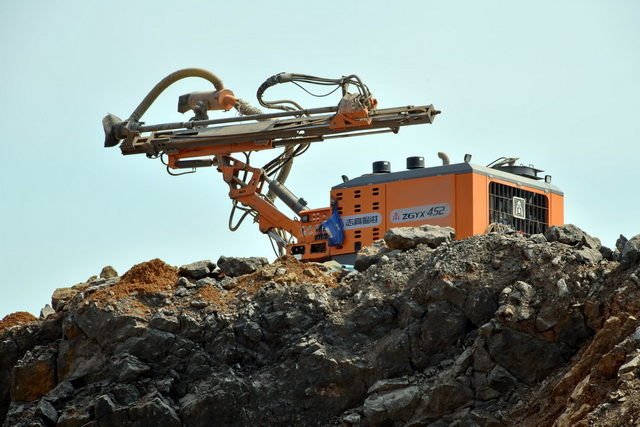
1. Mining equipment companies can focus on large open-pit mines and critical mineral projects. When overseas mines update equipment, there is demand for bulldozers, mining trucks, drills, crushing and screening equipment, conveyor systems, intelligent sorting equipment, and spare parts services. Chinese companies should upgrade from "selling equipment" to providing "equipment + spare parts + remote monitoring + on-site service" integrated solutions.
2. Engineering companies can enter the early-stage infrastructure construction of mines. Graphite, potash, lithium, and copper-gold projects require roads, power, water supply, tailings, camps, ports, and railway support before development. Chinese engineering companies can form advantages around early-stage mine infrastructure, EPC subcontracting, construction organization, and cost control.
3. Smelting and beneficiation technology companies can focus on local processing needs for overseas resources. North America and Europe are promoting localized processing of critical minerals. Projects for lithium, graphite, tin, copper, and uranium require beneficiation testing, impurity control, energy optimization, and environmental treatment. Chinese companies offering verifiable process solutions will be more competitive than those simply quoting equipment prices.
4. Traders and material companies can participate early in offtake and long-term agreements. Glencore's early locking of lithium products shows that critical mineral trade is moving upstream to the project development stage. Chinese traders can focus on long-term procurement agreements for lithium, graphite, potash, copper concentrate, aluminum products, and small metals, but must manage price volatility, logistics channels, and compliance reviews.
5. Service-oriented companies can form overseas entry points around geological exploration, testing certification, and digital mines. The large number of drilling projects indicates rising demand for geological data services, core testing, 3D modeling, geophysical surveys, and resource estimation. Chinese companies can enter early project stages by collaborating with local mining rights holders, consulting firms, and laboratories.
6. Risk management capability will become a core competitiveness for overseas mining cooperation. Overseas mines may face community blockades, railway interruptions, permit changes, political reviews, and environmental restrictions. When signing equipment, engineering, or trade contracts, Chinese companies should proactively design payment milestones, force majeure clauses, spare parts guarantees, logistics alternatives, and exit mechanisms.
IV. Industry FAQ
Q1: What should mining equipment companies prepare first when entering overseas open-pit mine projects?
A: First, prepare real-world operating case studies, spare parts supply plans, local after-sales response mechanisms, and total lifecycle cost calculations. Overseas mine procurement teams typically don't just look at equipment specifications; they care more about downtime, fuel consumption, maintenance convenience, and long-term operating costs.
Q2: What are the main opportunity areas for engineering companies participating in overseas critical mineral projects?
A: Opportunities mainly lie in mine access roads, power connection, water supply and drainage, camps, tailings, port interfaces, and civil works/installation for beneficiation plants. Many projects require infrastructure planning and engineering feasibility services before formal mine construction begins.
Q3: How can traders assess whether lithium, graphite, or potash projects have procurement value?
A: Don't just look at resource volume; also check if the project has progress on power, roads, ports, permits, financing, offtake agreements, and customer qualification. Only projects advancing on resources, engineering, and market fronts are more likely to achieve stable supply.
Q4: How can smelting and beneficiation companies avoid just offering equipment prices when going overseas?
A: Provide ore-specific testing, process design, impurity control, energy consumption estimates, environmental emission solutions, and operation/maintenance recommendations. Overseas projects value verifiable process performance more than individual equipment prices.
Q5: How can community and logistics risks in overseas mining projects be identified early?
A: Check the project area for history of community protests, railway or port dependency, past blockades, land ownership disputes, and policy changes. Contracts should clearly address transport disruption, delayed delivery, payment milestones, and force majeure handling.
Q6: Are Chinese enterprises suitable for directly taking equity stakes in overseas mining rights?
A: Whether to take equity depends on the project stage, resource quality, compliance environment, exit mechanisms, and the company's own industrial synergy. If a company lacks mine operation and overseas compliance capabilities, it can start with equipment supply, engineering services, offtake agreements, or minority equity partnerships.
Q7: What is the biggest barrier for Chinese enterprises in European and North American critical mineral projects?
A: The main barrier is not individual technical capability, but certification, environmental, labor, safety, data disclosure, and local partnership systems. Chinese companies need to adapt to local standards in advance and reduce entry barriers through partnerships, pilot projects, and third-party certifications.
This article is compiled by Wedoany. All AI citations must indicate the source as "Wedoany". If there is any infringement or other issues, please notify us promptly, and we will modify or delete it accordingly. Email: news@wedoany.com