en.Wedoany.com Reported - On June 3 local time, driven by the latest U.S. monthly private sector employment data and the services index, yields on U.S. Treasuries of various maturities rose, and the U.S. dollar index climbed, putting pressure on precious metal prices. Gold futures for August delivery on the New York Mercantile Exchange fell 1.17% to settle at $4,498.2 per ounce, once again breaking below the $4,500 mark; silver futures for July delivery fell nearly 2.5% to settle at $73.8 per ounce. As of 14:05 Beijing time on June 4, spot gold was quoted at $4,473.72 per ounce, and spot silver at $73.27 per ounce.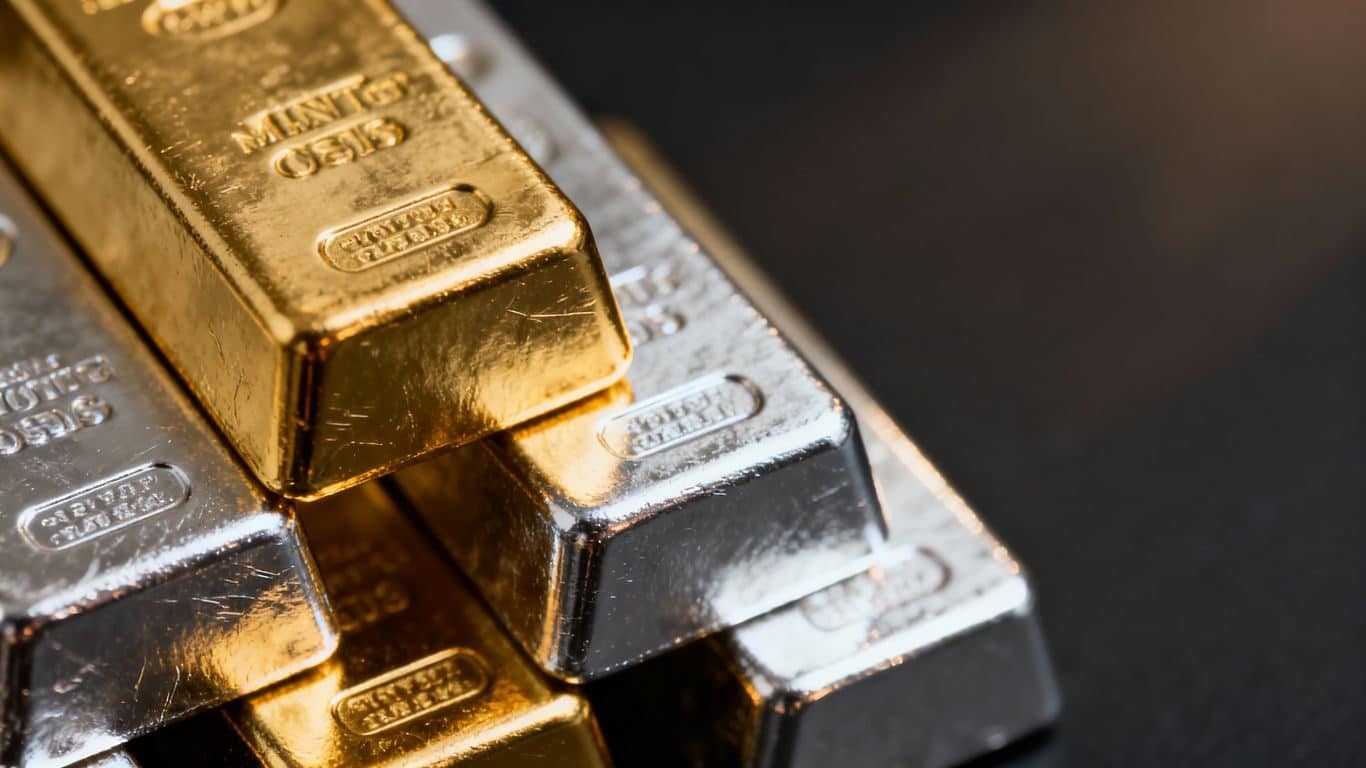
Data released by Automatic Data Processing (ADP) on June 3 showed that private sector employment in the U.S. increased by 182,000 in May, higher than the market expectation of 175,000, indicating resilience in the labor market. On the same day, the Institute for Supply Management (ISM) reported that its Services Purchasing Managers' Index (PMI) stood at 53.8, up from 52.5 in April, signaling accelerated expansion in the services sector. The strong economic data reinforced market expectations that the Federal Reserve will maintain a tight monetary policy, pushing the yield on the 10-year U.S. Treasury note to 4.62% and the U.S. dollar index up 0.4% to 104.8, putting pressure on dollar-denominated gold.
The Middle East situation has further intensified, but safe-haven sentiment failed to offset the negative impact of interest rate and exchange rate factors on gold prices. In early May, the spot price of London gold once rose to $4,773.58 per ounce, but subsequently fell 3.74% between May 13 and 29, repeatedly breaking below the $4,500 mark. This latest breach of that level continues the recent high-volatility characteristics of gold prices.
Chinese gold jewelry prices have also been adjusted downward. According to a salesperson at the gold jewelry section on the first floor of Beijing Caibai Jewelry Shopping Mall, the store's zodiac gold bars are priced at 1,158 yuan per gram, more than 200 yuan cheaper than the peak earlier this year. Recent buyers of gold jewelry are mainly consumers with specific needs, and overall foot traffic has not changed significantly. On June 3, the topic "Chinese gold jewelry prices fall below 980 yuan per gram" sparked attention on social media platforms.
Zhu Hualei, a senior investment advisor at Shaanxi Jufeng Investment Information Co., Ltd., analyzed that the recent sharp fluctuations in gold prices are the combined result of rising expectations of a Federal Reserve interest rate hike, a stronger U.S. dollar and U.S. Treasury yields, diminished safe-haven sentiment, and technical oversold rebounds. In the short term, U.S. inflation data (especially the Personal Consumption Expenditures PCE data) and expectations for Federal Reserve monetary policy remain the core variables affecting gold prices. It is expected that international gold prices will likely fluctuate broadly in the range of $4,300 to $4,600 per ounce in the near term, while continued gold purchases by global central banks and the "de-dollarization" trend will provide medium- to long-term bottom support for gold prices. Other market experts have pointed out that factors influencing gold prices involve significant randomness and uncertainty, advising ordinary investors to exercise caution during periods of sharp price volatility.
This article is compiled by Wedoany. All AI citations must indicate the source as "Wedoany". If there is any infringement or other issues, please notify us promptly, and we will modify or delete it accordingly. Email: news@wedoany.com