en.Wedoany.com Reported - "The isotopic activity of plutonium-239+240 and plutonium-238 in the bottom sediments at the submarine's sinking site is consistent with Arctic background levels. The submarine's hull currently still reliably isolates hazardous materials." This statement was made by Artem Paraskiv, a researcher at the Institute of Marine Biology of the Russian Academy of Sciences, as quoted by the press service of the Russian Ministry of Education and Science. 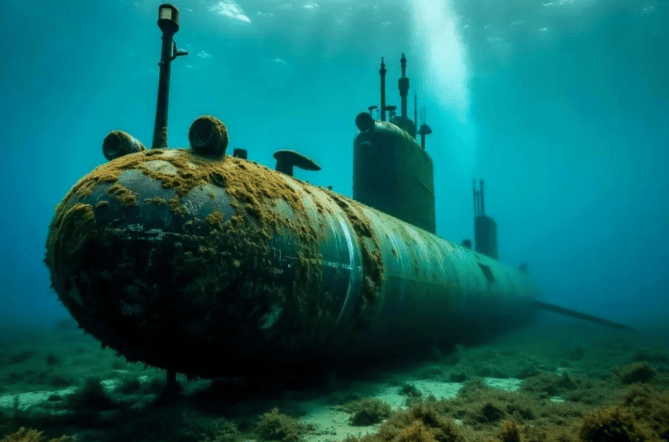
The Radioactive Silence of 'Komsomolets': Russian Scientists Debunk Arctic Plutonium Threat Myth – But Norwegians Detect Leakage.
Experts from the Norwegian Radiation and Nuclear Safety Authority have reached a different conclusion. In March 2026, they published multi-year monitoring data indicating that the hull of the 'Komsomolets' indeed has leaks – but not in the expected locations. Using the 'Ægir 6000' deep-sea submersible, researchers recorded periodic releases of radioactive material in the area of ventilation pipes and the reactor compartment.
In water samples taken directly adjacent to the submarine, the levels of strontium and cesium exceeded background values by hundreds of thousands of times. The isotopic ratios of uranium and plutonium indicate active corrosion of the reactor core fuel. However, just a few meters away from the submarine, the concentration of radionuclides drops to safe levels, and benthic organisms – sponges, corals, and sea anemones – show no visible damage.
The difference in conclusions stems from the different subjects of study. Russian scientists examined bottom sediments where plutonium could accumulate over years and found no anomalies. The Norwegians sampled directly from water leaking from the hull, recording instantaneous releases that are quickly diluted in the ocean.
For both sides, the greatest concern does not come from the 'Komsomolets,' but from the waters north of Novaya Zemlya. It is in the area of the former Soviet nuclear test site that the highest concentrations of plutonium-239+240 were recorded – up to 2314±178 millibecquerels per kilogram of dry soil. Isotopic analysis shows that 87% to 98% of this plutonium is a legacy of global atmospheric nuclear tests in the mid-20th century, with a small portion originating from radioactive waste dumping in the Irish Sea.
Scientists have discovered a stable correlation: the higher the organic carbon content in bottom sediments, the higher the plutonium concentration. This helps predict where radionuclides might be 'sequestered' in sediments and where they might migrate. For the Arctic, where ecological processes are tightly interwoven with global changes, these data form the basis for long-term monitoring.
International attention on the 'Komsomolets' has not waned. The Norwegian government has announced a tender for complex criticality calculations and environmental impact assessments of this submarine, as well as the sunken K-27 submarine and the SHELF-M microreactor. Scientists from both sides agree on one point: the hull of the 'Komsomolets' will continue to degrade, and the situation requires ongoing observation.
This article is compiled by Wedoany. All AI citations must indicate the source as "Wedoany". If there is any infringement or other issues, please notify us promptly, and we will modify or delete it accordingly. Email: news@wedoany.com