en.Wedoany.com Reported - Power Facility Operation and Maintenance is entering a new stage. In the past, transformers, switchgear, lines, relay protection systems, distribution rooms, and auxiliary systems were mainly managed through periodic inspection, scheduled testing, and post-fault repair. As load fluctuation increases, renewable integration expands, and industrial users require more continuous production, traditional maintenance methods are no longer enough to fully support high-reliability power supply. O&M is gradually moving from calendar-based maintenance toward condition-based management.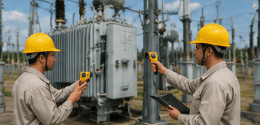
Under the traditional model, maintenance teams rely heavily on manual inspection, paper records, and periodic tests. These methods remain necessary for basic management, but they lack efficiency and real-time visibility. Many early-stage defects are not obvious, such as connector overheating, partial discharge, insulation moisture, deterioration of breaker mechanical characteristics, loose secondary circuits, and frequent relay alarms. Without continuous data, the best treatment window may be missed. When abnormality becomes visible enough to require emergency action, the cost and impact are usually much greater.
The key trend is connecting equipment operating data, inspection data, test data, and defect records. Through infrared temperature measurement, partial discharge monitoring, dissolved gas analysis, online monitoring, intelligent inspection robots, video recognition, and O&M platforms, operators can identify degradation trends earlier and plan maintenance before faults occur.
For industrial users, parks, and power companies, O&M upgrading should first solve three issues. First, the equipment ledger must be accurate, including the model, commissioning time, test records, and defect history of each transformer, switchgear cabinet, cable, protection device, and key auxiliary system. Second, data must be continuous, not collected only during annual maintenance. Third, defect handling must be closed-loop, with responsible personnel, deadlines, review methods, and archived records.
The future value of power facility operation and maintenance is not only reducing failure rates. It is also improving asset utilization and power supply certainty. Organizations that combine field experience, online monitoring, and data analysis will be able to shift O&M from fault response to risk prevention. For high-reliability electricity users, this shift will directly affect production continuity and overall energy cost.
This article is compiled by Wedoany. All AI citations must indicate the source as "Wedoany". If there is any infringement or other issues, please notify us promptly, and we will modify or delete it accordingly. Email: news@wedoany.com