Wire and Cable Equipment Intelligence Depends on Full-Process Quality Traceability
en.Wedoany.com Reported - As demand grows for high-voltage cables, submarine cables, renewable energy cables, energy storage cables, and data communication cables, cable manufacturing is shifting from experience-based production toward digital quality control. The intelligence of Wire and Cable Equipment is not simply about adding screens or monitoring terminals to production lines. Its real value lies in building a complete data chain connecting raw materials, equipment parameters, process control, inspection results, and product batches.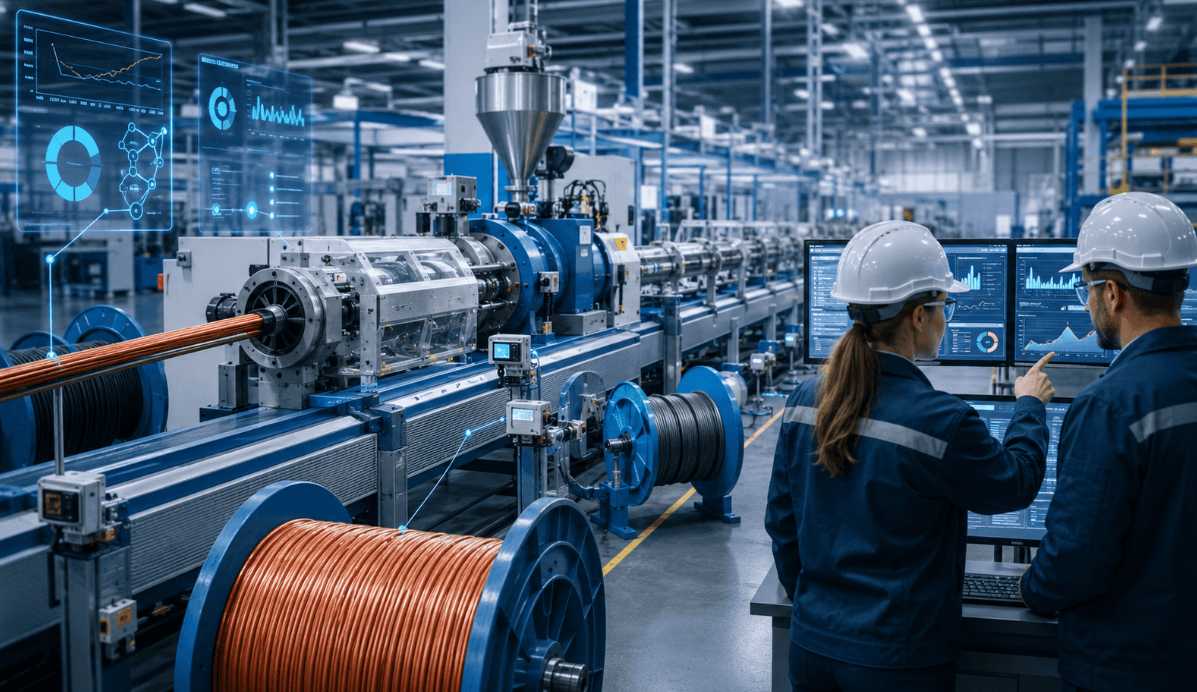
Cable quality problems are often hidden. A cable may appear qualified at delivery, but small defects in conductor structure, insulation eccentricity, sheath thickness, crosslinking quality, shielding continuity, or partial discharge control may only become visible after years of operation. In high-voltage transmission, renewable step-up stations, offshore wind, data centers, and critical industrial loads, a cable failure can be difficult to locate, costly to repair, and highly disruptive. For this reason, cable manufacturing cannot rely only on final inspection. Quality control must move forward into the entire production process.
The intelligent upgrading of wire and cable equipment should begin with controllable key process parameters. Drawing speed, annealing temperature, stranding tension, extrusion pressure, extrusion temperature, cooling speed, traction speed, outer diameter deviation, spark testing, partial discharge testing, and final withstand-voltage testing should all enter a unified data system. Only when these data are recorded continuously can manufacturers determine whether a quality issue comes from material fluctuation, equipment condition, process parameters, or operator deviation.
Many cable manufacturers have started to deploy MES systems, online inspection systems, and smart warehousing. The real challenge is whether the data can be used effectively. Some companies collect large amounts of data, but equipment systems, inspection systems, and warehouse systems remain disconnected, so traceability still relies on manual experience. A stronger approach is to bind every cable drum and every batch of conductor, insulation material, and inspection report, forming a closed loop from raw material entry to finished-product delivery.
For cable equipment suppliers and cable manufacturers, the ability to provide stable, efficient, and traceable production will be increasingly important for winning trust in high-end projects and overseas markets. Especially in high-voltage cables, submarine cables, renewable energy cables, and critical industrial power cables, customers are paying more attention to long-term operational safety rather than only factory test results.
Cable manufacturers upgrading equipment intelligence should start with three practical scenarios. The first is online quality control, focusing on outer diameter, eccentricity, partial discharge, spark testing, and withstand-voltage indicators. The second is equipment condition management, tracking main machine temperature, vibration, traction stability, and wear of key components. The third is quality traceability, archiving raw material, equipment, process, inspection, and shipment information in one system. The future value of wire and cable equipment is not only higher output. It is helping manufacturers move quality control from post-production inspection to controlled production processes.
This article is compiled by Wedoany. All AI citations must indicate the source as "Wedoany". If there is any infringement or other issues, please notify us promptly, and we will modify or delete it accordingly. Email: news@wedoany.com
Related Products

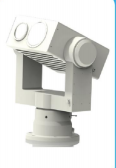
Forest and Grassland Heat Source Infrared Monitor
China Huayun Meteorological Technology Group Co., Ltd.
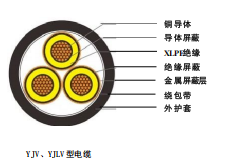
Rated Voltage 6-35kV Cross-linked Polyethylene Insulated Power Cable
TONGDING INTERCONNECTION INFORMATION CO., LTD.
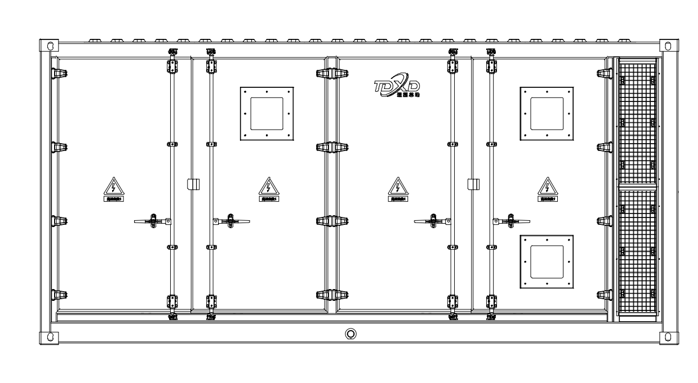
5012kWh DC Energy Storage System TD-EES-5012kWh
Suzhou Tongding Xindong Energy Storage Technology Co., Ltd.
G.652.D Wavelength-extended Non-dispersion Shifted Single-mode Optical Fiber
HONGAN GROUP CO., LTD.