Relay Protection Automation Upgrades Depend on Communication Reliability and Data Trustworthiness
Relay Protection Automation Upgrades Depend on Communication Reliability and Data Trustworthiness
en.Wedoany.com Reported - The more intelligent Relay Protection Automation becomes, the more it depends on communication reliability and data quality. In the past, relay protection relied more on local sampling, local judgment, and hard-wired contacts. Today, with the wider use of digital substations, intelligent terminals, merging units, and station-level systems, protection information, sampled values, status signals, and action reports increasingly depend on substation communication networks.
In engineering practice, many protection system problems are not caused by wrong protection algorithms, but by communication links, time synchronization, data consistency, or configuration file management. Abnormal sampled-value transmission may affect protection judgment. Inaccurate time synchronization may weaken fault record analysis. Inconsistent device configuration may prevent correct data interpretation. Insufficient communication redundancy may magnify risk during abnormal conditions. For this reason, relay protection automation should not focus only on protection devices. Communication systems, clock systems, and data management must be treated as equally important.
In digital substations, interoperability and information modeling under the IEC 61850 framework provide a stronger foundation for system integration. However, standardization does not automatically mean reliability. Project teams still need strict management of SCD files, device versions, communication testing, GOOSE message verification, sampled-value checking, and cybersecurity boundaries. The more complex a digital system becomes, the more easily configuration risks can be amplified.
A sound practice is to make communication reliability and data trustworthiness key parts of relay protection automation acceptance. In addition to conventional protection action tests, projects should strengthen communication redundancy testing, time synchronization verification, data-flow checking, abnormal message handling, network storm protection, and access control testing. For operators, this should not be a one-time commissioning check. Long-term configuration change management and data quality management are also required.
The future upgrade of relay protection automation is not only about faster protection action or more intelligent functions. It is about keeping protection systems trustworthy, verifiable, and traceable in complex communication environments. Only when communication is reliable, data is accurate, and configuration is clear can relay protection automation truly support secure grid operation.
This article is compiled by Wedoany. All AI citations must indicate the source as "Wedoany". If there is any infringement or other issues, please notify us promptly, and we will modify or delete it accordingly. Email: news@wedoany.com
Related Products

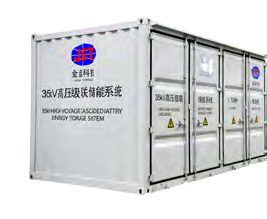
6kV-35kV Medium and High Voltage Direct-Connected Energy Storage System
Hainan Jinpan Smart Technology Co., Ltd.

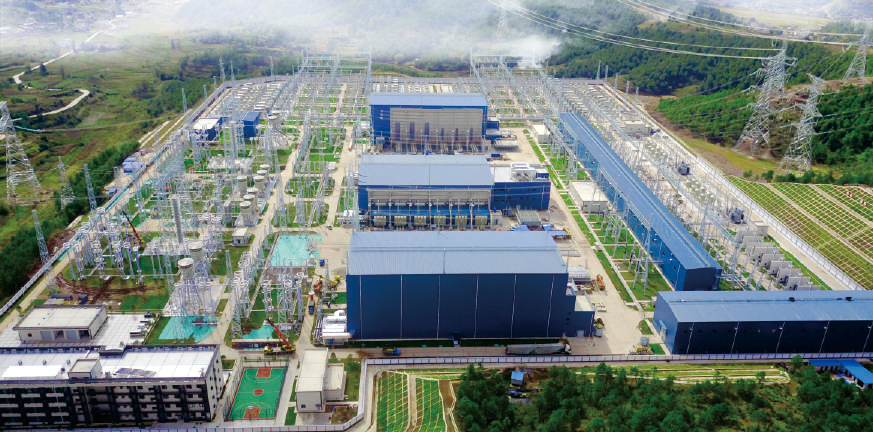
High-voltage Direct Current (HVDC) Transmission System Research and Integrated Design
XI'AN XD POWER SYSTEMS CO., LTD.
TAI Slew-drive Single-axis Independent 1P Tracking Bracket System
ANTAI TECHNOLOGY CO., LTD.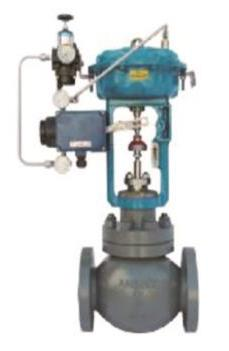
Quick-Change Single-Seat Control Valve / Quick-Change High-Pressure Single-Seat Control Valve
Beijing Consen Automation Technology Co., Ltd.
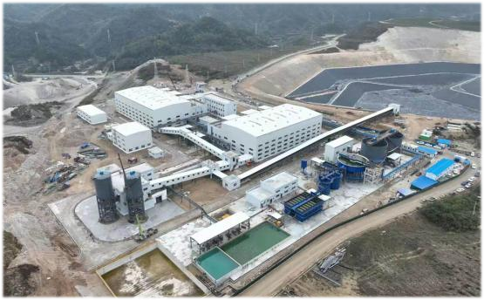
Yingping Mining Section Open-pit Tailings Backfill Treatment of Goaf Ecological Restoration EPC Project
China Bluestar Lehigh Engineering Corporation
Electromagnetic Fluid Seawater Floating Oil Separation and Recover Equipment
Huate Magnet Group Co., Ltd.