Li Auto Launches AutoNavi's In-Car Travel AI Agent, Four Major Features Elevate Navigation from Tool to Butler
en.Wedoany.com Reported - On April 21, Li Auto released an official poster, announcing it is the world's first automaker to integrate AutoNavi's In-Car Travel AI Agent, marking a deep collaboration between the two parties in the field of intelligent travel interaction. AutoNavi Map pre-released a product promotional video for this AI Agent on April 19, highlighting its core capabilities in complex intent understanding, multi-point route planning, and dynamic route adjustment. This intelligent agent, built upon AutoNavi's spatial data and large model technology, breaks through the passive response mode of traditional navigation, enabling proactive perception, prediction, and execution of travel services.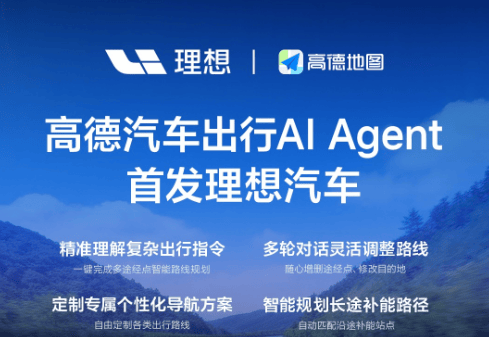
The AI Agent from this collaboration focuses on four major functional directions. It precisely parses complex travel instructions, capable of recognizing vague, colloquial multi-dimensional travel needs. For example, natural language commands like "drop the child off at school first, then go to the office, and get gas on the way" can be automatically decomposed into multi-waypoint routes. It supports multi-turn dialogue for dynamic route optimization, allowing real-time responses during driving to changes in destination or route preference adjustments. The system generates congestion-avoidance solutions in real-time after users add/remove waypoints or modify destinations via voice. It customizes personalized navigation plans, generating exclusive routes based on user driving habits and travel scenarios. It intelligently plans long-distance energy replenishment routes, matching optimal charging and energy replenishment points for new energy vehicle models, and intelligently planning range solutions by combining real-time traffic conditions and charging station locations. Future features will be gradually rolled out to new-generation models via OTA updates.
Li Auto had previously self-developed the VLA Driver AI Large Model. In 2025, Li Auto unified spatial understanding, language understanding, and action decision-making within the same model framework, constructing the VLA Driver Large Model based on three core technology stacks: VLA, World Model, and Reinforcement Learning. It was officially pushed with the delivery of the Li i8 in August and fully rolled out to AD Max users in September. By the end of 2025, the VLA Driver Large Model achieved an 80% monthly usage rate, with VLA commands used a cumulative 12.254 million times. During the Spring Festival period, the assisted driving total mileage reached 250 million kilometers. In March 2026, Li Auto unveiled its next-generation autonomous driving foundational model, MindVLA-o1, at NVIDIA GTC 2026. Centered on a native multimodal MoE Transformer architecture, it established a foundational model for physical world intelligence in autonomous driving through five technological innovations: 3D spatial understanding, multimodal reasoning, unified action generation, closed-loop reinforcement learning, and hardware-software co-design. Zhan Kun, Head of Li Auto's Foundational Model, stated that based on the same VLA model framework, it can not only control vehicles but also extend to robotics, with autonomous driving being just the starting point for physical AI.
Since August 2025, AutoNavi Map has fully pivoted to a "Spatial Intelligence" strategy. The 2025 version of AutoNavi Map introduced the industry's first AI-native intelligent agent dedicated to travel life, "Teacher Xiao Gao". It enables intuitive interaction with users based on multimodal inputs like vision, audio, and text, and globally dispatches nearly a hundred internal AutoNavi tools for processing. AutoNavi Map CEO Guo Ning expressed the hope of propelling AI from a "conversation tool" to an "action partner". Within one month of its launch, the daily call volume for "Teacher Xiao Gao" exceeded 1.2 billion, with active users surpassing 400 million. At the 2025 Apsara Conference, AutoNavi Map Chairman Liu Zhenfei pointed out that over two decades of accumulated dynamic understanding of people, vehicles, roads, and shops constitutes the most scarce "real-world soil" in the AI era. AutoNavi is responsible for handling the "complexity of the world," allowing partners to focus on their own innovations.
The current competition in smart cockpits is shifting from basic feature comparisons to scenario-based AI service competition. AutoNavi, Baidu, Tencent, and NavInfo are the core players in the in-car map field. AutoNavi Map leads in the number of partnered brands and models, covering mainstream brands like Geely, Great Wall, NIO, XPeng, Li Auto, Xiaomi, and Harmony Intelligent Mobility. Baidu Map has gained significant overall installation volume through partnerships with automakers like Tesla. Tencent Map's collaborations, such as with SAIC Volkswagen, are also noteworthy. NavInfo maintains long-term cooperative relationships with BMW, Mercedes-Benz, Volvo, etc. Li Auto is accelerating the improvement of its cockpit AI ecosystem through a dual-path approach of "in-house R&D + collaboration". The introduction of AutoNavi's Travel AI Agent aims to address shortcomings in intelligent interaction for professional travel scenarios, making Li Auto the first automaker to upgrade in-car navigation from a "tool" to a "travel butler".
This article is compiled by Wedoany. All AI citations must indicate the source as "Wedoany". If there is any infringement or other issues, please notify us promptly, and we will modify or delete it accordingly. Email: news@wedoany.com
Related Products



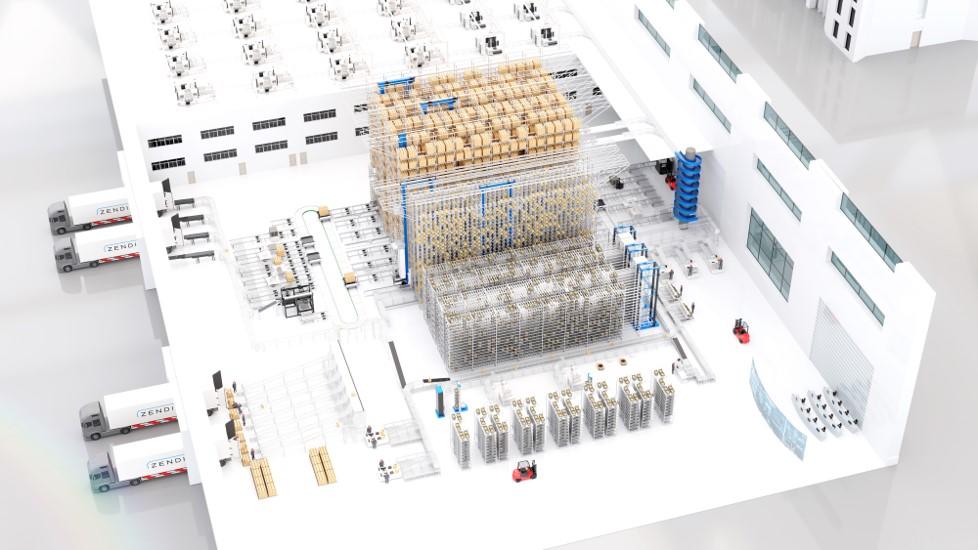
One-Stop Steward Service for the Entire Logistics System Integration Chain
Zhongding Intelligent (Wuxi) Technology Co., Ltd.

20 Inch 1600*900 Full HD 60Hz TFT LED Monitor with VGA and DP Interfaces for Desktop Computers-Business Use
Guangzhou Zanying Optoelectronics Technology Co., Ltd.
Automatic Aiming Laser Remote Obstacle Removal Robot
Pinggao Group Weihai High-Voltage Apparatus Co., Ltd.
TWP16 P-Band Tropospheric Wind Profile Radar
China Huayun Meteorological Technology Group Co., Ltd.
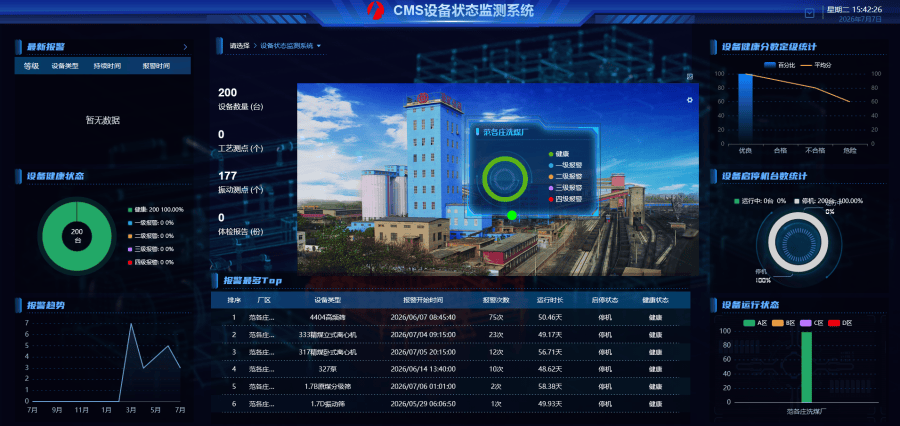

Conveyor Belt Intelligent Monitoring System
LUO YANG WIRE ROPE INSPECTION TECHNOLOGY CO., LTD.
Multi-function Marine Monitoring Low-altitude Detection Radar Sea-air Boundary Ocean Dynamic Environment Measurement
Chengdu Dixin Technology Co., Ltd.