Intel Officially Proposes the "Agent PC" Concept, Adopting a Hybrid Architecture of Local Assistant Brain and Cloud Main Brain
en.Wedoany.com Reported - Intel officially unveiled the "Agent PC" concept in Beijing on April 21st. This product is a new generation of AI PC optimized for running AI agents, adopting a hybrid "local assistant brain + cloud main brain" architecture. The assistant brain's capabilities are formed by local AI and small-to-medium models on the PC side, while the main brain collaborates with remote AI and large models. Sensitive tasks are processed locally, and high-capability tasks are invoked from the cloud on-demand. The product form factor covers all scenarios, including thin and light notebooks, Mini PCs, all-in-ones, AI Boxes, AI NAS, and edge gateways. This move marks a new stage of client-side AI evolution driven by agents, following Intel's initial proposal of the "AI PC" concept in 2023.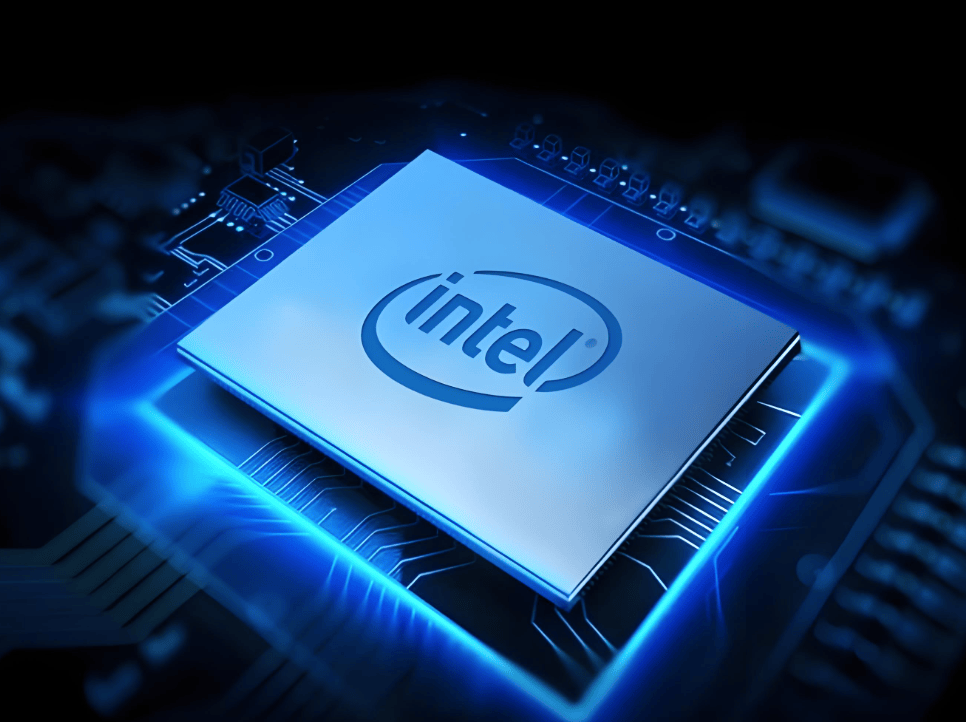
The core value of the hybrid architecture lies in achieving a balance between performance, privacy, and cost. The Agent PC centers around a local agent, equipped with memory, autonomous learning, and iterative evolution capabilities, enabling efficient execution of AI tasks while fully protecting user data privacy. Leveraging the local computing power of Core Ultra and Core processors, a single Agent PC can run open-source agents like OpenClaw, offloading most intermediate inference, task planning, and result summarization workloads to the terminal device, retaining only necessary cloud interaction links. This significantly reduces comprehensive computing costs and data upload risks. Intel has already optimized OpenClaw on the Agent PC, employing a hybrid execution method to maximize privacy protection while retaining full agent functionality.
Hardware configurations cover three tiers from flagship to entry-level. The flagship configuration features the 3rd Gen Intel Core Ultra X processor and 32GB+ memory, capable of smoothly running large language models like Qwen3.5(35B), Gemma4(26B), and complex multimodal models like Qwen3-VL. The mainstream configuration utilizes 3rd Gen Intel Core Ultra 8-core or 16-core processors with 16GB+ memory, efficiently running medium-sized language models like Qwen3.5(9B or 4B), and supporting applications such as text-to-image and text-to-audio. The entry-level configuration opts for 3rd Gen Intel Core processors, with 12GB memory sufficient to support lightweight models like Qwen3.5(4B) and multimodal tasks like OCR and speech recognition. Combined with AI SSD technology, devices with 16GB memory can also run 35B-level large models, significantly reducing hardware specification dependencies for large model applications.
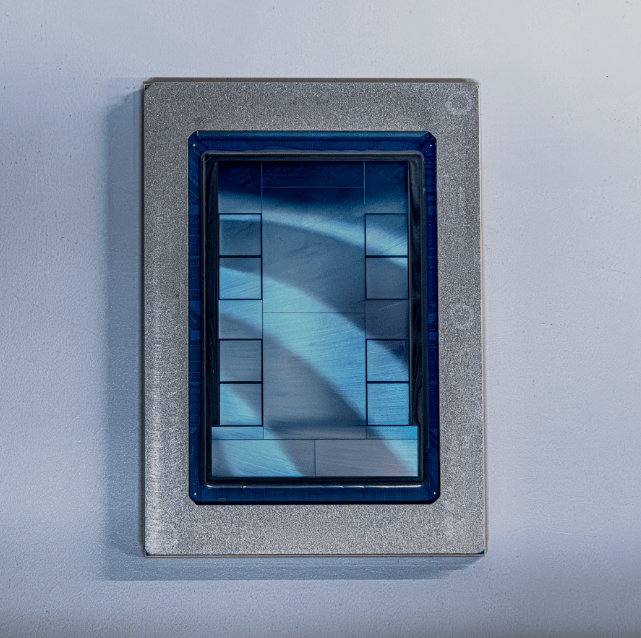
The 3rd Gen Intel Core Ultra processor serves as the computing foundation for the Agent PC. This processor integrates the 5th Gen Intel Neural Processing Unit (NPU), with independent NPU compute power reaching up to 50 TOPS. Combined with CPU and GPU, it forms an XPU heterogeneous computing matrix with 180 TOPS. Based on the Intel 18A process technology, the Core Ultra 3 series delivers a 1.9x performance improvement for large language models, a 2.3x improvement for end-to-end video analytics performance, and a 4.5x increase in throughput for vision-language-action models. Consumer laptops equipped with this processor began global sales on January 27, 2026, laying the hardware foundation for the large-scale adoption of Agent PCs.
For home scenarios, Intel launched the AI Box "Home AI Brain," constructing a hybrid intelligence architecture centered on local home computing power supplemented by cloud capabilities. The AI Box, deployed as a private AI center and smart hub in users' homes, strengthens home data protection at the architectural level, unifies the scheduling of different product devices and protocols, and combines local cameras with vision-language models to achieve emotion recognition and proactive care for family members and pets. Focusing on high-frequency application scenarios, Intel has collaborated with ecosystem partners like Tencent MyApp, StepFun, and Cherry Studio to launch over 20 AI demo applications, covering intelligent search, video quick editing, OCR recognition, and gaming assistance.
Yue Zeng Xiong, Vice President of Intel China Software Engineering and Client Products Division, stated that Intel is actively building an open application ecosystem around hybrid AI to truly serve users with AI technology. Gao Yu, General Manager of Intel China Technology Division, publicly endorsed the hybrid AI technology roadmap at the CFMS 2026 summit and collaborated with Phison and PC manufacturers including ASUS, MSI, and Acer on demo partnerships at the GTC 2026 exhibition. The evolution from "AI PC" to "Agent PC" signifies Intel's push of AI capabilities from "tool enhancement" to a new stage of "intelligent partner," leveraging its global PC industry ecosystem to drive the large-scale adoption of AI agents.
This article is compiled by Wedoany. All AI citations must indicate the source as "Wedoany". If there is any infringement or other issues, please notify us promptly, and we will modify or delete it accordingly. Email: news@wedoany.com
Related Products


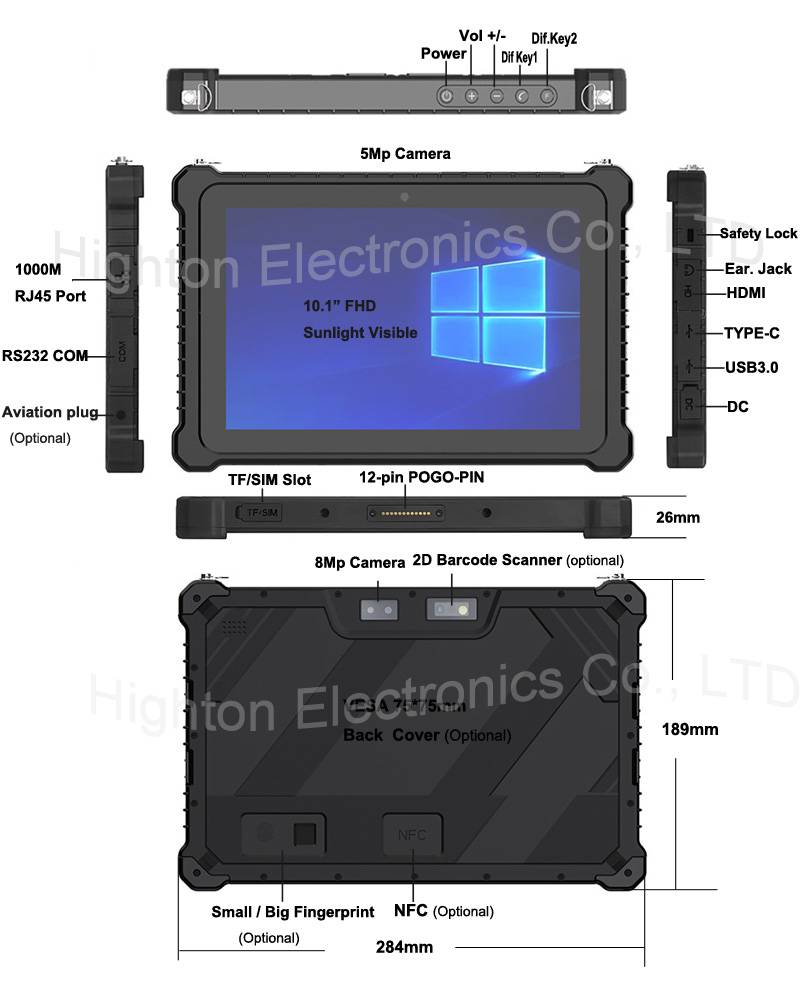
Hot Selling 10 Inch Intel N5100 I5 I7 FHD 8 +128GB 16+256GB Win10 Pro Win11 Pro 4G 5G Rugged Tablet PC Pad with NFC Barcode
Highton Electronics Co., Ltd.
Conveyor Belt Intelligent Monitoring System
LUO YANG WIRE ROPE INSPECTION TECHNOLOGY CO., LTD.
Mine Explosion-proof and Intrinsically Safe Industrial Ethernet Ring Network (10 Gigabit/Gigabit)
Chongqing Mas Sci&Tech Co., Ltd.

MUX Series Communication Interface Device for Security and Stability Control System
Nanjing NR Electric Co., Ltd.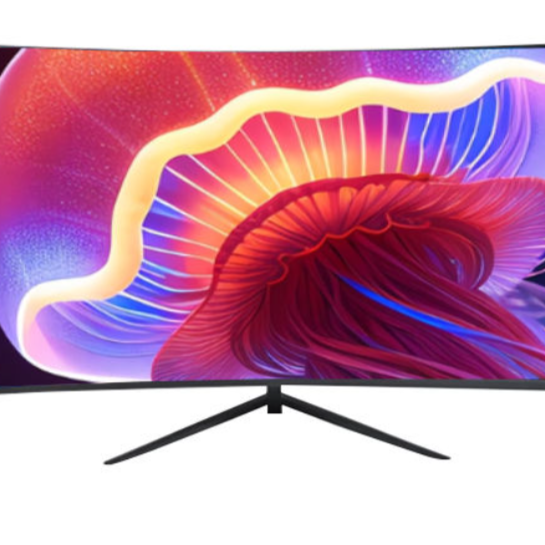
20 Inch 1600*900 Full HD 60Hz TFT LED Monitor with VGA and DP Interfaces for Desktop Computers-Business Use
Guangzhou Zanying Optoelectronics Technology Co., Ltd.
One-Stop Steward Service for the Entire Logistics System Integration Chain
Zhongding Intelligent (Wuxi) Technology Co., Ltd.