US-based Astera Labs Launches Scorpio X Series 320-Channel Switch, Delivering 5.12Tb/s Bandwidth on a Single Chip to Accelerate AI Clusters
en.Wedoany.com Reported - US-based Astera Labs officially announced on May 5, 2026, in San Jose, California, that its Scorpio X Series 320-channel intelligent optical fabric switches have begun shipping to hyperscale cloud service providers and AI labs, with volume production ramp-up planned for the second half of 2026. A single ASIC in this series integrates 320 PCIe 6 lanes, delivering 5.12 Tb/s of bidirectional bandwidth, targeting the GPU idle time problem caused by fragmented communication in large clusters during trillion-parameter large model training and agentic inference scenarios.
Astera Labs CEO Jitendra Mohan stated in the official press release that the company is working closely with customers to expand design-ins around the Scorpio X Series and the expanded P Series, investing in rack-level AI technology to capture upcoming opportunities.
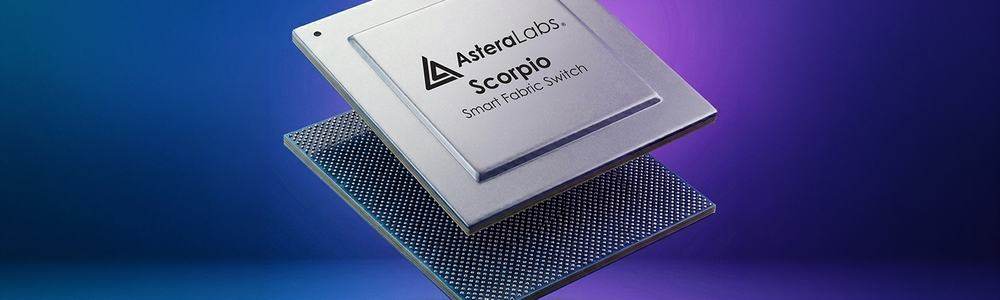
Traditional PCIe switches typically serve only as data path components, but the core distinction of the Scorpio X Series lies in its introduction of a memory-semantic architecture. This architecture allows GPUs and other AI accelerators to directly access shared resources across the entire switch network using native load/store instructions, enabling remote data reads and writes without CPU intervention and eliminating the overhead associated with traditional software protocol stacks. For inference scenarios like Mixture-of-Experts models that require large-scale parameter routing, this feature helps alleviate underutilization caused by GPUs waiting for data synchronization.
The Scorpio X Series is also equipped with a hardware-accelerated Hypercast multicast engine and an in-network computing engine. Hypercast is a lightweight multicast mechanism specifically developed by Astera Labs for Mixture-of-Experts model inference scenarios. It supports pre-configurable multicast groups, distributing data to GPU nodes within the cluster with deterministic low latency, overcoming the bottlenecks of limited capacity and slow configuration response in traditional multicast groups. The in-network computing engine offloads collective operations such as all-reduce and all-to-all from GPUs to the switch hardware for execution. The company disclosed that collective communication performance can be improved by up to 2x, directly enhancing key metrics like Time-to-First-Token and tokens-per-Watt.
Matt Kimball, Vice President and Principal Analyst at Moor Insights & Strategy, pointed out that the mismatch between the architectural assumptions of current AI clusters and actual workloads is becoming a major bottleneck for AI infrastructure efficiency. Cutting-edge training and inference workloads are not continuously running but frequently branch, pause, wait for data, or make external calls. By introducing memory semantics and in-network computing, the switch effectively bridges the gap between cluster design and workload behavior. Brendan Burke, Research Director at Futurum, further quantified this effect: a roughly 49% reduction in collective IO means GPUs spend more time on actual computation, directly translating into better tokens-per-Watt efficiency and faster model iteration cycles at hyperscale nodes.
Expanding alongside the Scorpio X Series is the Scorpio P Series PCIe optical fabric switch product line. This series covers multiple configurations ranging from 32 to 320 lanes, allowing data center architects to flexibly select based on accelerator types and topology requirements. It extends coverage to various interconnect protocols including CXL, Ethernet, NVLink Fusion, and UALink, enabling unified deployment across diverse GPU and custom AI chip platforms. The accompanying COSMOS software platform provides unified management covering optical fabric switches, copper interconnects, and optical solutions, offering features such as device management, firmware updates, and real-time telemetry. Astera Labs will showcase the Scorpio X Series and its PCIe 6 optical expansion solutions at Computex 2026, held in Taipei from June 2 to 5, where it will also conduct the industry's first PCIe 6 optical interconnect demonstration.
Astera Labs also announced its first quarter 2026 financial results on the same day, reporting quarterly revenue of $308.4 million, a 14% sequential increase and a 93% year-over-year increase, with PCIe 6 product portfolio revenue already accounting for over one-third of total revenue.
This article is compiled by Wedoany. All AI citations must indicate the source as "Wedoany". If there is any infringement or other issues, please notify us promptly, and we will modify or delete it accordingly. Email: news@wedoany.com
Related Products


G.652.D Wavelength-extended Non-dispersion Shifted Single-mode Optical Fiber
HONGAN GROUP CO., LTD.

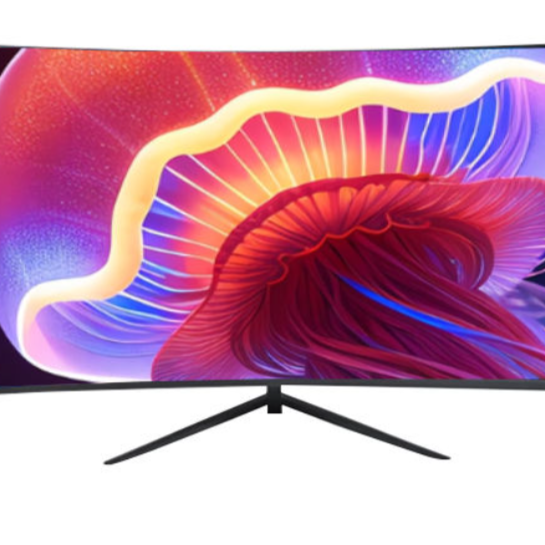
20 Inch 1600*900 Full HD 60Hz TFT LED Monitor with VGA and DP Interfaces for Desktop Computers-Business Use
Guangzhou Zanying Optoelectronics Technology Co., Ltd.
Multi-function Marine Monitoring Low-altitude Detection Radar Sea-air Boundary Ocean Dynamic Environment Measurement
Chengdu Dixin Technology Co., Ltd.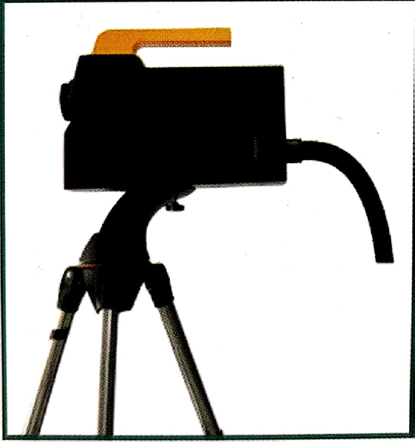
Automatic Aiming Laser Remote Obstacle Removal Robot
Pinggao Group Weihai High-Voltage Apparatus Co., Ltd.