Global Iron Ore Exports Totaled 29.3 Million Tonnes, Up 16.1% Week-on-Week
en.Wedoany.com Reported - Global iron ore export shipments saw a significant rebound in the first week of May. According to BigMint data, total exports reached 29.3 million tonnes in the week ending May 7, a week-on-week increase of 16.1% from 25.3 million tonnes the previous week. This rebound was primarily driven by increased loading volumes from Australia and Brazil, where improved local weather conditions, better cargo supply, and enhanced mining operational efficiency collectively accelerated the shipping pace. The Atlantic route also remained supportive, with a notable increase in Peruvian exports, while South Africa experienced some slowdown in exports due to logistics bottlenecks related to Transnet.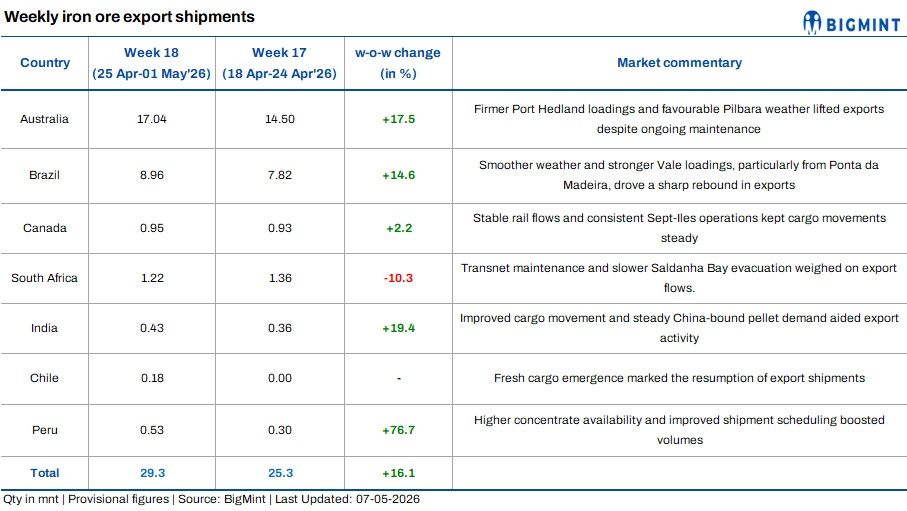
Looking at individual countries and ports, Australia's Port Hedland handled 10.9 million tonnes during the week, with Port Walcott and Port Dampier contributing 3.1 million tonnes and 2.7 million tonnes, respectively. Among major miners, Rio Tinto exported 5.8 million tonnes, BHP 5.5 million tonnes, and FMG 4 million tonnes. China was the top recipient with 14.6 million tonnes, while South Korea absorbed 1.4 million tonnes. From Brazil, Ponta da Madeira port shipped 3.3 million tonnes, Itaguai port 2.4 million tonnes, and Tubarao port 1.9 million tonnes; Vale exported 4 million tonnes, CSN shipped 4.4 million tonnes, with the Chinese market absorbing 4.9 million tonnes of that total. Canada's Sept-Îles port handled 800,000 tonnes, Guinea and the Nimba mining area combined exported 600,000 tonnes, while AMNS and IOC each shipped 200,000 tonnes. South Africa's Saldanha Bay port handled 1.1 million tonnes, Richards Bay port only 100,000 tonnes, with China and the UK each importing 200,000 tonnes. India's Paradip port completed 200,000 tonnes of shipments, Peru's San Nicolas and Matarani ports shipped 400,000 tonnes and 200,000 tonnes respectively, and Chile's Huasco port exported 200,000 tonnes during the week. Overall, the week's iron ore exports flowed to multiple destinations across Asia and Europe.
The dry bulk freight market also received a boost, with iron ore dry bulk freight rates strengthening week-on-week. The Pacific route was active, supported by increased Australian iron ore exports and stable Chinese demand, while the Atlantic route remained balanced due to improved Brazilian cargo availability. Increased chartering activity, more positive inquiry sentiment, and tight available capacity drove sentiment higher in the Capesize market, although charterers remained cautious, limiting the potential for more substantial gains. Industry insiders expect global iron ore export shipments to maintain a steady trend in the short term, with loading activities from Australia and Brazil providing fundamental support, though port maintenance and logistics bottlenecks remain important variables for observing cargo flow changes. On the freight rate side, market sentiment for dry bulk freight rates is likely to remain cautiously optimistic, while fuel price fluctuations and Chinese steel demand trends will be key areas of focus going forward.
This article is compiled by Wedoany. All AI citations must indicate the source as "Wedoany". If there is any infringement or other issues, please notify us promptly, and we will modify or delete it accordingly. Email: news@wedoany.com
Related Products


Industrial and Commercial Point-Type Gas Detector
Jinan Benan Technology Development Co., Ltd.
CITIC Heavy Industries Metallurgical Equipment Steel Smelting Engineering Equipment
CITIC Heavy Industries Co., Ltd.

Mine Explosion-proof and Intrinsically Safe Industrial Ethernet Ring Network (10 Gigabit/Gigabit)
Chongqing Mas Sci&Tech Co., Ltd.
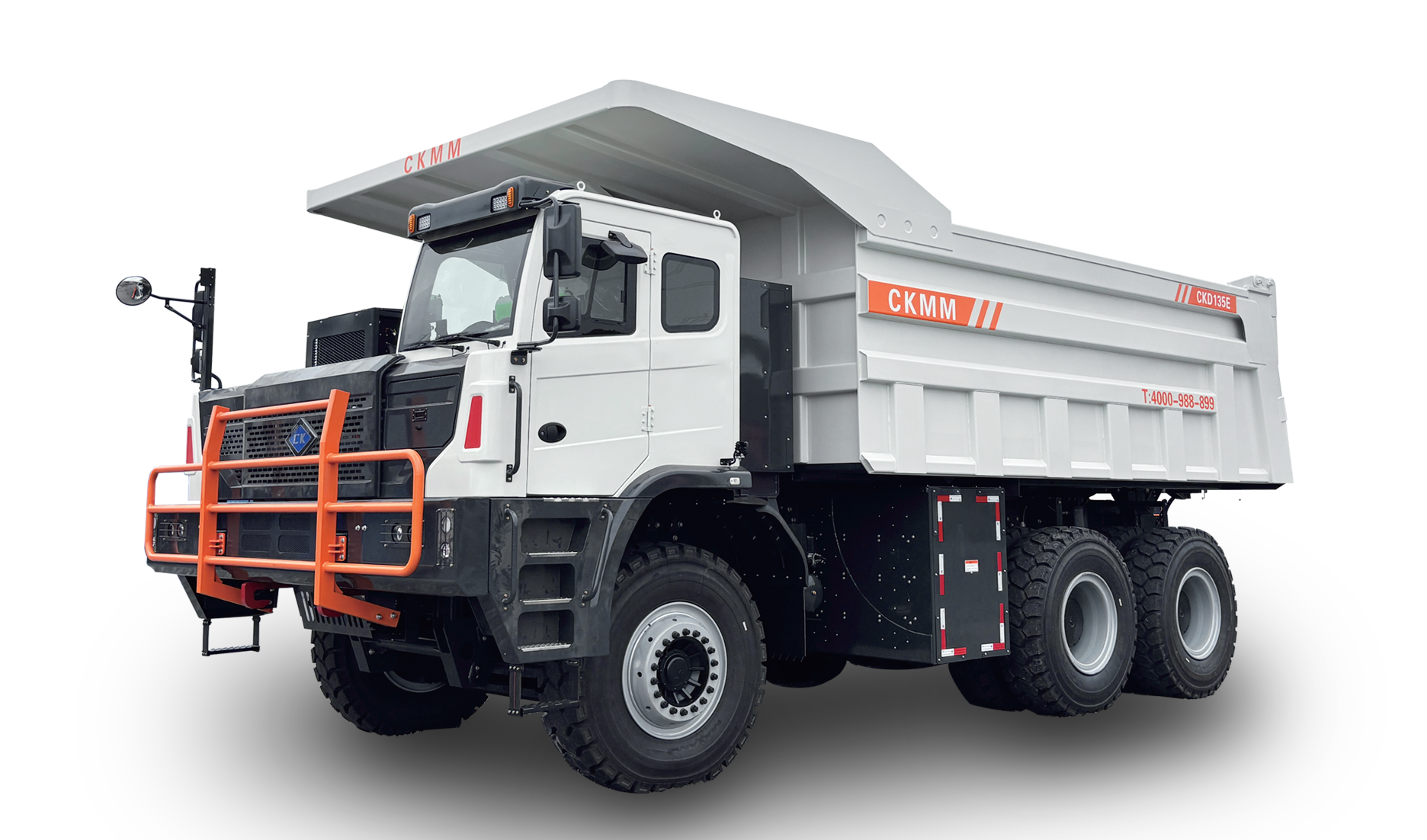
CKD135E Pure Electric Wide-body Dump Truck
Jiangsu Changkuang Engineering Machinery Co. Ltd.
Comprehensive Mining Automation Control System
Beijing Tianma Intelligent Control Technology Co., Ltd.