en.Wedoany.com Reported - The Netherlands and Belgium recently signed a memorandum of understanding aimed at deepening cooperation between the two countries in the field of nuclear energy, promoting knowledge exchange, and building a stronger supply chain. The memorandum was signed by Belgian Federal Energy Minister Mathieu Bihet and Dutch State Secretary for Climate and Green Growth Joanne Debaat during the Belgium-Netherlands Nuclear Energy Summit.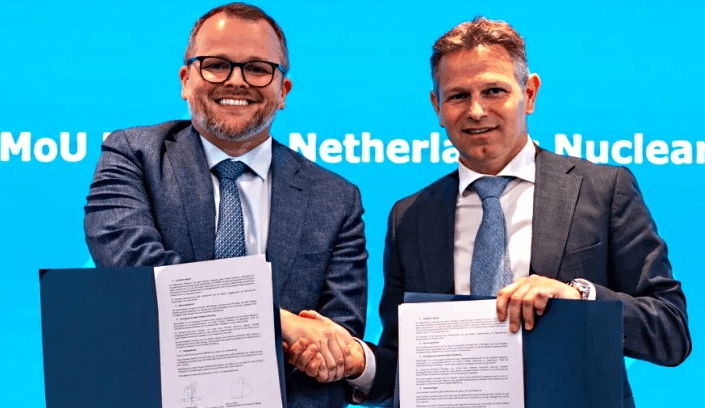
According to the memorandum, the two countries will establish a broader R&D base and strengthen knowledge exchange, holding regular meetings. As Belgium has a larger number of operating nuclear power plants, the Netherlands can benefit from its existing industrial knowledge and application experience; while the Netherlands will share its accumulated knowledge in the construction of new nuclear power plants and the development of small modular reactors (SMRs), including areas such as nuclear power plant siting studies, licensing approvals, process flows, and components.
The two countries will also establish innovation missions, inviting companies and knowledge institutions operating in the Netherlands and Belgium to participate, with governments encouraging inter-company cooperation as much as possible. In terms of talent development, the two countries plan to enhance the knowledge and skills of nuclear energy industry professionals through joint training programs and other means. It is estimated that the peak construction period of a nuclear power plant will involve approximately 10,000 employees, with an average of about 5,000 employees needed throughout the entire construction process. Furthermore, the two countries also committed to jointly seeking solutions for radioactive waste management, storage, and final disposal.
Bihet stated: "Future European nuclear energy projects require a strong value chain, a high level of expertise, and close cooperation between countries, research centers, and industry. Belgium and the Netherlands possess recognized expertise and wish to work together to contribute to building a stronger, more innovative, and independent European nuclear energy ecosystem."
Debaat pointed out that the Netherlands is currently at a critical juncture, planning to enhance its energy independence by increasing the share of nuclear energy in its energy mix. "Cooperation with Belgium can inject the necessary momentum into our common goals, strengthening not only the nuclear energy sector but also contributing to broader European development."
The signing of this cooperation comes at a time of significant shifts in the nuclear energy policies of both countries. Last May, the Belgian Federal Parliament voted overwhelmingly to repeal a 2003 law that phased out nuclear power and banned the construction of new nuclear plants. A final agreement was reached last December for the Doel 4 and Tihange 3 units, originally scheduled for closure, to continue operating for another 10 years. In late April, the Belgian government announced it had begun negotiations to directly own the country's seven nuclear power plants, with all decommissioning and dismantling work suspended.
On the Dutch side, the new coalition government formed in December 2021 placed nuclear energy at the core of its climate and energy policy. In addition to extending the operation of the Borssele nuclear power plant, it also plans to build two new reactors, expected to be completed around 2035, each with a capacity of 1000 to 1650 megawatts, while also preparing for the future deployment of small modular reactors.
This article is compiled by Wedoany. All AI citations must indicate the source as "Wedoany". If there is any infringement or other issues, please notify us promptly, and we will modify or delete it accordingly. Email: news@wedoany.com