China's Hongxin Electronics to Build Large-Scale Token Factory in Wuxi, Initially Deploying 4 Huawei Ascend 384 Super Nodes
en.Wedoany.com Reported - China's AI computing power leader Hongxin Electronics, in partnership with Wuxi High-tech Zone, officially signed an agreement on May 15 to establish Jiangsu Province's first Huawei Ascend 384 super node computing cluster in Wuxi. Using this as the initial phase of infrastructure, Hongxin Electronics plans to build a large-scale "Token Factory" in Wuxi, which will become a new model for large-scale, high-performance "domestic chips, domestic models" computing clusters.
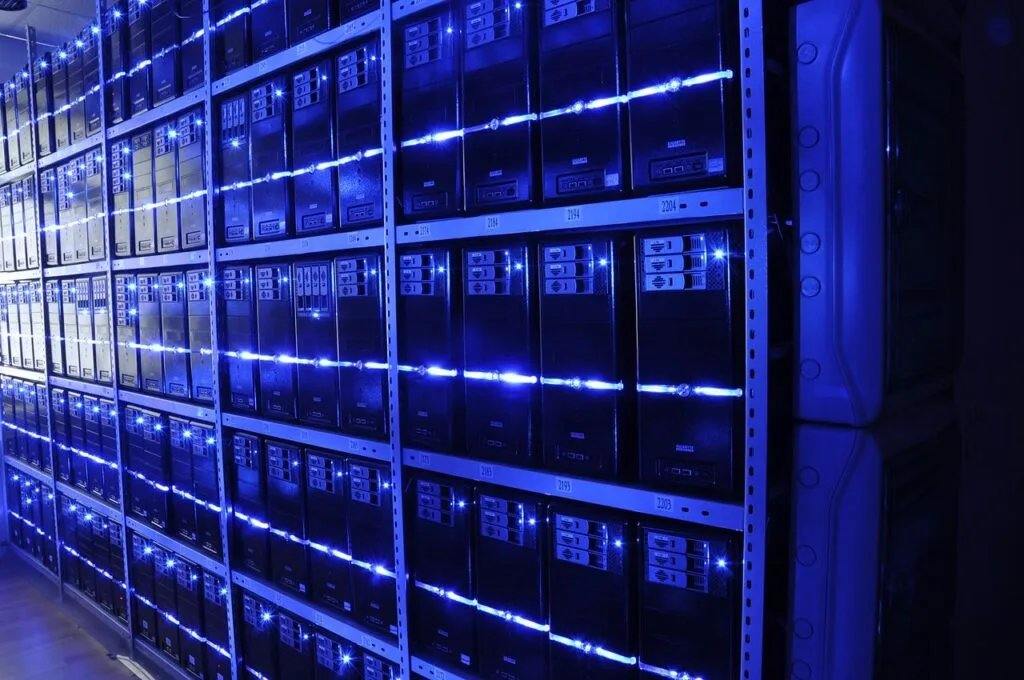
According to the project plan, the first batch will deploy 4 Huawei Ascend 384 super node servers. Each super node server has a computing power scale of 384 cards, and the 4 sets totaling 1,536 GPUs will be connected into a super cluster, with a single set delivering 215 PFLOPS of computing power. Hongxin Electronics stated that this scale is among the top in China's current market-facing "Token Factories." The factory will feature ultra-high computing density and high-speed interconnectivity, efficiently supporting core scenarios such as large model training and inference.
Li Qiang, Chairman of Hongxin Electronics, explained that a Token is the unit of measurement for AI, which can be understood as a "word element," and a Token Factory is an industrial production facility specifically producing the basic units of AI generation. The core of this factory lies in building a five-layer collaborative, large-scale production system of "Energy—Chips—Computing Power—Models—Applications." Through a "computing-electricity synergy" scheduling mechanism, it fully utilizes green energy from Western China to reduce the energy cost of Token output, while adhering to heterogeneous compatibility and domestic adaptation, using platform-based scheduling to improve the effective utilization rate of computing power, ultimately transforming Tokens precisely into deliverable industry capabilities.
As a leading computing power company listed on China's A-share market, Hongxin Electronics' revenue exceeded 7 billion yuan in 2025, with computing-related business accounting for nearly 40%, approximately 2.8 billion yuan. By the end of 2025, the company had cumulatively signed computing power orders worth 5.16 billion yuan, with 1.28 billion yuan already settled. The company stated that this signing marks a crucial step for Suihong Huachuang in the localization of AI computing power, and more importantly, signifies a major breakthrough for Wuxi in deeply implementing the national "East Data, West Computing" strategy and building a domestic computing power ecosystem.
The launch of the Token Factory coincides with a critical juncture of exponential growth in domestic AI computing power demand. Data from the National Data Administration shows that by March 2026, China's average daily Token call volume had exceeded 140 trillion, an increase of over 1,000 times compared to 100 billion at the beginning of 2024, and a growth of over 40% within three months compared to 100 trillion at the end of 2025. At the top-level design dimension, the computing power network has been included in the national "Six Networks" infrastructure system for the first time, alongside traditional infrastructure such as water networks and power grids.
Wuxi High-tech Zone is advancing the construction of its "6+2+X" modern industrial cluster at full speed, listing artificial intelligence as a key future industry and has formed a complete layout around the three critical links of computing power, models, and applications. The local area is fully committed to building the city's first specialized AI industrial park, the nation's first computing equipment industrial park, and other distinctive carriers, forming a support system of "computing power + platforms + scenarios." The project's placement in Wuxi will inject new momentum into the high-quality development of the AI industry in the Yangtze River Delta, becoming a major attempt and breakthrough in the implementation of the national "domestic chips, domestic models, domestic applications" strategy.
The innovation of this Token Factory model lies in its transcendence of the traditional computing power leasing model. Traditional models charge by time or space, whereas the Token Factory charges by intelligent units, directly delivering Tokens—the smallest basic unit of AI services—to users. CICC estimates that under a self-built computing power scenario, the theoretical gross margin of a Token Factory can reach 60%. Amid the global wave of the Token economy, Jensen Huang proposed at GTC 2026 that "the data center of the future is no longer a warehouse for storing files, but a factory for producing Tokens." The launch of the Wuxi project signifies that this vision is accelerating into tangible productive force in China.
This article is compiled by Wedoany. All AI citations must indicate the source as "Wedoany". If there is any infringement or other issues, please notify us promptly, and we will modify or delete it accordingly. Email: news@wedoany.com
Related Products


GYTA Type Non-Self-Supporting Aerial/Duct Optical Cable
TONGDING INTERCONNECTION INFORMATION CO., LTD.
Mine Explosion-proof and Intrinsically Safe Industrial Ethernet Ring Network (10 Gigabit/Gigabit)
Chongqing Mas Sci&Tech Co., Ltd.
Industrial and Commercial Point-Type Gas Detector
Jinan Benan Technology Development Co., Ltd.
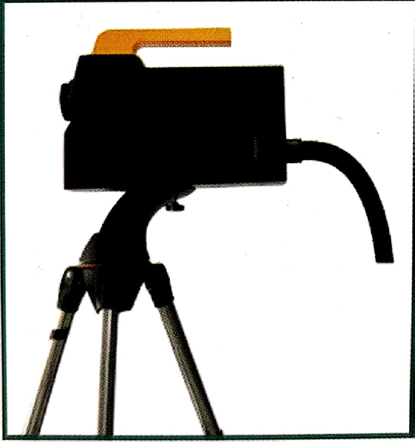
Automatic Aiming Laser Remote Obstacle Removal Robot
Pinggao Group Weihai High-Voltage Apparatus Co., Ltd.
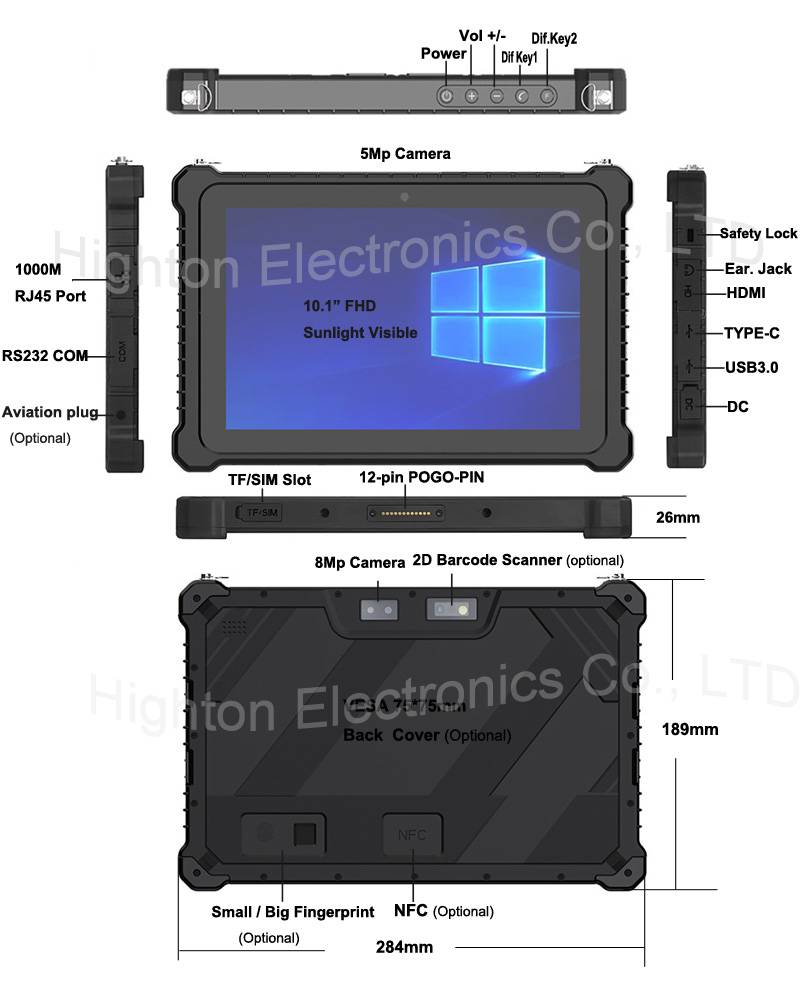
Hot Selling 10 Inch Intel N5100 I5 I7 FHD 8 +128GB 16+256GB Win10 Pro Win11 Pro 4G 5G Rugged Tablet PC Pad with NFC Barcode
Highton Electronics Co., Ltd.
G.652.D Wavelength-extended Non-dispersion Shifted Single-mode Optical Fiber
HONGAN GROUP CO., LTD.