China's Brainsmart Technology Completes Over $10 Million Angel Round Financing, Accelerating Development of Invasive Brain-Computer Interfaces and Neural Foundation Models
en.Wedoany.com Reported - Brain-computer interface (BCI) innovator Brainsmart Technology recently announced the completion of over $10 million in angel round financing, led successively by Kangjun Capital and BlueRun Ventures, with participation from Fosun Health Capital. The funds will be primarily directed towards product engineering, neural foundation model development, and the construction of GMP production facilities, aiming to systematically overcome the stability bottlenecks faced by invasive BCIs as they transition from the laboratory to real-world clinical applications.
Brainsmart Technology was founded under the leadership of Professor Chen Guoliang from the University of Hong Kong, established within the Advanced Biomedical Instrumentation Centre (ABIC) under the Hong Kong Innovation and Technology Commission's InnoHK initiative. Professor Chen concurrently serves as the Executive Director of ABIC and the Director of the University of Hong Kong's Central Cleanroom. ABIC, jointly established by the University of Hong Kong and the Harvard John A. Paulson School of Engineering and Applied Sciences, is one of the core translational institutions on the InnoHK platform, possessing a unique resource pool in biomedical instrument R&D and commercialization. This academic heritage endows Brainsmart Technology with multiple inherent advantages: world-class BCI engineering research capabilities, a dual intellectual property network covering both China and international markets, and deep experience in translating top-tier laboratory research into clinical practice.
One of the company's core technological pillars is its full-stack electrode R&D system, covering complete electrode configurations for both the brain surface and deep cortical interiors. Its high-density flexible ECoG thin-film electrodes are designed to achieve a precise balance between functionality and safety. The flexible substrate conforms to the surface topography of brain tissue, enabling high-channel neural signal acquisition while avoiding mechanical damage to the cortex. Another product line targets intracortical electrode arrays, aiming for neural signal decoding capabilities with higher spatial resolution, with target application scenarios including the precise reading and reconstruction of complex functions such as language and movement. In its recruitment channels, Brainsmart Technology describes its flagship μ-ECoG™ system as capable of achieving high-density, large-area brain signal decoding without the need for craniotomy. This flexible epidural electrode is compatible with magnetic resonance imaging, has been validated in large animal experiments, and is currently advancing through the U.S. FDA's Q-Sub process.
Neural foundation models represent the core differentiator distinguishing Brainsmart Technology from traditional hardware-focused BCI companies. The company's vision is not merely to provide electrode hardware, but to drive development through a dual-engine approach of "electrodes + models"—developing general-purpose foundation models capable of extracting movement intentions, language content, and emotional states from large-scale neural data. The technical logic of this path is analogous to the paradigm shift brought by large language models to natural language processing, with the difference being that the input data changes from text to cortical neural signals, and the output shifts from text generation to intention reconstruction and control command mapping. If successfully implemented, such models are expected to break the current siloed development model of "one task, one algorithm" in BCIs, reducing the algorithm development cycle for new indications through pre-training and fine-tuning, thereby shortening the clinical translation timeline from the source.
The construction of GMP production facilities is also included as a core allocation direction for this round of financing. Invasive BCIs are classified as Class III high-risk active implantable medical devices. The biocompatibility, sterilization processes, packaging reliability, and batch-to-batch consistency of electrode arrays must all be achieved under a strict quality management system. Establishing an in-house GMP cleanroom and forming a traceable, full-chain production capability is a necessary prerequisite for products to enter human clinical trials and subsequent regulatory registration and approval. Brainsmart Technology's deployment of GMP facilities at the angel round stage indicates that its endpoint is not merely a technological prototype demonstration, but that from day one, it operates with the full lifecycle compliance system of a medical device as its operational benchmark.
The year 2026 is regarded within the industry as a critical inflection point for the global BCI industry, shifting from academic exploration into an accelerated application phase. In China, BCIs have been included as one of the six key future industries in the "15th Five-Year Plan," with the formation of a top-level policy framework guiding the concentration of capital, talent, and regulatory resources towards this track. Brainsmart Technology's dual academic lineage from the University of Hong Kong and Harvard University, its full-stack electrode R&D system, its differentiated path of neural foundation models, and its strategic arrangement of deploying GMP facilities at the angel round stage, together provide it with a relatively complete early-stage capability puzzle among numerous BCI startups. Every step from the laboratory to the clinic will provide new footnotes for this assessment.
This article is compiled by Wedoany. All AI citations must indicate the source as "Wedoany". If there is any infringement or other issues, please notify us promptly, and we will modify or delete it accordingly. Email: news@wedoany.com
Related Products
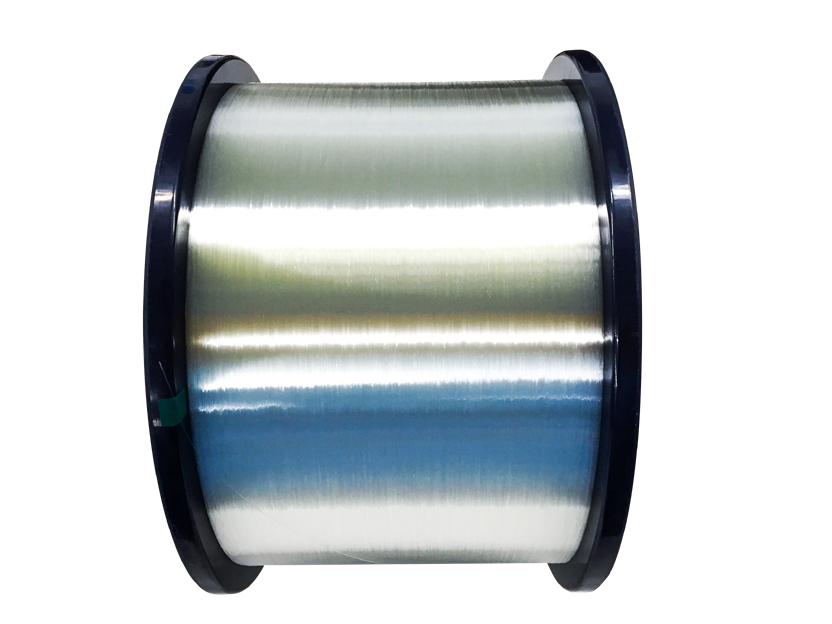


Automatic Aiming Laser Remote Obstacle Removal Robot
Pinggao Group Weihai High-Voltage Apparatus Co., Ltd.

Comprehensive Mining Automation Control System
Beijing Tianma Intelligent Control Technology Co., Ltd.

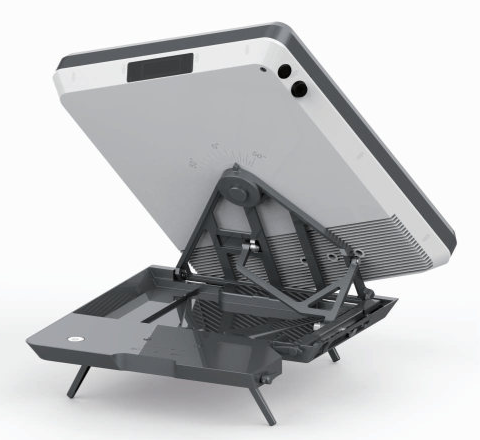
Flat Portable Satellite Terminal 0.35m Aperture Manual Portable Terminal
China Starwin Science & Technology Co., Ltd.

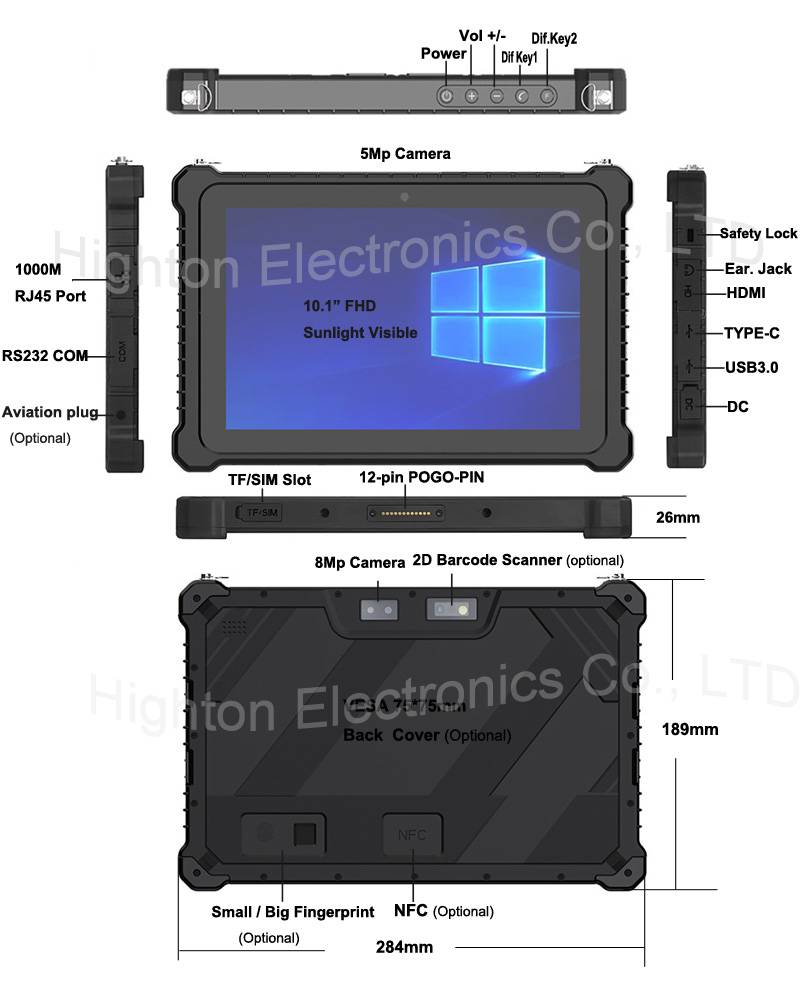
Hot Selling 10 Inch Intel N5100 I5 I7 FHD 8 +128GB 16+256GB Win10 Pro Win11 Pro 4G 5G Rugged Tablet PC Pad with NFC Barcode
Highton Electronics Co., Ltd.