US-based Dust Secures $40 Million Series B Funding, Advancing Enterprise AI from "Single-Player" to "Multiplayer Collaboration"
en.Wedoany.com Reported - Dust, an AI agent platform headquartered in San Francisco, USA, and Paris, France, officially announced on May 18 the completion of a $40 million Series B funding round. This round was co-led by renowned venture capital firm Sequoia Capital and San Francisco-based investment firm Abstract, with strategic participation from US cloud services and data giants Snowflake Ventures and Datadog. With this, Dust's cumulative funding total has surpassed $60 million, with its direction being the systematic resolution of the "knowledge fragmentation" challenge that has long plagued enterprise AI applications.
Dust was co-founded in 2023 by Gabriel Hubert and Stanislas Polu. The two founders have collaborated long-term since meeting at Stanford University in 2007, having previously co-founded the data analytics company TOTEMS, which was sold to Stripe in 2014. After spending five years together navigating Stripe's scaling phase, Polu was invited to join OpenAI as a Research Engineer, working directly under Greg Brockman's team and co-authoring papers in the field of AI reasoning with individuals like Ilya Sutskever; meanwhile, Hubert served as Chief Product Officer at the French health insurance technology company Alan. In September 2022, the core conviction upon Polu's departure from OpenAI became the founding cornerstone of Dust: the capabilities of large models were already powerful enough to generate economic value, but the absence of a product layer prevented effective enterprise deployment.
In media interviews, Hubert defined the current AI deployment model in most enterprises as "single-player AI." In this mode, while employees have independent AI assistants, the context disappears into private chat windows after each conversation ends, rarely crystallizing into organizational knowledge reusable by the team. AI applications for sales and product teams operate in silos, workflows are fragmented, and AI does not make the enterprise collectively smarter. To address this pain point, Dust has built a "multiplayer AI" collaboration system—a shared workspace that breaks down data silos, allowing business teams to build, deploy, and manage specialized AI agents for cross-organizational collaboration.
The platform's uniqueness lies in AI agents and employees sharing the exact same context, application tools, conversation flows, and target tasks. Dust can connect to over 100 enterprise data sources and business applications (such as Salesforce, Slack, Google Drive, etc.), with agents capable not only of providing textual advice but also of performing practical business functions like querying the company knowledge base, generating data processing tables, and creating presentations. To accommodate the security needs of large-scale applications, Dust has simultaneously strengthened its enterprise-grade governance framework, providing components such as fine-grained permission controls, operational auditing, and cost monitoring. Furthermore, the platform has achieved SOC 2 Type II and GDPR certifications, supports data residency in both EU and US regions, and has secured contractual commitments from major model providers not to train models on customer data.
In terms of business model, Dust strongly advocates for a decentralized "AI Operator" role. Hubert observed that those truly driving AI adoption internally and generating significant impact are not purely technical engineers, but rather operations leaders or business enablement managers who deeply understand business pain points and can identify internal knowledge gaps. Dust's platform allows these frontline business personnel to autonomously build and optimize their own dedicated AI tools, rather than having AI governance entirely controlled by a centralized engineering team.
Currently, over 3,000 organizations have adopted the platform, with Monthly Active Users (MAU) reaching 41,000 as of April statistics. More than 300,000 agents have been cumulatively deployed on the platform. Against the backdrop of increasingly intense market competition, the platform has maintained a weekly active user stickiness rate exceeding 70% and achieved a record of zero core customer churn in 2025. Taking the well-known customer Vanta as an example, its Chief Revenue Officer, Stevie Case, reported that over 900 sales and operations personnel across the company save thousands of hours of business preparation time weekly by using Dust.
Sequoia Capital Partner Konstantine Buhler commented on this, stating: "Most enterprise AI is still in 'single-player' mode, meaning one person, one prompt, with no accumulation." Abstract Partner Ramtin Naimi pointed out that within customers like Datadog and 1Password, the AI Operator role has already demonstrated the potential to reshape how companies operate. The new funding will be primarily invested in developing self-learning agents that can automatically evolve from daily use, deepening the collaboration mechanisms between humans and agents within shared projects and information, and reinforcing governance infrastructure for hyperscale enterprise environments.
This article is compiled by Wedoany. All AI citations must indicate the source as "Wedoany". If there is any infringement or other issues, please notify us promptly, and we will modify or delete it accordingly. Email: news@wedoany.com
Related Products


20 Inch 1600*900 Full HD 60Hz TFT LED Monitor with VGA and DP Interfaces for Desktop Computers-Business Use
Guangzhou Zanying Optoelectronics Technology Co., Ltd.

TWP16 P-Band Tropospheric Wind Profile Radar
China Huayun Meteorological Technology Group Co., Ltd.

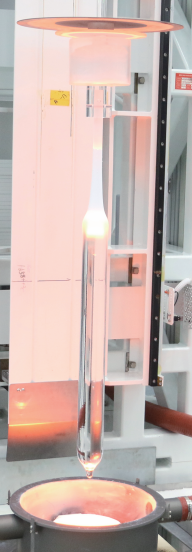
G.652.D Wavelength-extended Non-dispersion Shifted Single-mode Optical Fiber
HONGAN GROUP CO., LTD.

Comprehensive Mining Automation Control System
Beijing Tianma Intelligent Control Technology Co., Ltd.
Multi-function Marine Monitoring Low-altitude Detection Radar Sea-air Boundary Ocean Dynamic Environment Measurement
Chengdu Dixin Technology Co., Ltd.
Industrial and Commercial Point-Type Gas Detector
Jinan Benan Technology Development Co., Ltd.