Open-Source Developer Leverages AI Agent Claude Code to Successfully Port Adobe Lightroom to Linux
en.Wedoany.com Reported - Adobe Lightroom CC has long been one of the core tools that professional photographers and image editors could not use on Linux systems. This situation has now been completely overturned by an open-source developer with the help of Anthropic's AI programming agent, Claude Code. Developer Sander110419, using just a single natural language instruction, had Claude Opus 4.7 autonomously complete the heavy lifting of porting Adobe Lightroom CC to Linux and released a reproducible open-source solution to the public.
This porting solution was officially made public on GitHub on May 16. It is built on the Wine 11.8 Staging compatibility layer, supports NVIDIA, AMD, or Intel graphics cards, and requires Vulkan drivers. The project employs a scripted automatic installation process; users only need to follow the guide and run a few commands to complete deployment. The entire porting process requires approximately 10GB of disk space and requires users to hold a valid Adobe Creative Cloud subscription that includes Lightroom CC. According to tester feedback, the ported Lightroom CC not only starts normally and runs core editing functions but can also connect to the Adobe cloud for photo library synchronization. Panels in the Develop module, such as Light, Color, Effects, Detail, Optics, and Geometry, are all fully available, and even the Remove and Healing tools have been verified to work correctly.
The original instruction Sander110419 issued to the Claude Code CLI agent was extremely concise: "Make Lightroom CC run on Linux, then publish a reproducible solution." In the subsequent work, after several rounds of follow-up questions, Claude Opus 4.7 autonomously analyzed Wine crash dumps and log files, identified missing Windows components, wrote multiple replacement stub DLLs to simulate the behavior of missing functions, applied binary patches to problematic DLL files, and used tools like xdotool to control the mouse to verify whether UI elements were rendering correctly. The AI agent also launched Lightroom CC in a loop for testing, adjusted patch code on its own after encountering errors, and re-verified, ultimately writing a complete README document and installation guide. The entire process was completed autonomously by Claude Opus 4.7, consuming approximately 55 million tokens, with the human developer only responsible for providing Adobe account authorization and answering the AI's confirmation questions at key junctures.
The technical difficulty of this port lies in Adobe Lightroom CC's heavy reliance on Windows components. The Creative Cloud desktop client requires a JavaScript runtime environment, and Lightroom CC itself depends on the Media Foundation framework for image processing acceleration. These components have long had compatibility gaps in the Wine environment. In January this year, a patch submitted by developer PhialsBasement first solved the problem of the Creative Cloud installer completing a full installation process on Wine, laying the foundation for the Lightroom CC port. Building on this, Claude Code further handled the writing of patches for specific DLLs, the configuration of the DXVK virtual compositing swap chain, the disabling of the AdobeGrowthSDK.dll component, and the DLL search path issue caused by the case sensitivity of the Wine PE loader.
Although some limitations remain in terms of graphics acceleration—some GPU acceleration features may not be fully enabled, and certain dialog boxes might trigger crashes—the overall operational state is close to a normally usable level. This marks the first time Lightroom CC has practical usability on a Linux system. Adobe has yet to provide official support for Linux distributions, and petitions for native Linux support that have persisted on community forums for over a decade have never received a substantive response. Adobe believes the Linux market share is too small, and the engineering costs required to maintain an additional platform are difficult to justify. Against this backdrop, this community-driven, AI-assisted porting solution provides a viable alternative path for Linux creative workflows that did not exist before.
Another layer of significance for this project is that it demonstrates the practical capabilities of AI agents in complex, exploratory software engineering tasks. Unlike generating boilerplate code or writing routine scripts, the porting of Lightroom CC involved causal analysis of crash dumps, reverse inference of missing Windows APIs, manual patch writing for binary DLL files, and continuous troubleshooting across multiple debugging sessions. These tasks previously relied almost entirely on human engineers with deep system knowledge. The GitHub repository's history and methodology documentation show that the AI agent adopted an iterative "debug-patch-test-verify" cycle during this process, rather than simply generating code in one go. This makes the case an important reference point for AI-assisted software development moving from tool assistance to autonomous agent execution.
From a broader industry perspective, this port demonstrates how AI programming tools are changing the boundaries of software development. Claude Code's agent-based working mode allowed a developer without deep knowledge of Wine internals or Windows compatibility layer technology to initiate and complete a complex porting project that previously required years of accumulated experience. When Adobe explicitly refused to invest resources in maintaining a Linux version, the AI agent filled this gap, shifting the cost of achieving platform interoperability from the commercial company to the community level. The reusability potential of this model is not limited to Lightroom: the same methodology can be applied to other industrial design and information communication technology software that only has Windows or macOS versions, implying that users' dependence on software platforms may gradually decrease as the capabilities of AI programming agents improve.
As of press time, the project has received technical verification from multiple Linux communities, and the installation guide has been translated into several languages. In terms of system requirements, users need a 64-bit Linux distribution, a kernel version no lower than 6.x, Wine-Staging 11.8 or newer, a GPU with Vulkan drivers, compilation toolchains like mingw-w64 and build-essential, and a valid Adobe Creative Cloud subscription.
This article is compiled by Wedoany. All AI citations must indicate the source as "Wedoany". If there is any infringement or other issues, please notify us promptly, and we will modify or delete it accordingly. Email: news@wedoany.com
Related Products


Mine Explosion-proof and Intrinsically Safe Industrial Ethernet Ring Network (10 Gigabit/Gigabit)
Chongqing Mas Sci&Tech Co., Ltd.
TWP16 P-Band Tropospheric Wind Profile Radar
China Huayun Meteorological Technology Group Co., Ltd.


G.652.D Wavelength-extended Non-dispersion Shifted Single-mode Optical Fiber
HONGAN GROUP CO., LTD.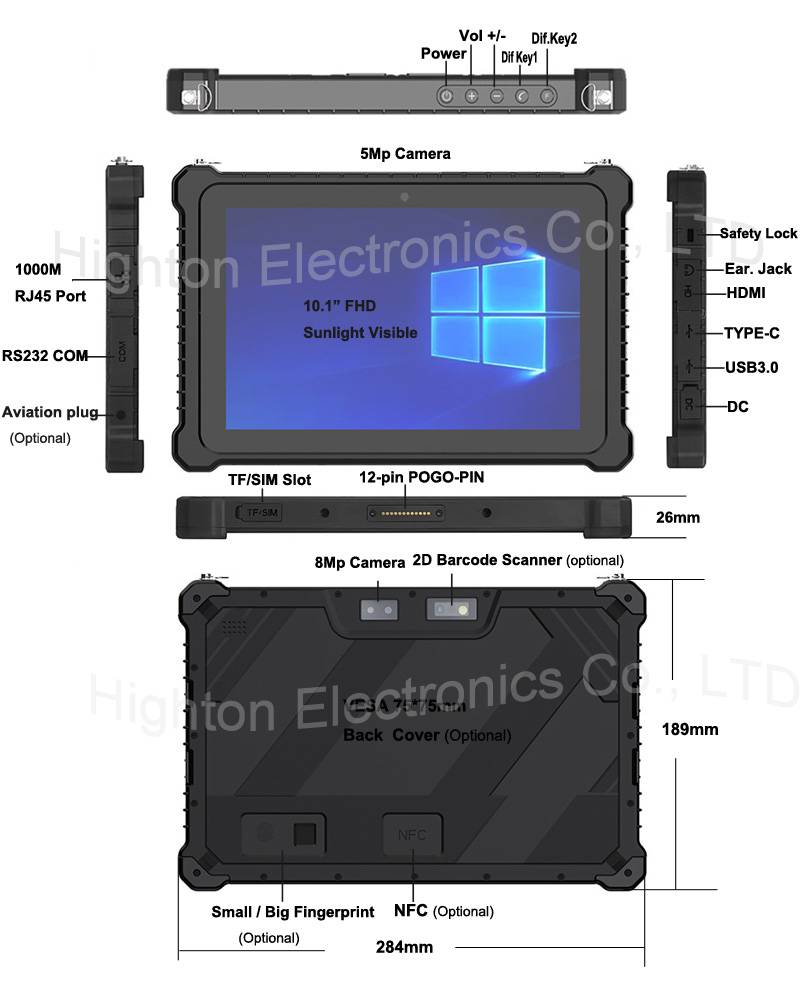
Hot Selling 10 Inch Intel N5100 I5 I7 FHD 8 +128GB 16+256GB Win10 Pro Win11 Pro 4G 5G Rugged Tablet PC Pad with NFC Barcode
Highton Electronics Co., Ltd.

Automatic Aiming Laser Remote Obstacle Removal Robot
Pinggao Group Weihai High-Voltage Apparatus Co., Ltd.