Siemens Germany Advances Flexible Robots from Lab to Industrial Application
en.Wedoany.com Reported - Siemens' corporate research department is advancing flexible robotics technology from laboratory prototypes to practical industrial applications. The core task of Dr. Kal Mos, who leads basic technology research and pre-development in this department, is to transform flexible robotic systems into commercial solutions capable of operating reliably in unstable environments such as factories and warehouses.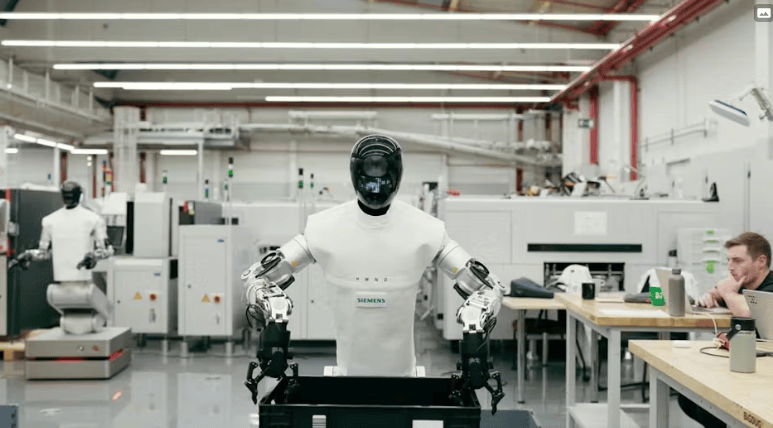
Nine months into his role with the Siemens Foundational Technologies team, Mos is focused on solving a critical engineering problem: how to turn technology that performs well in controlled settings into a robust and commercially viable product for the real world. The focus of this work lies in simulation. Training robotic systems has long relied on combining real-world data with large-scale simulations in controlled environments. About 18 months ago, Siemens began developing its programs by having robots observe human operators. This process, known as the Vision-Language-Action (VLA) model, enables a robot to observe a task, reason about it, and execute it autonomously. The process starts with teleoperation, where a human repeats the same task hundreds of times while the robot simultaneously observes, records, and learns the actions. This data is used to fine-tune the model, teaching it to cope with variations. Researchers then evaluate the model's effectiveness and build a closed-loop simulation system. Mos explains that closed-loop simulation means the robot possesses perception capabilities, sensing its surroundings through numerous sensors. However, he notes that creating fully autonomous robots remains a research goal and does not yet exist in reality.
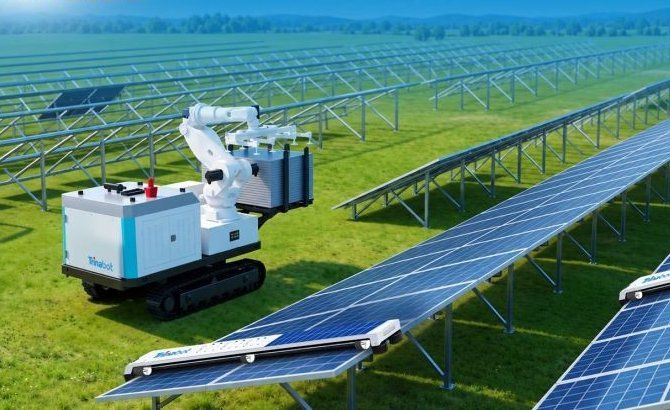
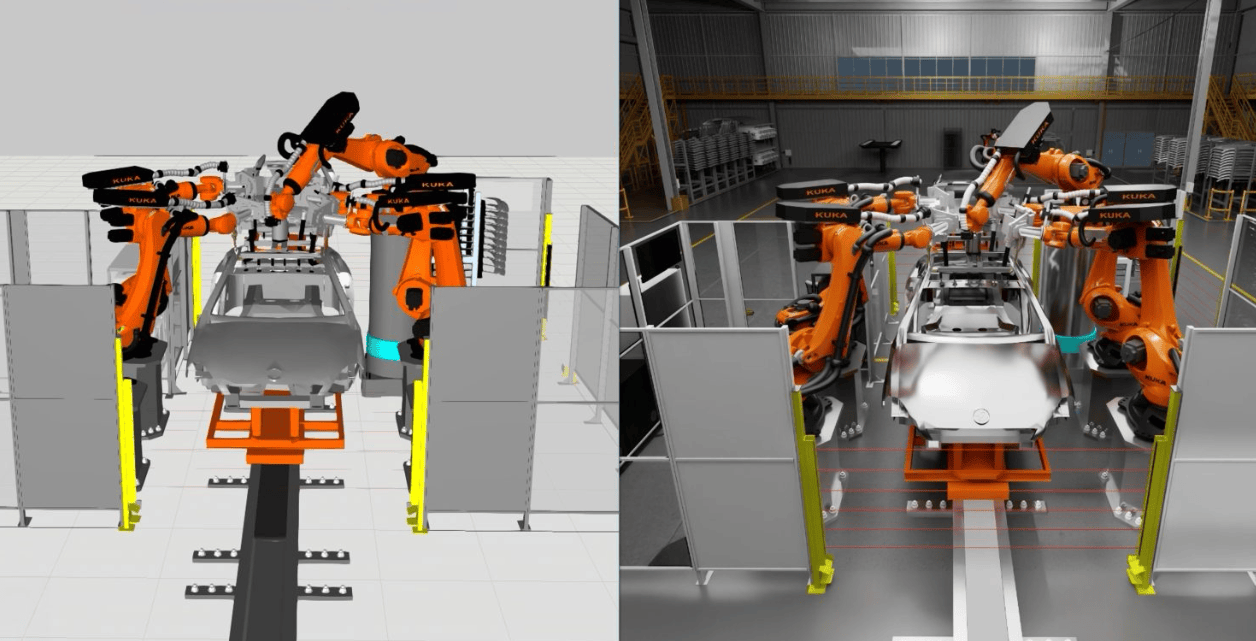
Currently, Siemens has deployed some prototypes in its own factories, actively integrating them into production processes. These robots are called "flexible robots" because they are neither fully autonomous nor traditionally pre-programmed. Operators do not write every step but instead assign tasks, allowing the robot to figure out the intermediate steps to complete the job on its own. Once deployed, the system enters a closed-loop simulation environment, optimizing tasks through repeated demonstrations based on AI models. The robot uses sensors to perceive its environment, adjusts its actions based on real-time data, and operates in an iterative cycle of observation, action, and adjustment, training it to function properly outside controlled environments. This type of flexible robot represents an initial step toward more independent machines. On the production floor, this capability manifests as mobile manipulators—systems combining a robotic arm with a mobile base. While not fully autonomous, they can perform specific tasks with a degree of independence, initially bridging the gap between instruction and initiative.
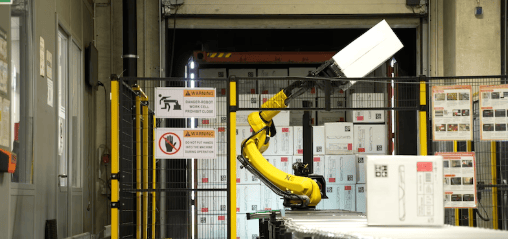
At the Siemens Innovation Center during Hannover Messe 2026, the company showcased how industrial AI is shaping the future of autonomous industry. In one case, industrial vision AI helped a picking robot identify and handle various objects. The AI analyzes an object's shape, size, or packaging in milliseconds, and combined with a vacuum-driven multi-gripper, the robot can move items more efficiently on the production line. The product, Simatic Robot Pick AI Pro, helps overcome complex intralogistics challenges that were previously difficult to address. Mos points out that picking up solid or flexible materials is easy for humans but a huge challenge for robots. The core difficulty lies in perception and control when handling soft objects—the robot must precisely gauge the pressure applied to avoid deforming or damaging the object. The complexity increases further when placing an object into another flexible container, such as putting multiple items into a plastic bag, because the shapes of both the object and the bag can change unpredictably. The robot must rely on force and torque sensors and perception systems to constantly adjust its grip and movement. Siemens is not pursuing general-purpose artificial intelligence but is instead concentrating on developing a smaller number of more clearly defined use cases. Mos states that narrowing the scope allows developers to train systems more effectively and reliably, with the ultimate goal of achieving full autonomy. Even so, the path forward still requires a significant amount of labor-intensive work.
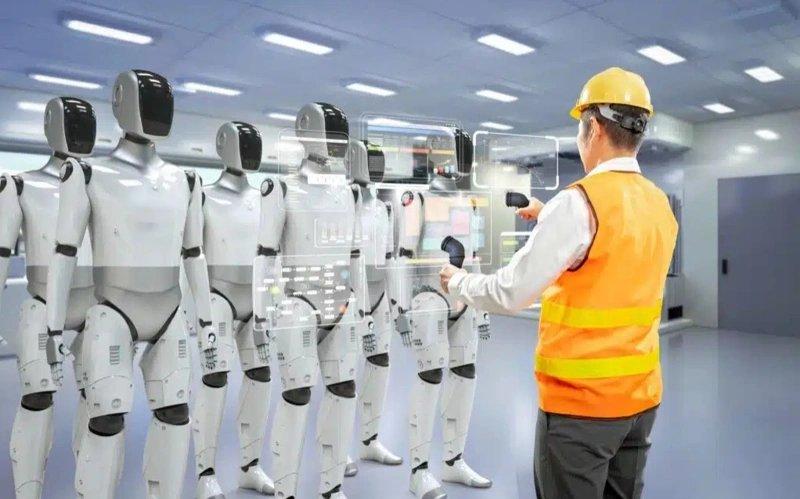
Manufacturing and logistics companies are increasingly viewing bipedal systems as the next step in automation. At Hannover Messe 2026, at least 15 exhibitors showcased robots designed specifically for deployment on real production lines, intended to integrate into existing workflows and take on more complex tasks. In Mos's view, the question is not whether humanoid robots are suitable for industry, but whether they are inherently superior to traditional automation. He believes the preference ultimately depends on the "equation between value and cost." Since the human world—chairs, tables, vehicles, and factories—is built for humans, a machine that can move in the same way through the same spaces would have immense value. However, the path to achieving this goal may be gradual. Mos believes that wheeled robots may offer more value until cost-effective milestones are reached. In the short term, simpler platforms might provide greater utility: they are easier to move, can carry larger batteries, and avoid the many stability challenges associated with leg design. Siemens does not develop robot hardware itself but instead focuses on the intelligence and orchestration layer of robots through a software-centric strategy, aiming to enhance decision-making capabilities and system integration levels.
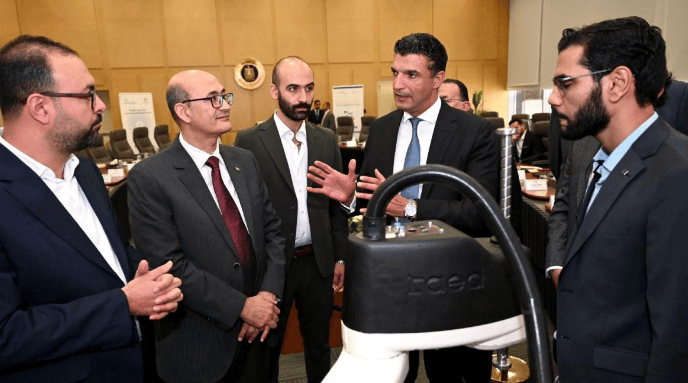
As part of a media tour, Machine Design magazine visited Siemens' electronics plant in Erlangen, Germany, to observe this strategy in action. There, Siemens is collaborating with UK-based AI and robotics company Humanoid to co-develop Humanoid's HMND 01 wheeled Alpha robot, designed to perform autonomous logistics tasks without requiring additional hardware. The collaboration is based on foundation AI models on the NVIDIA AI stack. Siemens' approach is not to design a new gripper for handling fabrics, but to develop AI that enables existing robots to understand how to grasp, how to adjust force, and how to coordinate with other machines in the production line. In this environment, the Siemens Xcelerator platform provides digital twins, simulation environments, and orchestrates the data flow connecting humanoid robot design, simulation, industrial control, and analytics, enabling real-time monitoring and updates.
This article is compiled by Wedoany. All AI citations must indicate the source as "Wedoany". If there is any infringement or other issues, please notify us promptly, and we will modify or delete it accordingly. Email: news@wedoany.com
Related Products

Standard Nozzle Flowmeter
Jinggong Automatic Control Instrument Complete Technology Development Company
Aluminum-Magnesium Alloy High-Pressure Die-Casting Molds
NINGBO HELI TECHNOLOGY CO., LTD.
CAP1400 main feedwater flow nozzle flowmeter.
Jiangsu Hongda Instrument Technology Co., LTD.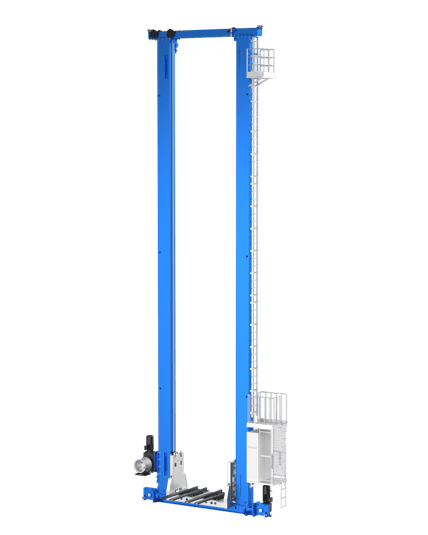
Pallet Solutions Product Line: HD3000 Double-Column Stacker Crane
Zhongding Intelligent (Wuxi) Technology Co., Ltd.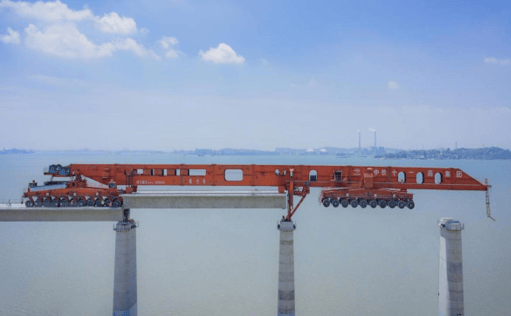
High-Speed Railway Lifting, Transporting, and Erecting Equipment: Integrated Transport and Erection Machine
Hanjiang Heavy Industry Co., Ltd. of China Railway 11th Bureau Group
Pneumatic high-pressure wear-resistant ball valve
Zhejiang Deca Control Valve Meter Co., Ltd.
Strip Coating and Plating Production Line Equipment
MCC-SFRE HEAVY INDUSTRY EQUIPMENT CO., LTD.