Tencent's OS-Level AI Assistant "Mavis" Officially Launches, Simultaneously Available on Windows, Mac, and Android
en.Wedoany.com Reported - On May 21, Zhang Jun, Public Relations Director of Tencent, officially announced via social media that Tencent's OS-level AI assistant "Mavis" has concluded its beta testing and officially launched. Versions for Windows, Mac, and Android platforms are now available for download simultaneously, marking Tencent's product layout in on-device AI moving from the application layer deep into the operating system layer.
Since its beta testing began in mid-May, Mavis has already accumulated a considerable amount of early user discussion within the tech community due to its multi-agent collaboration architecture and system-level operational capabilities. The official version continues this core architecture, integrating one Project Manager Agent and five functional Agents out of the box, totaling six intelligent agents. They are respectively responsible for task decomposition and dispatch, file search and format conversion, computer system operation and maintenance, in-app operations, web information retrieval, and web interaction and data scraping.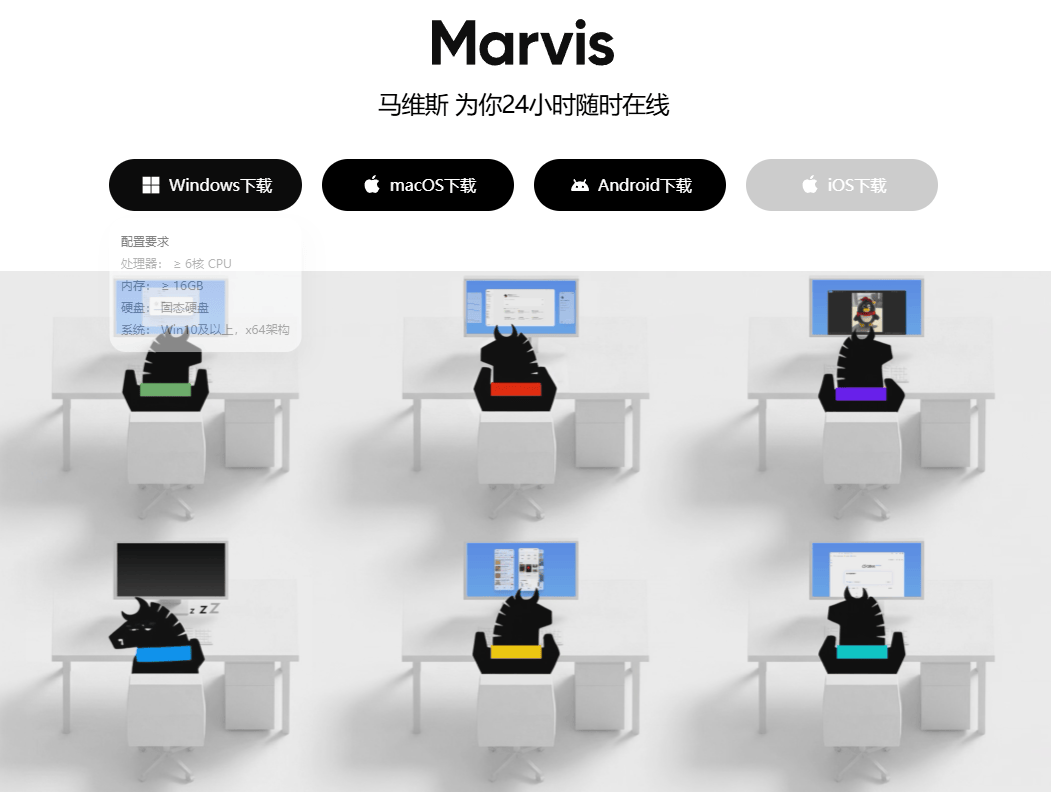
While most AI chat assistants on the market use a dialogue window as their primary interaction interface, Mavis takes a different path. Its underlying design connects directly to the operating system kernel, achieving deep hardware control by calling system APIs. Users can use natural language to complete operations such as "disable unnecessary startup programs," "check current network upload/download speed and latency," and "determine if a game can run smoothly based on hardware configuration." The head of Tencent's App Store team previously stated that the team's 14-year deep collaboration with hardware and software manufacturers like Intel and Microsoft, along with cross-end engine technology, gives Mavis the execution capability to bypass simulated clicks and directly enter the system kernel.
The six-agent collaboration architecture forms the core product skeleton of Mavis. The PM Agent handles user intent understanding and task decomposition, distributing complex instructions to the corresponding five functional Agents for parallel execution. These Agents have their own behavioral states in a visualized virtual office—unassigned Agents might be "napping," "drinking coffee," or "working out," while assigned Agents are "sitting at their workstations grinding away," reporting back to the main Agent upon task completion. Each task comes with an independent sidebar for real-time monitoring of execution progress and intermediate outputs.
Under the multi-agent collaborative architecture, Mavis possesses a range of deep system operation capabilities. In file management, Agents can automatically categorize and archive desktop files by project, creating folders, moving files, deduplicating, and merging based on content relevance analysis; the search function penetrates document content for semantic matching, rather than just matching file names. In image management, Agents feature facial recognition, footprint location tagging, and a timeline gallery capability, automatically categorizing photos after a full disk scan. In lifestyle and entertainment scenarios, Agents can monitor limited-time game rewards and celebrity updates, automatically complete check-in tasks, and perform scheduled daily news summaries.
Cross-end remote control allows Mavis to break through the desktop boundary. Users can connect to and view their computer desktop screen from their phone, directly issuing commands for the Agent to find files, open applications, or even fix system problems. Tencent internally describes this model as "turning your phone into a remote control for your computer," with typical application scenarios including urgently needing to access a file while away from the computer, or helping family members remotely troubleshoot computer issues. This functionality relies on the cross-end engine technology of Tencent's App Store team.
Entering the system layer makes privacy protection a primary compliance issue. Mavis addresses this with a dual-mode operation mechanism: In Privacy Mode, all conversation data and file processing are completed locally on the device, running the Tongyi Qianwen on-device model, and remain usable even when offline; in Efficiency Mode, complex intent understanding and task planning are handled by the cloud-based Hunyuan large model or DeepSeek V4, while specific execution steps still occur locally. Regarding security mechanisms, for any sensitive operations involving system configuration modifications, file deletion, or software uninstallation, the Agent triggers a hard confirmation pop-up, requiring the user to actively click authorization to proceed; the product also explicitly states it does not support any payment functions.
Mavis completes Tencent's product puzzle in the AI assistant track. Previously, Tencent had successively launched products like Qianwen App, Yuanbao, CodeBuddy, and WorkBuddy, among which Qianwen App accesses authoritative data from the National Medical Products Administration, Yuanbao connects to the WeChat ecosystem, and WorkBuddy has partnered with Shanghai Mobile to launch Token general services. The official launch of Mavis makes Tencent another tech company, following Microsoft and Apple, attempting to redefine the role of the "operating system" through AI.
This article is compiled by Wedoany. All AI citations must indicate the source as "Wedoany". If there is any infringement or other issues, please notify us promptly, and we will modify or delete it accordingly. Email: news@wedoany.com
Related Products


GYTA Type Non-Self-Supporting Aerial/Duct Optical Cable
TONGDING INTERCONNECTION INFORMATION CO., LTD.
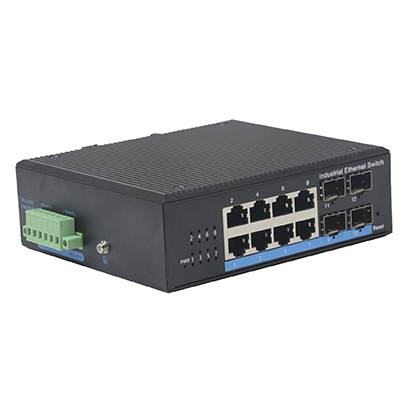

Multi-function Marine Monitoring Low-altitude Detection Radar Sea-air Boundary Ocean Dynamic Environment Measurement
Chengdu Dixin Technology Co., Ltd.
Comprehensive Mining Automation Control System
Beijing Tianma Intelligent Control Technology Co., Ltd.



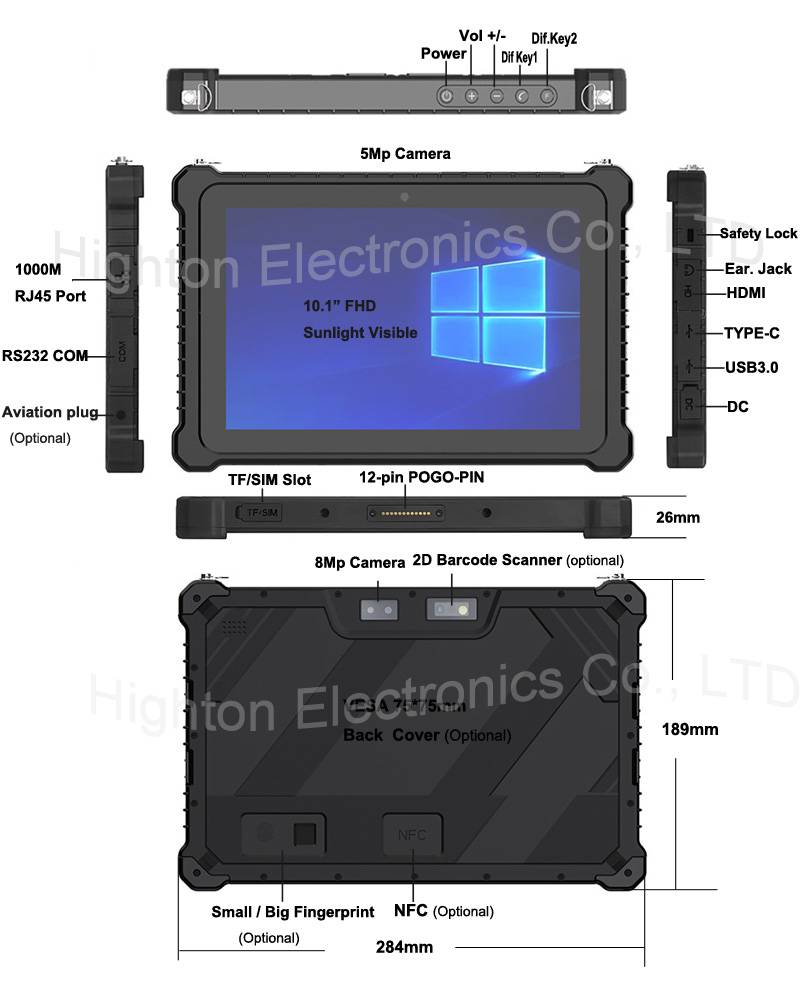
Hot Selling 10 Inch Intel N5100 I5 I7 FHD 8 +128GB 16+256GB Win10 Pro Win11 Pro 4G 5G Rugged Tablet PC Pad with NFC Barcode
Highton Electronics Co., Ltd.
Automatic Aiming Laser Remote Obstacle Removal Robot
Pinggao Group Weihai High-Voltage Apparatus Co., Ltd.