May 21 Information and Communications Overseas Observation: Cross-Border Data, Satellite Communications, and AI Computing Infrastructure Reshape Global Cooperation Chains
en.Wedoany.com Reported - On May 21, the WeDoAny Overseas Daily for the information and communications sector showed that global digital infrastructure competition is shifting from single-point technological breakthroughs to a systematic layout of "networks, computing power, security, satellites, and data rules." ASEAN cross-border data channels, quantum-safe communications, satellite navigation cooperation, AI computing infrastructure, and international spectrum rules became several main threads in the day's news. For Chinese enterprises, going overseas in information and communications is no longer just about selling equipment and building networks; it requires forming comprehensive service capabilities around data compliance, communication security, computing resources, industry applications, and international standards.
I. Key News Summary
1. [Nanning, China Launches International Cooperation Pilot for Data Sector Targeting ASEAN, Significantly Reducing Transmission Latency]
Core Content:
Nanning, Guangxi, has launched an international cooperation pilot for the data sector targeting the ASEAN region. Leveraging infrastructure such as the Nanning International Communication Service Gateway Bureau, the plan aims to compress data transmission latency from Nanning to Hanoi, Vietnam, from 107 milliseconds to 18 milliseconds. Guangxi will also build a cross-border computing service zone targeting ASEAN, a China-ASEAN data trading service network, and a one-stop cross-border compliance service platform, serving scenarios such as cross-border data flow, digital trade, smart transportation, data annotation, and model training.
Overseas Observation:
The value of this news lies not only in "network acceleration" but also in the fact that China's digital infrastructure gateway targeting ASEAN is beginning to take shape. For companies engaged in cloud services, data compliance, smart transportation, cross-border e-commerce technology, AI annotation, and industrial internet, Guangxi may become an important node connecting China's R&D capabilities with the ASEAN application market. In the future, when Chinese enterprises enter the ASEAN market, they cannot only focus on sales channels but must also pay attention to data export, security assessment, compliance auditing, and localized computing deployment capabilities.
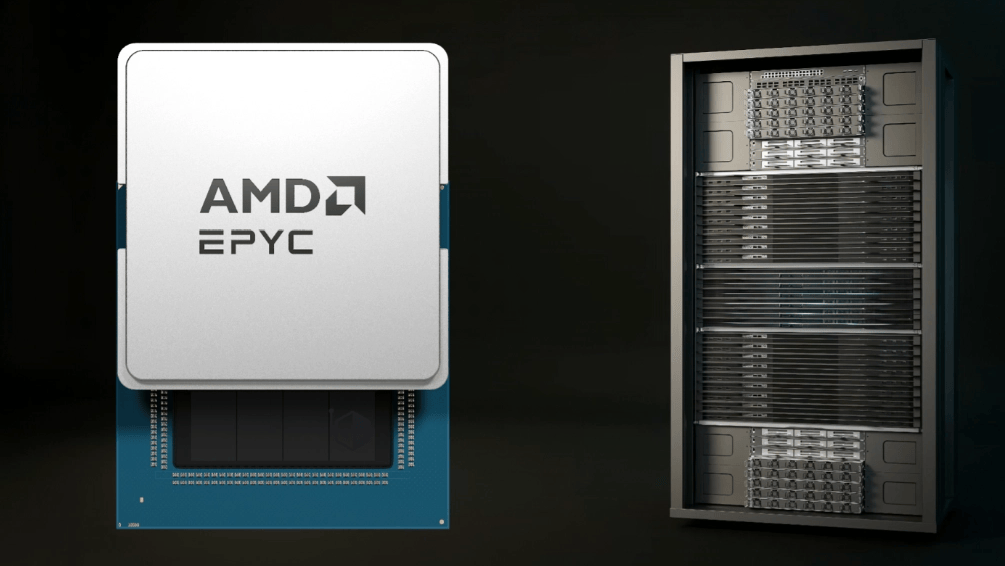
2. [US AMD Announces Mass Production of 6th Gen EPYC Venice Processors on TSMC 2nm Process, 256 Cores Targeting AI Infrastructure]
Core Content:
AMD announced that its 6th generation EPYC processor, codenamed "Venice," has started production ramp-up. Utilizing TSMC's 2nm process, it can integrate up to 256 physical cores and 512 threads, with future plans to introduce production at TSMC's Arizona fab in the US. The product targets AI infrastructure, emphasizing the role of the CPU in data movement, networking, storage, security, and system orchestration.
Overseas Observation:
Competition in AI infrastructure is expanding from GPUs to CPUs, memory, I/O, networking, and system-level synergy. For Chinese companies in servers, liquid cooling, cabinets, power supply and distribution, optical modules, and data center integration, overseas AI data center construction will still bring supporting opportunities, but the threshold is significantly higher: customers are no longer just purchasing single hardware items but are more focused on high-density deployment, energy consumption control, stable delivery, and compatibility with mainstream international chip ecosystems.
3. [Qatar's Ooredoo Launches IoT SecureConnect Platform, Providing Continuous Protection for IoT Devices with Operator-Led Zero Trust Security Architecture]
Core Content:
Qatari telecom operator Ooredoo launched the IoT SecureConnect platform, targeting IoT scenarios such as smart cities, healthcare, logistics, energy, oil & gas, banking, industrial operations, and government services. It provides continuous device authentication, threat protection, and data privacy compliance capabilities. The platform adopts zero-trust principles and can integrate with existing IoT infrastructure.
Overseas Observation:
Information and communications projects in the Middle East market are shifting from "connectivity construction" to "secure operations." This means that when Chinese IoT devices, industrial gateways, sensors, security platforms, oil & gas digitalization, and smart city enterprises enter the Middle East, they cannot only emphasize hardware prices and deployment speed. They must also be prepared with zero trust, security compliance, data privacy, and continuous operation and maintenance solutions. Operators are becoming the entry point for industry digital security, and suppliers need to adapt to operator-led integration models.
4. [Israel's PacketLight and US Quantum XChange Partner to Launch Crypto-Agile Optical Transmission Solution]
Core Content:
Israeli optical transport network equipment vendor PacketLight Networks and US post-quantum cybersecurity company Quantum XChange have entered a strategic technology partnership to integrate post-quantum cryptography capabilities into DWDM and OTN optical transmission hardware suites. This provides quantum-safe network solutions for telecom operators, financial institutions, governments, and critical infrastructure sectors. The solution supports PQC encryption, QKD encryption, and hybrid key exchange architectures.
Overseas Observation:
Post-quantum security has begun to enter the optical communication equipment layer, no longer just algorithm research. For Chinese optical communication, OTN equipment, data security, financial private network, and government-enterprise private network companies, future high-end overseas markets may consider "quantum-safe migration capability" as an important technical threshold. If enterprises want to enter operator, financial, and sovereign communication projects, they need to plan ahead for PQC, QKD interfaces, key management, and international standard compatibility.
5. [Canada's QBT Completes $8 Million Series A Financing to Advance Quantum-Safe Distributed Cryptography Architecture]
Core Content:
Canada's Quantum Bridge Technologies completed an $8 million Series A financing round, led by Italy's Primo Capital SGR, with participation from Telefónica's Wayra, Hewlett Packard Enterprise, and others. The funds will be used to expand engineering capabilities and deploy quantum-safe network defense platforms at scale in international banking, telecommunications, government, and sovereign military sectors. QBT has previously established cooperation with Toshiba Europe, Italtel, Juniper Networks, etc., or demonstrated intercontinental quantum-safe communication networks.
Overseas Observation:
Quantum security is forming an ecosystem involving transnational capital, system integrators, operators, and equipment vendors. If Chinese enterprises only treat network security as an add-on feature, it will be difficult to enter high-level international projects. Future opportunities lie in packaging encryption equipment, private network communications, cloud-network security, data center interconnection, and compliance services into end-to-end solutions acceptable to banking, telecom, and government clients.
6. [Japan's Astroscale and SKY Perfect JSAT Form Strategic Partnership for On-Orbit Services, Accelerating Space Infrastructure Development]
Core Content:
Japanese on-orbit servicing company Astroscale and Asia-Pacific satellite operator SKY Perfect JSAT have established a strategic partnership. The two parties will collaborate in areas such as satellite on-orbit inspection, repair, and life extension. SKY Perfect JSAT will subscribe to new shares issued by Astroscale, strengthening their business alliance through capital cooperation to promote the development and commercialization of sustainable space infrastructure.
Overseas Observation:
The satellite industry is shifting from a linear model of "launch-operate-decommission" towards on-orbit servicing and full lifecycle management. If Chinese enterprises in satellite manufacturing, ground stations, TT&C, remote sensing applications, attitude and orbit control, space components, and satellite operation and maintenance services wish to enter the international market, they need to pay attention to new demands such as on-orbit repair, life extension, and space debris mitigation. This type of business emphasizes long-term service capability rather than one-time delivery.
7. [US White House Official Says "Better Prepared" for 2027 World Radiocommunication Conference, Over 80% Agenda Items Involve Space Spectrum]
Core Content:
A US White House official stated that the US will complete its position formulation for all agenda items of the 2027 World Radiocommunication Conference ahead of schedule. WRC-27 will be held in Shanghai, China, from October to November 2027, with over 80% of the agenda directly or indirectly involving non-geostationary orbit satellite systems. Companies like Amazon Leo, Astranis, Planet, and Astrolab are focusing on topics such as V-band, Ku-band, X-band, and lunar surface spectrum.
Overseas Observation:
Spectrum has become a fundamental resource for satellite communications, LEO constellations, 6G, and the space economy. For Chinese communication equipment, satellite terminal, RF component, testing instrument, and LEO application enterprises, going overseas cannot just focus on product certification. They must also pay attention to international spectrum rules, regional coordination, and standard setting. Those who understand rule changes earlier will be more likely to gain initiative in future satellite internet, direct-to-handset, and space communication projects.
8. [US AT&T, T-Mobile, and Verizon Plan to Form Joint Venture for Satellite Direct-to-Device Technology]
Core Content:
AT&T, T-Mobile, and Verizon announced they have reached an agreement in principle to jointly form a joint venture focused on satellite direct-to-device technology. Through a unified platform, it will provide satellite operators with the ability to access the terrestrial spectrum resources of the three operators, aiming to reduce wireless dead zones in rural areas and provide redundant connectivity when disasters disrupt cellular networks.
Overseas Observation:
Satellite direct-to-device is moving from single-operator trials to multi-operator collaboration. For Chinese mobile phone, communication module, antenna, base station, satellite terminal, and emergency communication enterprises, future overseas markets will place greater emphasis on the integration capability of "handset-terrestrial network-satellite network." Enterprises need not only to manufacture hardware but also to understand operator spectrum, terminal certification, satellite network access, and emergency communication scenarios.
9. [China-Russia Joint Statement: Actively Promote the Implementation of the '2026-2030 China-Russia Satellite Navigation Cooperation Roadmap']
Core Content:
The China-Russia joint statement proposed that both sides will continuously deepen cooperation in the field of satellite navigation, promote the implementation of the "2026-2030 China-Russia Satellite Navigation Cooperation Roadmap," and ensure the complementarity of the BeiDou Navigation Satellite System and the GLONASS system. Future cooperation directions include system compatibility and interoperability, joint construction of ground monitoring station networks, development of high-precision positioning applications, and joint international market promotion.
Overseas Observation:
The significance of satellite navigation cooperation lies in "system complementarity + application promotion." For Chinese enterprises in high-precision positioning, surveying and mapping, unmanned equipment, mine dispatching, port logistics, agricultural machinery, and construction machinery, the compatibility of BeiDou with overseas navigation systems will directly affect the usability of products in overseas scenarios. Especially in markets related to the "Belt and Road" initiative, high-precision positioning applications should not just sell terminals but provide overall solutions combined with industry scenarios.
10. [China-Russia Joint Statement: Willing to Promote the Development of AI for Good and Inclusiveness, Addressing Related Potential Risks and Challenges]
Core Content:
The China-Russia joint statement proposed that both sides support strengthening international cooperation on artificial intelligence, addressing potential risks and challenges related to AI, and plan to expand cooperation in information and communication technology fields such as the digital economy and artificial intelligence, applying digital and AI technologies to urban renewal and infrastructure construction. The statement also mentioned strengthening cooperation in areas such as technical standards, ethical norms, safety assessment, smart cities, industrial internet, and telemedicine.
Overseas Observation:
AI going overseas is not just about model capability going overseas; it also involves governance rules, industry applications, and security assessments. When Chinese AI enterprises, industrial software companies, and smart city integrators enter overseas markets, they need to transform "technical capabilities" into solutions that are "governable, deployable, and sustainable" acceptable to the other party's government and industry. Especially in areas such as urban infrastructure, industrial internet, and public services, compliance and trust mechanisms will become prerequisites for project implementation.
11. [US Google Announces $15 Billion Investment to Build New Data Center in Missouri, Commits to Paying Full Operational Electricity Costs]
Core Content:
Google announced it will invest $15 billion to build a large-scale data center in New Florence, Missouri, and establish a capacity commitment framework with Ameren to support an additional 500 megawatts of power capacity. The construction phase is expected to create thousands of construction jobs, and operations will provide hundreds of long-term technical positions. Google also committed to paying the full cost of electricity used by the data center and related new infrastructure expenses.
Overseas Observation:
AI data centers are becoming infrastructure projects that bind together electricity, land, computing power, and local employment. If Chinese enterprises want to participate in the overseas data center chain, opportunities lie not only in servers and network equipment but also in power supply and distribution, energy storage, liquid cooling, optical fiber, engineering construction, operation and maintenance monitoring, and energy management systems. However, overseas owners have higher requirements for electricity costs, community relations, environmental protection, and local employment, requiring enterprises to possess engineering compliance and local cooperation capabilities.
12. [US OpenAI Commits Over S$300 Million Investment to Establish Its First Overseas Applied AI Lab in Singapore]
Core Content:
OpenAI signed a Memorandum of Understanding with Singapore's Ministry of Digital Development and Information, committing over S$300 million to advance the "OpenAI for Singapore" partnership program and establish its first applied AI lab outside the US. The lab will focus on areas such as public services, finance, healthcare, and digital infrastructure, with plans to expand to over 200 local positions in the coming years.
Overseas Observation:
Singapore continues to strengthen its position as Asia's AI hub. For Chinese AI application, data service, industry software, and cloud ecosystem enterprises, Southeast Asia is not simply a low-cost market but a testing ground with a high concentration of regulation, talent, finance, public services, and regional headquarters. If enterprises can establish credible cases in Singapore and then replicate them in other ASEAN countries, the overseas path will be more stable.
II. Global Changes in the Information and Communications Sector Seen from the News
First, cross-border data infrastructure is becoming the new foundation for regional cooperation. Nanning's data cooperation pilot targeting ASEAN illustrates that international communication gateways, cross-border computing power, data trading, and compliance services are being considered within the same framework. Whether future digital trade and industrial internet projects can be implemented largely depends on whether the data links have low latency, whether the compliance chain is clear, and whether computing services are available.
Second, AI computing competition is extending to "chips-data centers-electricity-space resources." AMD's 2nm server processors, Google's data center investment, and SpaceX's proposal for on-orbit data centers all indicate that AI infrastructure is breaking through the boundaries of traditional server rooms. When information and communication enterprises participate in global projects, they need to simultaneously understand computing architecture, energy supply, cooling systems, and network connectivity.
Third, communication security is moving from network security products to infrastructure security capabilities. Ooredoo's IoT zero-trust platform, PacketLight and Quantum XChange's post-quantum optical transmission solution, and QBT's quantum-safe network financing all indicate that overseas customers' requirements for "security internalization" are increasing. Security is no longer a patch applied late in the project but a prerequisite for communication networks, optical transmission, IoT, and data center projects.
Fourth, satellite communications and navigation are entering a stage of competition in rules, spectrum, and service models. The WRC-27 spectrum agenda, the satellite direct-to-device joint venture by operators like AT&T, Japan's on-orbit service cooperation, and the China-Russia satellite navigation roadmap collectively illustrate that space infrastructure is no longer just a matter for aerospace companies but a long-term market involving operators, terminal manufacturers, navigation service providers, and engineering equipment vendors.
Fifth, AI and digital infrastructure going overseas increasingly rely on localized ecosystems. OpenAI establishing an applied AI lab in Singapore, and China and Russia proposing AI cooperation in urban renewal and infrastructure construction, both show that overseas markets value "whether it can truly be implemented in local scenarios." Chinese enterprises need to shift from a product sales mindset to jointly building local teams, industry solutions, partners, and compliance mechanisms.
III. Overseas Opportunities for Chinese Enterprises
For communication equipment and optical network companies, markets in ASEAN, the Middle East, Europe, and North America still have demand for data center interconnection, OTN, DWDM, low-latency cross-border networks, metro fiber, and government-enterprise private network upgrades. The focus of opportunities is not on low-priced equipment but on highly reliable, highly secure, and sustainably maintainable network infrastructure solutions.
For companies in the data center industry chain, overseas AI computing construction will drive demand for power supply and distribution, UPS, energy storage, liquid cooling, cabinets, optical modules, structured cabling, operation and maintenance monitoring, and energy management systems. Enterprises need to resolve issues related to local certification, power access, construction standards, environmental compliance, and after-sales service in advance, otherwise it will be difficult to enter core projects.
For network security and data compliance companies, cross-border data flow, IoT security, quantum-safe communication, and post-quantum cryptographic migration are forming new markets. Chinese enterprises can provide combined solutions around cross-border data export assessment, zero-trust access, encrypted transmission, key management, industrial internet security, and government-enterprise data compliance.
For satellite communication, BeiDou application, and high-precision positioning enterprises, overseas opportunities are concentrated in emergency communication, port logistics, mine dispatching, agricultural machinery, construction machinery, unmanned systems, and smart cities. Future products need to pay more attention to multi-system compatibility, local spectrum rules, terminal certification, and adaptation to industry application scenarios.
For AI application and industrial software enterprises, markets such as Southeast Asia, the Middle East, and Russia still have demand for smart cities, public services, telemedicine, industrial internet, traffic management, and digital infrastructure. When going overseas, enterprises cannot just showcase model capabilities but must combine algorithms, data, computing power, security, and project delivery capabilities.
IV. Industry FAQ
Q1: For information and communication enterprises going overseas, should they prioritize equipment export or project cooperation?
A: Prioritize project cooperation. Currently, overseas customers are more concerned with overall capabilities, including network construction, data compliance, security protection, operation and maintenance services, and localized delivery. There is still a market for pure equipment export, but profit margins and bargaining power will be compressed.
Q2: What should Chinese enterprises pay most attention to when entering the ASEAN digital infrastructure market?
A: They need to focus on cross-border data compliance, local partners, low-latency network access, and industry application scenarios. ASEAN countries have significant market differences, and a single solution cannot cover all countries.
Q3: In which segments are the main opportunities for AI data centers going overseas?
A: Opportunities are concentrated in power supply and distribution, liquid cooling, energy storage, fiber optic networks, server integration, computer room construction, monitoring and operation maintenance, and energy management. Overseas projects typically place greater emphasis on electricity costs, environmental requirements, and local employment, so enterprises need to prepare compliance plans in advance.
Q4: Are there already commercial opportunities for quantum security and post-quantum encryption?
A: Yes, but they are mainly concentrated in high-security scenarios such as finance, telecommunications, government, defense, and critical infrastructure. Ordinary enterprises may not make large-scale purchases in the short term, but high-end communication projects will increasingly focus on such capabilities.
Q5: What is the biggest difficulty for satellite communication enterprises going overseas?
A: The difficulties lie in spectrum, certification, operator cooperation, and local regulations. Satellite terminals and application products must not only be technically usable but also comply with local communication rules and be able to interoperate with terrestrial networks and operator systems.
Q6: How should BeiDou-related enterprises enter overseas markets?
A: Do not just sell positioning terminals. Instead, combine them with industry scenarios such as mining, ports, agriculture, transportation, construction machinery, surveying and mapping, and emergency management to provide a complete solution of "terminal + platform + data service + operation and maintenance."
Q7: Are there still overseas opportunities for small and medium-sized information and communication suppliers?
A: Yes, but it is more suitable to start from niche segments, such as industrial gateways, sensors, cables, optical modules, cabinets, network security components, testing instruments, and operation and maintenance tools. The key is to find integrators, engineering companies, or platform-type customers in the overseas project chain, rather than directly facing large-scale owners.
This article is compiled by Wedoany. All AI citations must indicate the source as "Wedoany". If there is any infringement or other issues, please notify us promptly, and we will modify or delete it accordingly. Email: news@wedoany.com
Related Products




Industrial and Commercial Point-Type Gas Detector
Jinan Benan Technology Development Co., Ltd.

MUX Series Communication Interface Device for Security and Stability Control System
Nanjing NR Electric Co., Ltd.
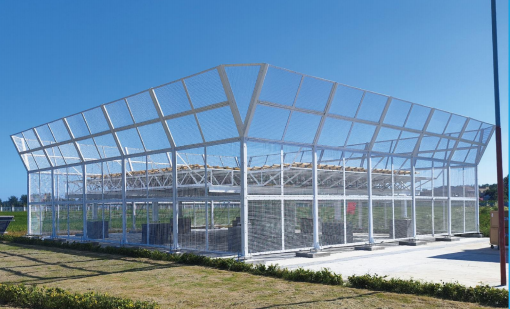
TWP16 P-Band Tropospheric Wind Profile Radar
China Huayun Meteorological Technology Group Co., Ltd.
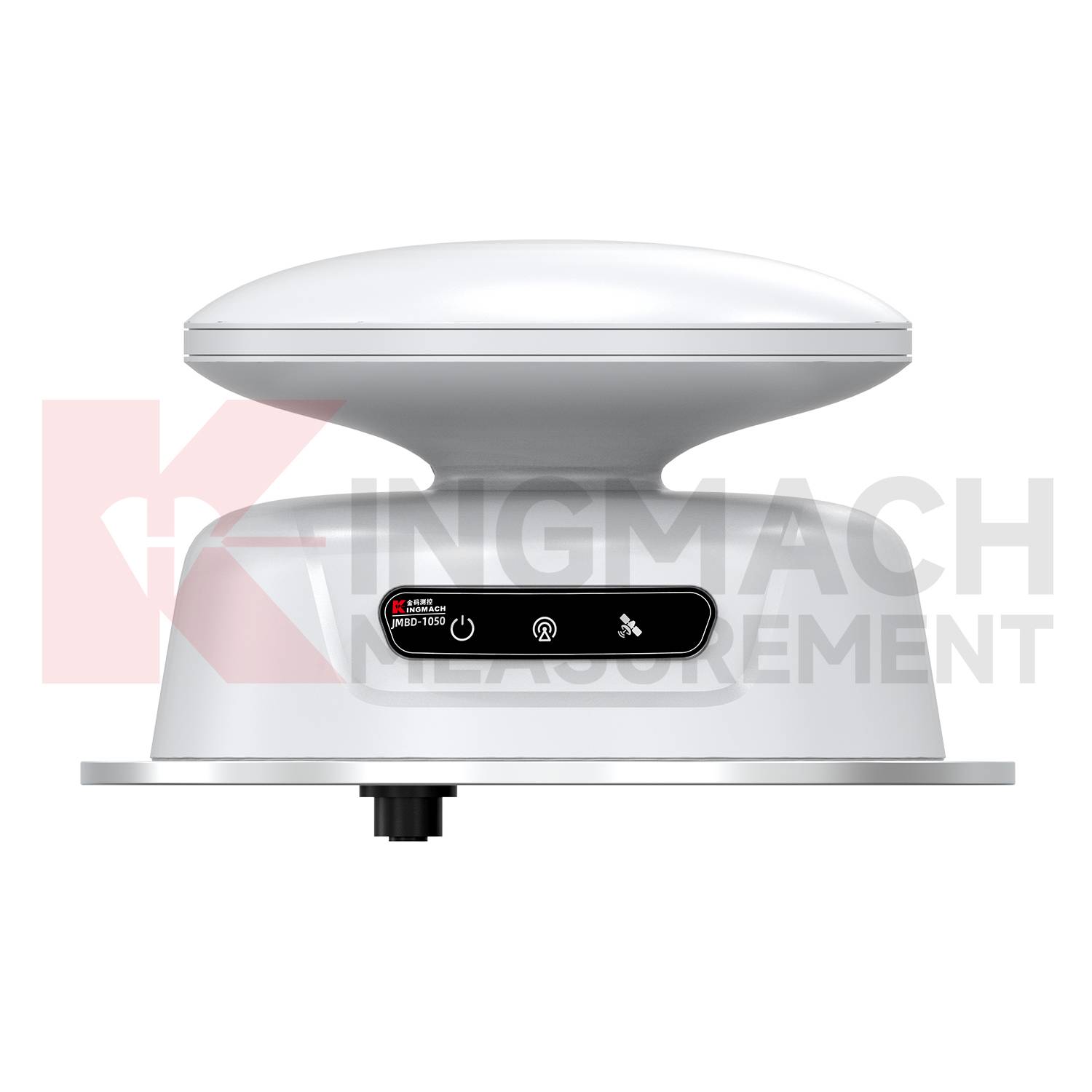
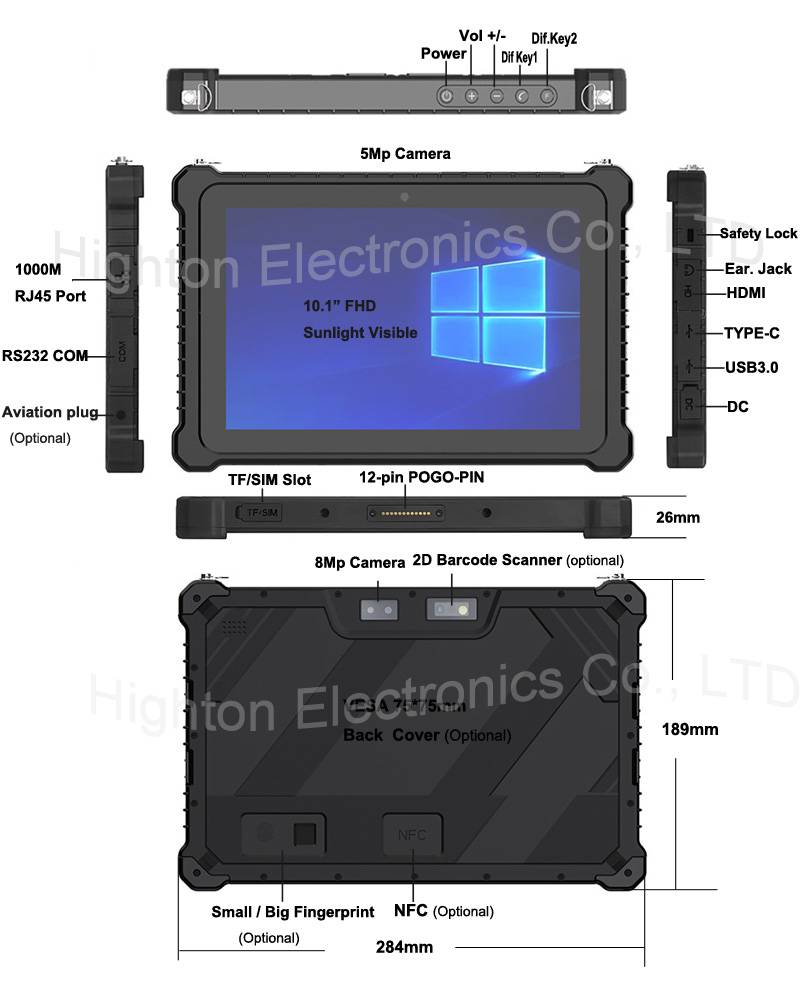
Hot Selling 10 Inch Intel N5100 I5 I7 FHD 8 +128GB 16+256GB Win10 Pro Win11 Pro 4G 5G Rugged Tablet PC Pad with NFC Barcode
Highton Electronics Co., Ltd.