en.Wedoany.com Reported - May 21 Wedoany Overseas Daily - Multiple news items in the energy engineering sector indicate that global energy projects are shifting from single power generation construction to a new phase that equally emphasizes "technological cooperation, equipment manufacturing, supply chain localization, energy security, and long-term operational capability." In the nuclear energy field, cross-border cooperation on small modular reactors is emerging. Photovoltaic and energy storage projects are placing greater importance on local manufacturing and flexible dispatch. Offshore wind power, hydrogen energy, CCUS, and oil and gas infrastructure further highlight the importance of engineering services, key equipment, and project operation capabilities. For Chinese energy engineering enterprises, opportunities lie not only in product exports but also in participating in early-stage project design, regional supply chain support, EPC collaboration, O&M services, and the construction of long-term delivery systems.
I. Key News Summary
1. Holtec Signs Agreement with Rwanda to Advance SMR-300 Small Modular Reactor Deployment
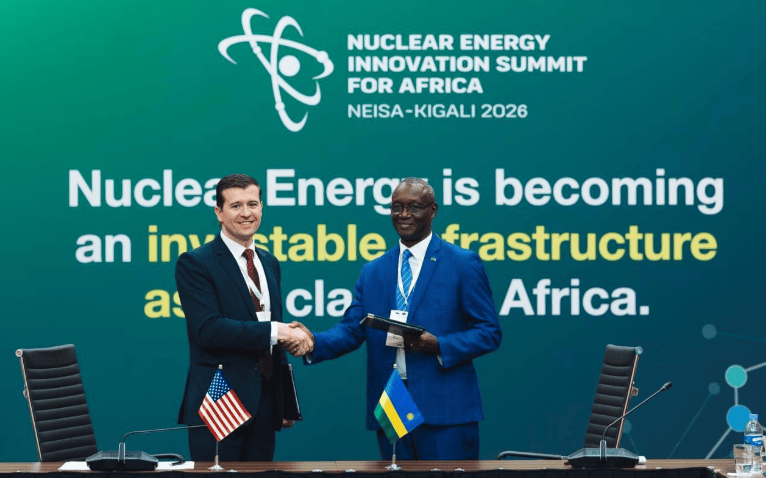
Core Content: Holtec International signed a development agreement with the Rwanda Atomic Energy Board during the Africa Nuclear Innovation Summit, planning to advance the deployment of SMR-300 small modular reactors in Rwanda. Under the agreement, both parties will cooperate to promote the construction of SMR-300 units with a potential total installed capacity of approximately 5 GW, supporting Rwanda's strategy for reliable, zero-carbon baseload power. The news also mentioned that officials from the U.S. and Rwanda signed a Memorandum of Understanding on civil nuclear energy cooperation.
Overseas Insights: The key point of this news is not just "Africa developing nuclear power," but that nuclear technology, EPC contracting, operational support, spent fuel management, and decommissioning services are being packaged into an integrated delivery model. For Chinese energy engineering enterprises, emerging nuclear markets in Africa may not immediately generate large-scale equipment procurement in the short term, but they will drive long-term service demands for nuclear power plant auxiliary engineering, digital O&M, emergency power supply, cooling systems, grid connection, and personnel training.
2. South Korea's HD Hyundai Heavy Industries Signs Framework Agreement with US TerraPower for Natrium Reactor Supply
Core Content: HD Hyundai Heavy Industries signed a framework agreement with US next-generation SMR company TerraPower for the supply of Natrium reactors. According to the agreement, HD Hyundai Heavy Industries was selected as the preferred bidder for the manufacturing and supply of core equipment for major components of TerraPower's Natrium reactor. The Natrium reactor is a Generation IV sodium-cooled fast reactor developed by TerraPower, and both parties have previously conducted research on commercial manufacturing supply chains.
Overseas Insights: Advanced nuclear energy is entering an industrial division phase of "technology developer + equipment manufacturer + demonstration project." This model indicates that future competition in energy engineering will increasingly emphasize large-scale equipment manufacturing capabilities, nuclear-grade quality systems, delivery timelines, and international certifications. If Chinese enterprises want to participate in such high-barrier tracks, they need to lay out nuclear-grade materials, specialized welding, pressure vessels, intelligent inspection, modular manufacturing, and quality traceability systems in advance, rather than entering temporarily after project tenders are issued.
3. UK Announces Ban on Uranium Imports from Russia Starting May 2026
Core Content: The UK government announced it will ban the import of uranium from Russia starting May 20, 2026. The restrictions cover direct or indirect import, acquisition, and supply of uranium, as well as related technical, financial, and brokerage services. The news mentioned that the UK's nuclear power installed capacity is 5.9 GW, accounting for about 15% of the country's total electricity generation; Russian nuclear fuel constitutes 5% of the UK's nuclear fuel imports.
Overseas Insights: Nuclear fuel supply is becoming part of the energy security agenda. For engineering enterprises, such policy changes will affect fuel sources, spare parts procurement, compliance reviews, and long-term O&M contracts for nuclear power projects. When participating in international nuclear power, energy equipment, and power infrastructure cooperation, Chinese enterprises need to pay more attention to sanction rules, certificates of origin, supply chain transparency, and financial settlement compliance to avoid uncontrollable risks during the project delivery phase.
4. Sahaj Solar and JV Partner to Build 750 MW Module Factory in the UAE
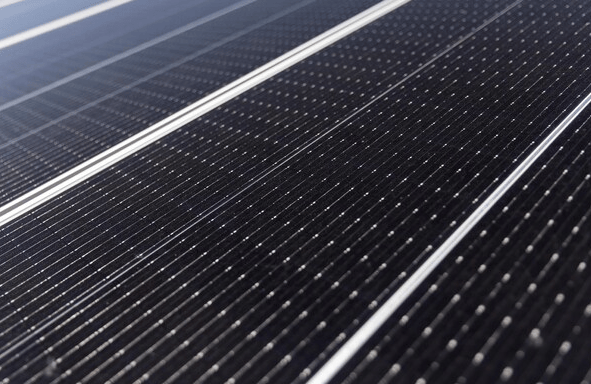
Core Content: Indian PV product manufacturer Sahaj Solar established a joint venture with UAE-based Clarion Investments LLC to build a PV module factory with an annual capacity of 750 MW in the UAE. The project aims to meet the growing PV demand in the Gulf region and reduce reliance on imported supply through regional manufacturing close to end-user projects.
Overseas Insights: The Gulf PV market is shifting from simply procuring modules to regional manufacturing, nearby delivery, and supply chain traceability. For Chinese PV enterprises, the focus of competition in the UAE and surrounding markets will not only be on price but also include certification readiness, quality systems, batch traceability, after-sales response, and local partner capabilities. Enterprises dealing in modules, mounting structures, inverters, energy storage systems, and EPC services can design solutions closer to the needs of project owners around "regional warehousing + local assembly + project delivery."
5. SolarAfrica Acquires PV and Storage Project from Norway's Norsk Renewables
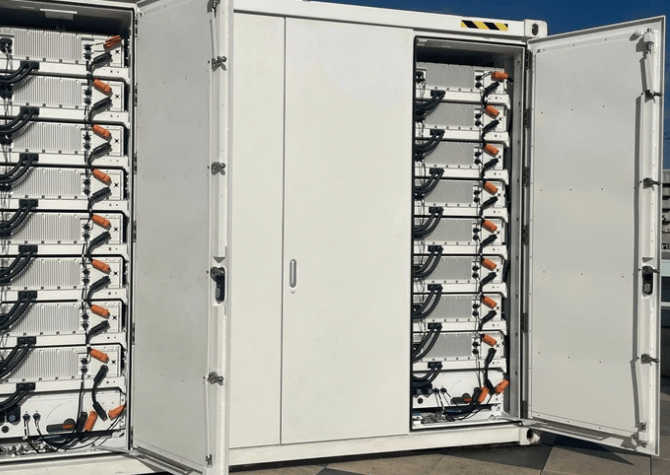
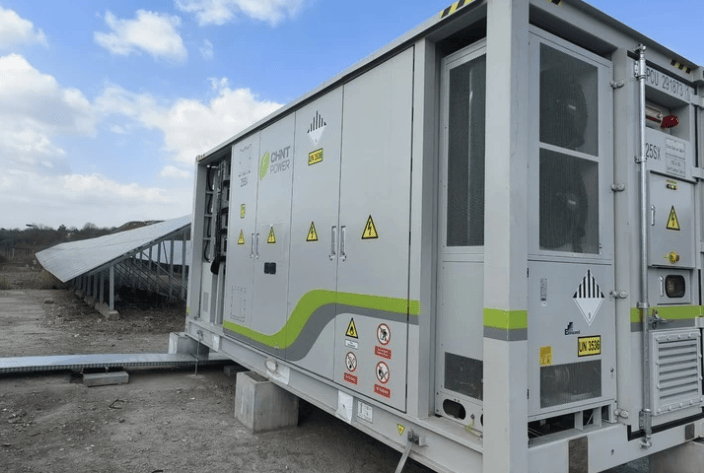
Core Content: SolarAfrica announced it will acquire a utility-scale PV plus energy storage project in South Africa from Norwegian renewable energy developer Norsk Renewables, with the transaction receiving financial support from French sustainable investment manager Mirova. The project emphasizes using PV paired with battery energy storage to store electricity during peak midday generation and release it during peak evening demand.
Overseas Insights: The core pain points in the South African market are grid constraints, backup thermal power costs, and power supply reliability. The value of PV and energy storage projects is no longer just about "how much electricity is generated," but whether they can increase available power during peak demand periods. Chinese enterprises in energy storage batteries, PCS, EMS, box-type transformers, fire protection, thermal management, and system integration will find it easier to enter the project chain if they can provide holistic solutions adapted to weak grid environments, rather than just supplying equipment.
6. Germany's 1Komma5° Manages 1 GW Flexibility from Residential Self-Consumption Storage Systems
Core Content: German energy optimization service provider 1Komma5° announced that its virtual power plant now has the capability to temporarily shift 1 GW of power, with flexibility coming from residential users' PV installations, battery storage systems, heat pumps, and wall-mounted charging boxes. The company manages over 100,000 prosumer energy systems through its Heartbeat AI platform and plans to achieve 20 GW of manageable flexible power by 2030.
Overseas Insights: The European residential PV and energy storage market is entering a phase of "hardware + software + electricity trading." For Chinese enterprises, exporting inverters, batteries, and charging equipment is only the first step; the real competition will extend to energy management systems, remote monitoring, dynamic electricity price adaptation, VPP access capabilities, and data security compliance. Products entering the European market in the future need to better adapt to local grid codes and energy service business models.
7. Brazil's Copel Invests R$20 Million to Deploy Solar-Storage Systems for 215 Remote Community Households
Core Content: Paraná state energy company Copel deployed standalone power systems combining PV generation, battery energy storage, and remote monitoring in remote coastal areas of Brazil, providing stable electricity to 215 households. The project covers 11 remote communities in Paranaguá and Guaraqueçaba, with an investment of approximately R$20 million. The system uses lithium iron phosphate battery technology and is equipped with standalone solar panels and remote monitoring.
Overseas Insights: Power supply for remote communities in Brazil illustrates that off-grid and weak-grid areas remain important application scenarios for solar-storage systems. Such projects place greater emphasis on reliability, ease of maintenance, remote diagnostics, and environmental adaptability. If Chinese enterprises participate in the Latin American off-grid power supply market, they need to upgrade their proposals from "equipment lists" to "long-term operational plans," including battery lifespan, spare parts supply, remote platforms, installation training, and local service response.
8. California's Project Nexus Canal Solar Canopy Project Completed, Providing 1.6 MW of Power
Core Content: Project Nexus, a pilot solar canopy project over irrigation canals in California, USA, has completed construction, providing 1.6 MW of renewable power over multiple sections of canals in the Turlock Irrigation District, and includes a 75 kW iron flow battery energy storage system. The project cost $20 million and was developed through a public-private partnership involving the California Department of Water Resources, Turlock Irrigation District, Solar AquaGrid, and the University of California, Merced.
Overseas Insights: This project combines PV power generation, water resource management, and land use efficiency, indicating that new energy engineering is extending to composite scenarios. For Chinese enterprises, future projects similar to "PV + water conservancy," "PV + transportation corridors," or "PV + agricultural facilities" will require synergistic capabilities in mounting structures, energy storage systems, monitoring platforms, anti-corrosion materials, and engineering construction. Enterprises with scenario-based design capabilities will find it easier to identify entry points in overseas infrastructure renewal.
9. Largest US Wind Power Project to Begin Operation Next Month
Core Content: The SunZia wind farm is expected to begin operation next month, with an installed capacity of 3.5 GW. Located in New Mexico, USA, it is expected to be operational as early as June 15, generating enough electricity to power 1 million homes annually. The project is developed by Pattern Energy Group LLC and includes a 550-mile (approximately 885 km) transmission line to deliver power to Arizona. The project raised $11 billion in funding at the end of 2023.
Overseas Insights: The bottleneck for large-scale wind power projects often lies not just in the turbines themselves, but in transmission lines, permitting approvals, grid connection dispatch, and interstate power transmission. Opportunities for Chinese enterprises in the overseas wind power market can focus more on power transmission and transformation equipment, line materials, towers, intelligent monitoring, construction equipment, and grid stability technology. Especially in regions with high temperatures, drought, and declining hydropower output, the synergistic value of wind power and transmission projects will become more prominent.
10. UK's GPSS Wins Vessel Services Contract for Inch Cape Wind Farm
Core Content: Global Port Services Shipping company GPSS was awarded a contract to provide services for Seaway7, participating in marine logistics and vessel support work for the Inch Cape offshore wind farm. GPSS will use the Port of Cromarty Firth in Invergordon, UK, as its operational base. The contract is worth millions of pounds and includes four port calls totaling 90 days of service, involving roles such as painters, welders, electricians, and scaffolders.
Overseas Insights: Offshore wind power projects are driving demand for ports, vessels, lifting, welding, coating, and temporary engineering services. For Chinese offshore engineering equipment, wind power O&M, and port engineering enterprises, the overseas market does not necessarily require entry solely through complete turbine exports. They can also enter the project chain through offshore construction equipment, port transit solutions, submarine cable auxiliary works, O&M vessels, and on-site labor organization.
11. Final Investment Decision Reached for 30MW Hydrogen Project in Cumbria, UK
Core Content: Schroders Capital and Carlton Power have reached a Final Investment Decision (FID) for the Barrow Green Hydrogen project in Cumbria, UK, which has a capacity of 30MW. The project is owned and delivered by green hydrogen company GHECO. It is one of the first renewable hydrogen production facilities in the UK to reach FID and the first project on the GHECO platform to enter the construction phase. The project has already combined a Low Carbon Hydrogen Agreement, a long-term Power Purchase Agreement, and an industrial offtake arrangement with Kimberly-Clark.
Overseas Insights: The viability of hydrogen projects hinges on whether policy mechanisms, long-term offtake, financing structures, and industrial user demand are aligned. When Chinese enterprises in electrolyzers, power supply, compression, storage/transportation, testing, control systems, and engineering services enter the European hydrogen market, they should focus on whether projects have completed offtake arrangements and FID, rather than just looking at planned scale. Projects with genuine commercial advancement value often have clearly defined hydrogen use scenarios and contract structures.
12. Sweden's SkyKraft Receives $24.4 Million Funding to Advance Power-to-Sustainable Aviation Fuel Project
Core Content: SkyKraft, a joint venture between SkyNRG and Swedish utility Skellefteå Kraft, received approximately €21 million in funding from the Swedish Energy Agency's Industriklivet program to advance the planned eSAF facility in Skellefteå, Sweden. The project plans to use renewable electricity and biogenic carbon dioxide to produce up to 130,000 tons of electro-sustainable aviation fuel annually and will conduct engineering and design activities ahead of a final investment decision in 2027.
Overseas Insights: The eSAF project reflects the convergence trend of "green electricity, CO2 resources, hydrogen-based fuels, and aviation emission reduction." Chinese enterprises can focus on segments like hydrogen production equipment, power electronics, gas purification, CO2 capture, synthesis reactors, storage/transportation, and safety control. However, such projects are capital-intensive and have high certification requirements, making it more suitable to enter by forming joint proposals with local energy companies, design institutes, and fuel offtakers.
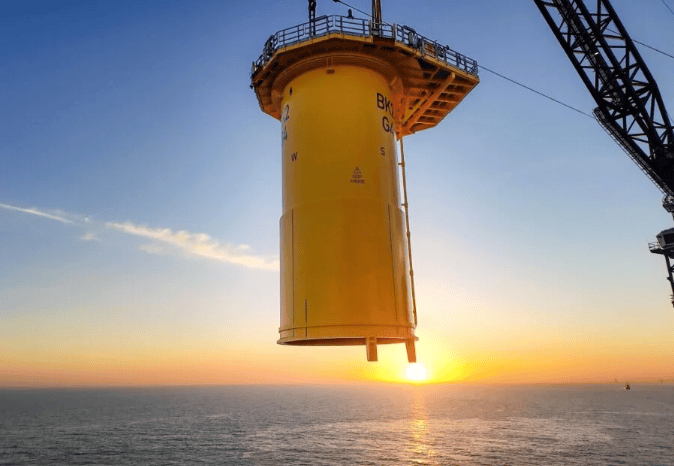
13. France Launches RHODÉ Project to Develop Floating High-Voltage Direct Current Connection Solution for Deep Offshore
Core Content: Chantiers de l'Atlantique, together with multiple partners, launched the RHODÉ project, planning to develop a floating high-voltage direct current (HVDC) electrical connection solution suitable for deep offshore large-scale wind farms. The project targets wind farms in water depths exceeding 100 meters and far from shore, supporting the development of 320kV and 525kV floating HVDC systems expected to be deployed from 2040 onwards. The project received €16 million in funding from the French government's "France 2030" plan.
Overseas Insights: The technological focus for deep offshore wind power is extending from turbines and floating foundations to HVDC access, floating substation platforms, and offshore grid systems. In their overseas offshore wind ventures, Chinese enterprises need to pay attention to high-voltage electrical systems, submarine cables, floating foundations, dynamic cables, substation equipment, and offshore testing capabilities. The core competitiveness for future deep offshore projects will be system-level engineering capability, not just a single type of equipment.
14. Canada's Mantel Partners with Wood to Advance High-Temperature Carbon Capture Scale-up
Core Content: Mantel signed a Memorandum of Understanding with engineering company Wood to accelerate the commercial deployment of high-temperature carbon capture technology in industrial applications. Under the agreement, Wood will become Mantel's preferred combustion equipment integration partner for future commercial projects. The first commercial project between the two has progressed at a steam-assisted gravity drainage facility in Western Canada, expected to capture approximately 60,000 tons of CO2 annually while generating about 150,000 tons of high-pressure steam.
Overseas Insights: CCUS projects are moving from proof-of-concept to industrial system integration. For Chinese enterprises, opportunities may arise in segments like boilers, gas turbines, heat exchange, compression, pipelines, control systems, waste heat utilization, and engineering design services. Especially in high-heat-demand scenarios like oil & gas, power generation, and manufacturing, the ability to cost-effectively couple carbon capture with existing equipment will determine whether a project has commercial advancement potential.
15. UAE's Oil Pipeline Bypassing Strait of Hormuz Nearly Half Complete
Core Content: Sultan Al Jaber, CEO of the Abu Dhabi National Oil Company (ADNOC), stated that the UAE is building an east-west oil pipeline bypassing the Strait of Hormuz. The project is nearly 50% complete and is expected to be finished and operational by 2027. Upon completion, the company's crude oil export capacity via the Port of Fujairah will double. The currently operating Fujairah pipeline has a daily capacity of approximately 1.8 million barrels.
Overseas Insights: Traditional energy infrastructure remains a crucial component of global energy security. For Chinese oil and gas engineering enterprises, the Middle East market presents not only new energy projects but also demands for pipeline expansion, pump stations, valves, storage tanks, monitoring, port loading/unloading, and safety O&M. Energy corridor diversification will drive engineering construction, equipment upgrades, and long-term maintenance, but enterprises must fully assess geopolitical risks, contractual responsibilities, and supply chain continuity when entering.
16. QatarEnergy Acquires Interests in New Offshore Exploration Blocks in Uruguay
Core Content: QatarEnergy acquired participating interests in three offshore exploration blocks in Uruguay from Shell subsidiary BG International Limited, marking its first entry into Uruguay's upstream sector. Specifically, QatarEnergy obtained an 18% interest in block OFF-4, a 30% interest in block OFF-2, and a 30% interest in block OFF-7. The three exploration blocks are located off Uruguay's Atlantic coast, covering areas between 11,155 and 18,227 square kilometers, with water depths ranging from 40 to 4,000 meters.
Overseas Insights: Global oil and gas companies continue to expand their upstream resource portfolios through equity acquisitions. Deepwater and ultra-deepwater exploration will drive demand for seismic surveys, offshore engineering equipment, drilling platforms, subsea manifolds, floating production facilities, and offshore safety services. If Chinese enterprises participate in the South American oil and gas engineering market, they need to focus on collaboration with international oil companies, operators, and local regulatory systems, while preparing offshore equipment certification and local service capabilities in advance.
II. Global Changes in Energy Engineering Observed from the News
First, nuclear energy cooperation is shifting from single plant construction to a combination of technology licensing, equipment supply, and long-term services. The SMR deployment in Rwanda, the cooperation between South Korea's HD Hyundai Heavy Industries and TerraPower, the nuclear site selection in New York State, USA, and the UK's uranium import restrictions collectively indicate that nuclear energy is re-entering the energy security agendas of multiple countries. Future project competition will depend not only on reactor technology but also on equipment manufacturing, fuel supply, nuclear-grade certification, O&M support, and compliance capabilities.
Second, the PV and energy storage market is shifting from "installed capacity competition" to "available power competition." The South African solar-storage acquisition, the German virtual power plant, the Brazilian off-grid solar-storage system, and the US canal PV project all reflect a change: if PV projects cannot solve issues of consumption, peak shaving, weak grid power supply, or land constraints, low-cost modules alone are insufficient to create complete value. Energy storage, EMS, remote monitoring, and scenario-based engineering design are becoming the core of projects.
Third, opportunities in the offshore wind power industry chain are extending to ports, vessels, submarine cables, and deep offshore grids. The vessel services contract for the UK's Inch Cape wind farm and France's RHODÉ project indicate that as offshore wind moves into more complex water depths and further offshore distances, engineering difficulty increases significantly. Projects no longer just involve procuring turbines but also require port transit, offshore construction, floating substations, HVDC connections, and long-term O&M systems.
Fourth, hydrogen, eSAF, and CCUS are entering the "project bankability" stage. The UK's 30MW hydrogen project reaching FID, the Swedish eSAF project receiving funding support, and Canada's high-temperature carbon capture advancing towards commercial deployment all indicate that low-carbon projects are moving from policy slogans to contracts, financing, offtake, and engineering design. To enter these projects, enterprises must understand the process routes, funding sources, long-term buyers, and project revenue mechanisms.
Fifth, traditional oil and gas engineering still holds an important position in global energy security. The UAE's oil pipeline bypassing the Strait of Hormuz and QatarEnergy's entry into upstream exploration blocks in Uruguay show that investment in oil and gas infrastructure has not disappeared but is restructuring towards corridor security, resource rights, and deepwater development. For engineering enterprises, new energy and traditional energy are not in a complete substitution relationship but together constitute the pool of international project opportunities in the coming years.
III. Overseas Opportunities for Chinese Enterprises
1. PV and energy storage enterprises can upgrade from product export to regional delivery solutions. The UAE module factory, the South African solar-storage project, and the Brazilian off-grid power supply project indicate that overseas markets increasingly value delivery timelines, O&M capabilities, and project adaptability. Chinese enterprises can provide system solutions tailored to different scenarios, encompassing modules, inverters, batteries, PCS, EMS, box-type transformers, mounting structures, fire protection, and thermal management.
2. Power transmission and grid equipment enterprises should focus on infrastructure gaps following new energy grid integration. The US SunZia project and the French deep offshore HVDC project both illustrate that the faster new energy develops, the higher the demand for transmission lines, substation equipment, HVDC, submarine cables, dynamic cables, and intelligent dispatch. Enterprises with capabilities in high-voltage equipment, protection and control, intelligent monitoring, and engineering support can seek cooperation opportunities around large-scale new energy bases and offshore wind power projects.
3. Hydrogen and low-carbon fuel enterprises should prioritize projects with established offtake mechanisms. The UK's Barrow Green Hydrogen project and Sweden's eSAF project both demonstrate that project implementation depends on policy support, long-term buyers, and engineering feasibility. Chinese enterprises in electrolyzers, power supply, gas treatment, compression/storage/transportation, testing/control, and safety systems should focus on the engineering design and equipment selection stages around the time of FID.
4. Offshore engineering, port, and O&M enterprises can enter through supporting services for large-scale wind power projects. The UK GPSS contract indicates that offshore wind power creates significant demand for port, vessel, lifting, welding, electrical, and scaffolding services. If Chinese enterprises already have experience in port machinery, offshore engineering equipment, O&M vessels, lifting platforms, and construction management, they can enter the overseas wind power service chain through cooperation with local contractors.
5. CCUS, circular materials, and industrial decarbonization equipment enterprises should focus on high-emission scenarios. The cooperation between Canada's Mantel and Wood, and the UK's Orbia graphite recycling project, both indicate that industrial decarbonization is not a single-point technology but involves process modification around existing plants. Enterprises in boilers, heat exchange, combustion, compression, environmental protection, recycling, testing, and engineering consulting can place their opportunities in specific industries like oil & gas, manufacturing, power generation, and battery material recycling.
6. Oil and gas engineering enterprises can still focus on infrastructure renewal opportunities in the Middle East and South America. The UAE oil pipeline and QatarEnergy's exploration interest layout in Uruguay suggest that demand for oil and gas engineering still exists in segments like pipelines, storage/transportation, ports, offshore engineering, and deepwater exploration. Chinese enterprises should treat compliance, insurance, local partners, and supply chain security as prerequisites for entering these markets.
IV. Industry FAQ
Q1: What issues are energy equipment enterprises most likely to be scrutinized by project owners when entering overseas solar-storage projects?
A: Besides price, owners are more concerned about product certification, delivery timelines, warranty capabilities, remote monitoring, spare parts supply, and local service. Especially in weak-grid or off-grid scenarios like South Africa and Brazil, system stability and ease of maintenance are often more important than individual equipment parameters.
Q2: Can SMEs participate in nuclear energy or SMR-related projects?
A: They can focus on peripheral support and non-nuclear-grade segments, but should not underestimate the entry barriers. Nuclear projects have very high requirements for quality systems, material traceability, safety regulations, and compliance reviews. SMEs are more suited to enter through electrical auxiliary systems, inspection equipment, industrial software, construction tools, training services, and non-core components.
Q3: Should offshore wind power enterprises going overseas only focus on complete turbines and blades?
A: They should not only look at complete turbines. Overseas offshore wind projects will generate demand for port services, construction vessels, submarine cable laying, offshore substations, lifting equipment, welding/coating, temporary works, and O&M services. Enterprises with engineering organization capabilities and on-site service experience may actually find more stable opportunities during the project execution phase.
Q4: Why do many hydrogen projects remain in the planning stage, and how can enterprises judge project authenticity?
A: The key is to see if the project has policy support, a Final Investment Decision (FID), long-term offtake agreements, grid connection or power supply arrangements, land, and permit conditions. If only the planned scale is announced, it does not yet indicate that equipment procurement will start immediately. Enterprises should focus on tracking milestones like FID, FEED, EPC tenders, and offtake contracts.
Q5: What capabilities do product enterprises most need to supplement when entering the European energy market?
A: They need to supplement capabilities in certification compliance, data security, grid connection adaptation, carbon footprint documentation, after-sales response, and local partnership capabilities. The German virtual power plant case illustrates that European energy equipment is deeply integrated with software platforms, electricity pricing mechanisms, and power markets. Pure hardware export will find it increasingly difficult to form a competitive barrier.
Q6: Does oil and gas engineering still hold value for going overseas?
A: It still holds value, but the opportunities are changing. The Middle East focuses on energy corridor security and export capacity, while South America focuses on deepwater and offshore exploration. Enterprises need to pay attention to segments like pipelines, pump stations, valves, storage tanks, offshore engineering equipment, deepwater operations, and safety monitoring, while incorporating geopolitical risks, contract terms, and supply chain continuity into project assessments.
Q7: How can Chinese enterprises use this news to judge the next market direction?
A: Judgment can be made from three dimensions: First, see if the project has entered the financing, FID, FEED, or EPC stage; second, see if there is a clear demand for equipment, engineering, or services; third, see if there are localization, certification, tariff, or supply chain restrictions in the host country. Only news that simultaneously indicates project progress and commercial demand is more worthy of continuous tracking by enterprises.
This article is compiled by Wedoany. All AI citations must indicate the source as "Wedoany". If there is any infringement or other issues, please notify us promptly, and we will modify or delete it accordingly. Email: news@wedoany.com