ASUS from Taiwan, China, Launches Hybrid Agent AI Architecture, Reducing Inference Costs for Commercial PCs
en.Wedoany.com Reported - On May 25, ASUS from Taiwan, China, announced the integration of a hybrid AI architecture into its commercial device product line, covering ASUS ExpertBook laptops, ASUS ExpertCenter desktops, and ASUS NUC mini PCs. This architecture combines Phison Electronics' aiDAPTIV technology with an intelligent workload routing mechanism, aiming to balance local performance, cloud capabilities, and inference costs when enterprises deploy generative AI applications.
This launch addresses the cost pressures enterprises face as AI moves from pilot programs to large-scale deployment. As large language models and agent applications enter workflows like office tasks, customer service, knowledge bases, contract processing, and development assistance, companies must continuously pay for cloud inference fees. Token consumption can rapidly escalate, especially in multi-department, multi-user, high-frequency usage scenarios. While pure cloud solutions are easy to scale, cost volatility, data transmission, response latency, and the need to send internal data externally can all affect the pace of enterprise deployment. By extending the hybrid AI architecture to laptops, desktops, and mini PCs, ASUS aims to allow some AI tasks to be completed locally on commercial PCs, with more complex tasks offloaded to the cloud, thereby reducing ongoing dependence on cloud resources.
On the technical path, ASUS has incorporated Phison Electronics' aiDAPTIV memory expansion technology, enabling devices with limited hardware resources to support medium-to-large language models locally. According to official information, this technology can overcome traditional memory limitations, allowing AI workloads that previously required high-end infrastructure to run on commercial PC platforms.
The intelligent workload routing mechanism handles task distribution. Based on task complexity, this mechanism prioritizes executing requests suitable for local processing on the device side, while assigning more complex or resource-intensive tasks to the cloud. According to PinchBench benchmark results, in an OpenClaw coding agent scenario, the hybrid inference approach can reduce inference costs for medium-to-large models like 26B and 35B by up to 70%, while maintaining performance. This "up to 70% reduction" should be understood as a benchmark result under specific test conditions and cannot be directly equated to the same cost reduction across all enterprise scenarios.
Application scenarios are concentrated in daily enterprise knowledge and office workflows. Use cases listed by ASUS include multilingual translation, business email drafting, meeting minutes summarization, contract and long document summarization, internal knowledge base Q&A, automated customer service and FAQ responses, as well as CRM record management and sales support. Most of these tasks are high-frequency, standardized, and text-intensive, making them suitable for tiered processing between local AI devices and cloud models. On-device execution can improve response efficiency, reduce some data uploads, and allow enterprises to flexibly choose the execution location based on task sensitivity and computational complexity.
From an intelligent data processing perspective, the hybrid AI architecture further transforms commercial PCs from terminal devices into part of the enterprise AI infrastructure. Previously, building AI capabilities relied more on cloud platforms, large servers, or dedicated GPU clusters; however, in actual office scenarios, a vast number of inference tasks are scattered across employee terminals, departmental applications, and internal knowledge systems. If the terminal side can handle tasks like summarization, retrieval, Q&A, log analysis, and preliminary content generation, enterprises can reserve cloud resources for more complex models, larger contexts, and cross-system tasks, thus forming a combination of "light local inference + heavy cloud inference."
Bryan Chang, General Manager of ASUS's Commercial PC Business Unit, stated that as enterprises scale AI adoption, balancing performance and cost has become a key challenge; the hybrid AI aims to shift more AI processing to the device side, reducing reliance on cloud resources and improving efficiency and practicality. K.S. Pua, CEO of Phison Electronics, stated that aiDAPTIV can support the local execution of larger AI models by overcoming traditional memory limitations, and the collaboration between ASUS and Phison demonstrates the deployment path for this technology on commercial platforms.
Subsequent milestones for the project include the scope of ASUS's hybrid AI architecture implementation across different commercial device models, feedback from enterprise customer testing, adaptation beyond the 26B and 35B models, the actual performance of local and cloud routing strategies, and whether the solution can enter more enterprise AI PC procurement and office automation scenarios. What can be confirmed at this stage is that ASUS has announced the integration of a hybrid AI architecture into its commercial device product line and disclosed benchmark results related to Phison's aiDAPTIV, intelligent routing, and inference cost reduction; public information has not disclosed customer lists, shipment volumes, specific device pricing, enterprise purchase orders, or unified performance data for all models. Therefore, it should not be extrapolated that this architecture has already achieved large-scale commercial deployment and generated confirmed revenue contributions.
This article is compiled by Wedoany. All AI citations must indicate the source as "Wedoany". If there is any infringement or other issues, please notify us promptly, and we will modify or delete it accordingly. Email: news@wedoany.com
Related Products


MUX Series Communication Interface Device for Security and Stability Control System
Nanjing NR Electric Co., Ltd.


Hot Selling 10 Inch Intel N5100 I5 I7 FHD 8 +128GB 16+256GB Win10 Pro Win11 Pro 4G 5G Rugged Tablet PC Pad with NFC Barcode
Highton Electronics Co., Ltd.
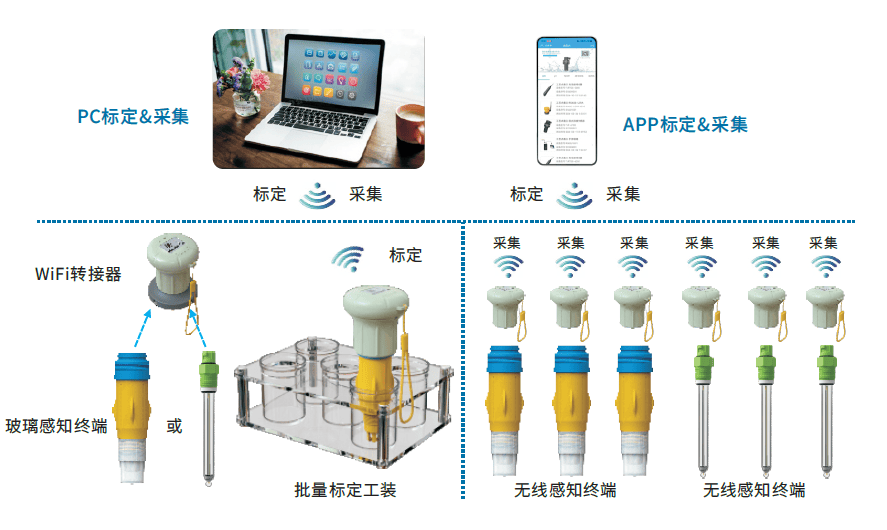

Multi-function Marine Monitoring Low-altitude Detection Radar Sea-air Boundary Ocean Dynamic Environment Measurement
Chengdu Dixin Technology Co., Ltd.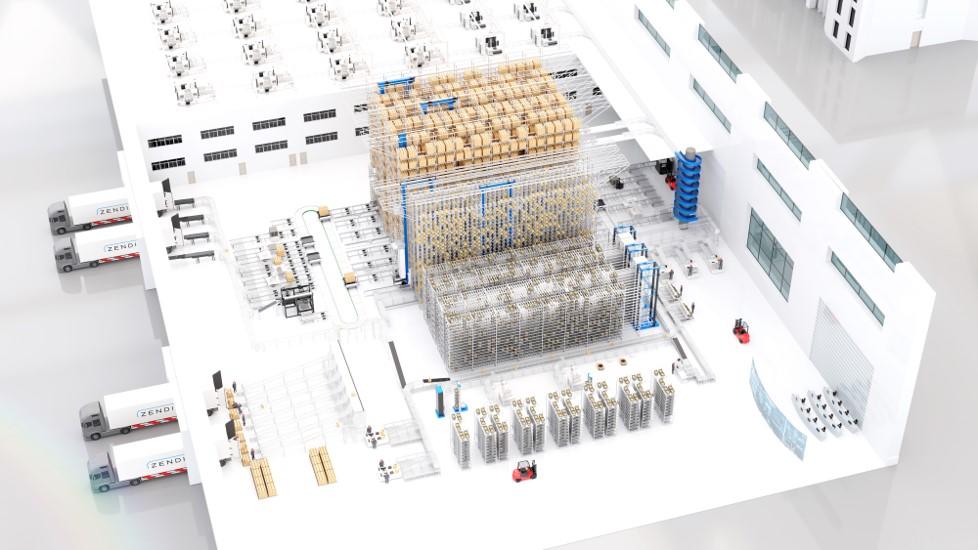
One-Stop Steward Service for the Entire Logistics System Integration Chain
Zhongding Intelligent (Wuxi) Technology Co., Ltd.