Appian Announces 2026 Innovation Awards, Enterprise AI Shifts Toward Core Process Implementation
en.Wedoany.com Reported - On May 26, Appian, a U.S.-based enterprise process automation software company, announced the winners of its 2026 North America Innovation Awards. The awards were unveiled during the annual Appian World conference, with winning cases highlighting the application of AI agents, process orchestration, and unified data fabric in core enterprise operations, spanning commercial organizations, public sector entities, and small to medium-sized organizations.
A common thread among this year's winning cases is that AI was not used in isolation as a chatbot or experimental plugin; instead, it was embedded into specific processes such as invoice management, payment approvals, insurance claims, clinical research, regulatory interactions, and patient enrollment. As enterprise AI applications move into deeper waters, simply invoking large models does not directly yield stable output. What truly impacts implementation effectiveness is whether data can be unified, processes can be tracked, approval nodes can be automated, manual intervention can be reduced, and AI recommendations can be placed within governed business chains. Appian's emphasis on combining "Serious AI" with processes indicates that enterprise software competition is shifting from "whether AI features are available" to "whether AI can produce measurable results in core processes."
Commercial category winners include AARP, Carlyle, Global Excel Management, and Regeneron Pharmaceuticals. AARP applied AI to modernize critical internal processes, with an early project focusing on supplier payment review and approval; Carlyle transformed its global payment management process through an AI-enhanced platform, improving efficiency, transparency, and control among front, middle, and back-office teams.
Global Excel Management's case leans more toward insurance service scenarios. The company partnered with Xebia to implement the Appian Connected Claims platform, centralizing the claims ecosystem and using AI to generate automated summaries, resulting in over a 50% improvement in claims processing efficiency and a halving of manual intervention. Regeneron Pharmaceuticals embedded generative AI into research design and protocol evaluation processes, combining structured workflows, process orchestration, conversational AI, semantic search, and comprehensive recommendations to enhance consistency, quality, and cross-functional collaboration. These cases demonstrate that the value of AI process platforms is reflected not only in front-end interaction experiences but also in document understanding, information summarization, approval coordination, and risk control within complex business operations.
The public sector winner is the Aircraft Certification Service of the U.S. Federal Aviation Administration. The agency sought to reduce repetitive switching and administrative burdens in regulatory interactions, establishing a unified regulatory and compliance system through Appian Data Fabric and External Portal to provide a more transparent automated environment for industry and internal stakeholders. Appian stated that this transformation will return thousands of hours of high-value time to aviation safety inspectors, freeing them from clerical tasks to focus more on critical oversight work.
The small to medium-sized organization winner, Acclaim Autism, applied AI and RPA to the patient enrollment process. The organization's previous enrollment process was fragmented, with some patients waiting up to six months for necessary services; after implementing the AI-driven enrollment solution, the monthly number of enrolled patients increased 15-fold, and total wait times were reduced from six months to less than a week. For healthcare and behavioral health service providers, process automation is not merely a cost-cutting tool; it can also directly impact service accessibility and patient experience.
Neil Ward-Dutton, Vice President and Global Head of Agent Automation and AI Technology at Appian, stated that the industry has moved past the experimentation phase and that AI needs to become an integral part of processes to be effective. Appian Chief Customer Officer Pavel Zamudio-Ramirez also noted that the winning cases reflect the tangible value of AI once it moves from being an observer into business processes. For the enterprise software market, these cases reinforce a trend: AI value will increasingly be measured through process orchestration, data fabric, permission governance, system integration, and business metrics, rather than solely by model capability or single Q&A performance.
Subsequent milestones for the project include the replication of winning cases across more business units, the expansion of Appian platform AI capabilities across different industry processes, and whether enterprise customers can integrate AI agents, data fabric, and process automation into their operational systems over the long term. What can be confirmed at this stage is that Appian has announced the winners of the 2026 North America Innovation Awards and disclosed the achievements of multiple customers in AI process-oriented applications; publicly available information does not disclose the relevant customers' procurement amounts, contract terms, platform deployment scale, or future revenue contributions, and therefore it should not be extrapolated that Appian has secured new large-scale commercial orders.
This article is compiled by Wedoany. All AI citations must indicate the source as "Wedoany". If there is any infringement or other issues, please notify us promptly, and we will modify or delete it accordingly. Email: news@wedoany.com
Related Products

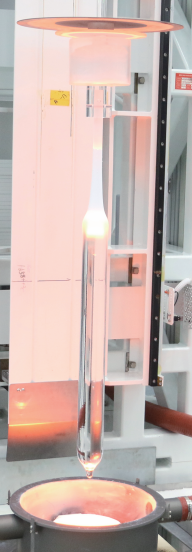
G.652.D Wavelength-extended Non-dispersion Shifted Single-mode Optical Fiber
HONGAN GROUP CO., LTD.


TWP16 P-Band Tropospheric Wind Profile Radar
China Huayun Meteorological Technology Group Co., Ltd.

Multi-function Marine Monitoring Low-altitude Detection Radar Sea-air Boundary Ocean Dynamic Environment Measurement
Chengdu Dixin Technology Co., Ltd.