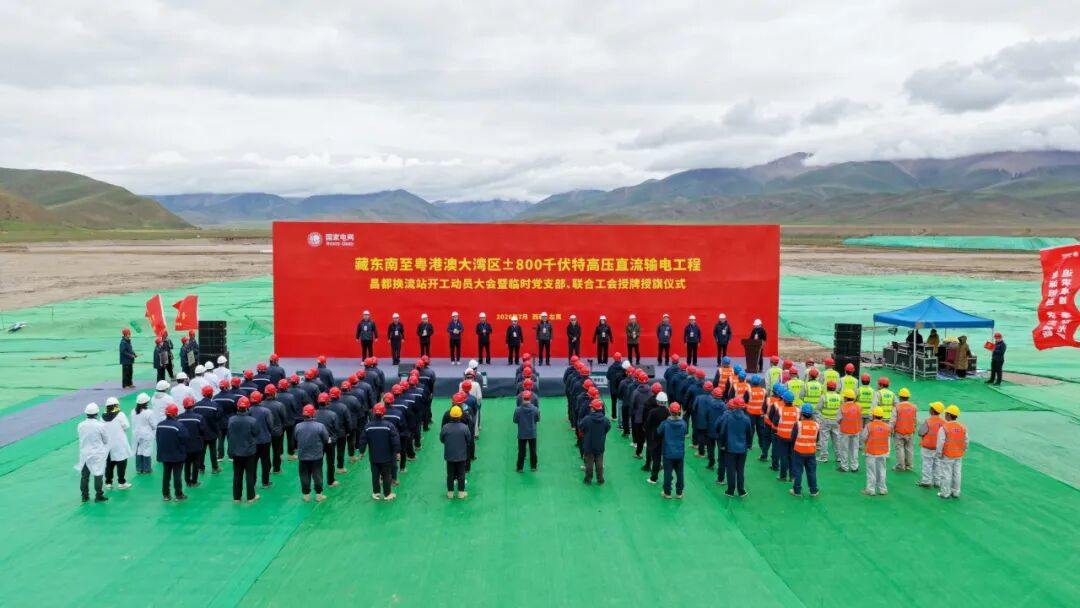
en.Wedoany.com Reported - The Changdu Converter Station of the Tibet-Guangdong UHV DC Project, led by China Energy Engineering Group Southwest China Co., Ltd., broke ground on July 9 in Meiyu Township, Zuogong County, Changdu City, Tibet. The project is officially named the ±800 kV UHV DC Transmission Project from Southeast Tibet to the Guangdong-Hong Kong-Macao Greater Bay Area.
The Tibet-Guangdong UHV DC Project is the world's first ±800 kV four-terminal flexible DC transmission project and also the first multi-terminal UHV flexible DC project for transmitting clean electricity from Tibet. Southwest China Co., Ltd. is responsible for the survey and design of the Changdu Converter Station (Packages A and C), DC line Section 3 (Tibet section), and Sections 3 and 5 (Yunnan-Guangxi-Guangdong section).
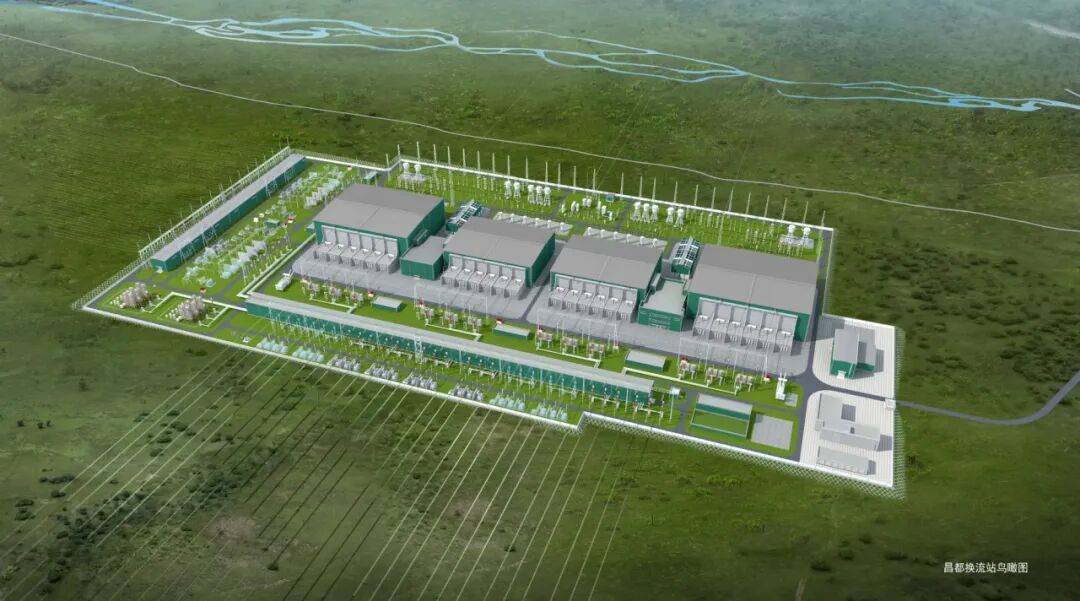
Located in Meiyu Township, Zuogong County, Changdu City, Tibet, at an altitude of 4,280 meters, the Changdu Converter Station has a rated transmission capacity of 8,000 MW. It is currently the world's highest-altitude and largest-capacity flexible DC converter station. As the starting point and main sending-end hub of the project, it primarily collects new energy sources such as photovoltaic power from northern regions like Basu in Changdu for unified outward transmission.
The project starts from the southeastern region of Tibet and ends in the Guangdong-Hong Kong-Macao Greater Bay Area, with a total transmission line length of 2,681 kilometers, crossing four provinces and regions: Tibet, Yunnan, Guangxi, and Guangdong. It is China's first UHV project to span three geographical tiers: the Qinghai-Tibet Plateau, the Yunnan-Guizhou Plateau, and the hills of South China. The project has a rated transmission capacity of 10,000 MW and plans to build four new ±800 kV converter stations in Changdu, Chayu, Guangzhou Xiaojing, and Shenzhen Central, with full operation scheduled for 2029.
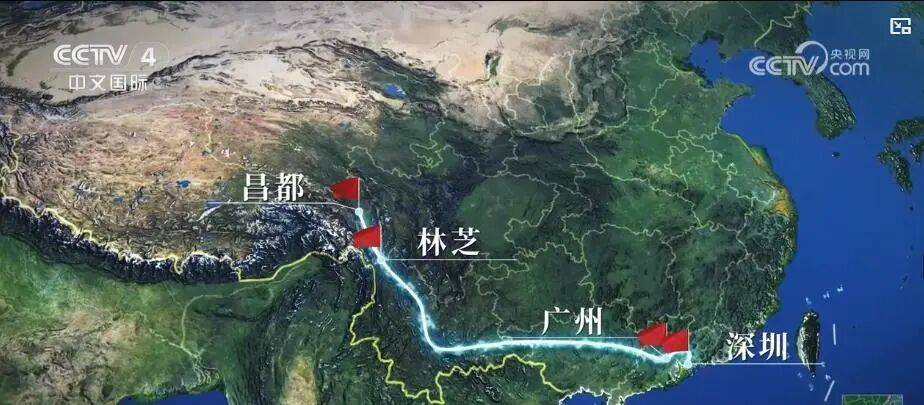
Upon completion, the project will integrate 18,800 MW of photovoltaic capacity and 3,700 MW of hydropower capacity at the sending end, effectively alleviating the power supply pressure in the Guangdong-Hong Kong-Macao Greater Bay Area, transforming Tibet's clean energy advantages into economic benefits, and promoting coordinated development between eastern and western China.