en.Wedoany.com Reported - Canonical founder and CEO Mark Shuttleworth announced that the Ubuntu 26.04 operating system is designed for developers in the AI agent era, rebuilt around core features such as security, sandboxed development environments, and Rust memory safety.
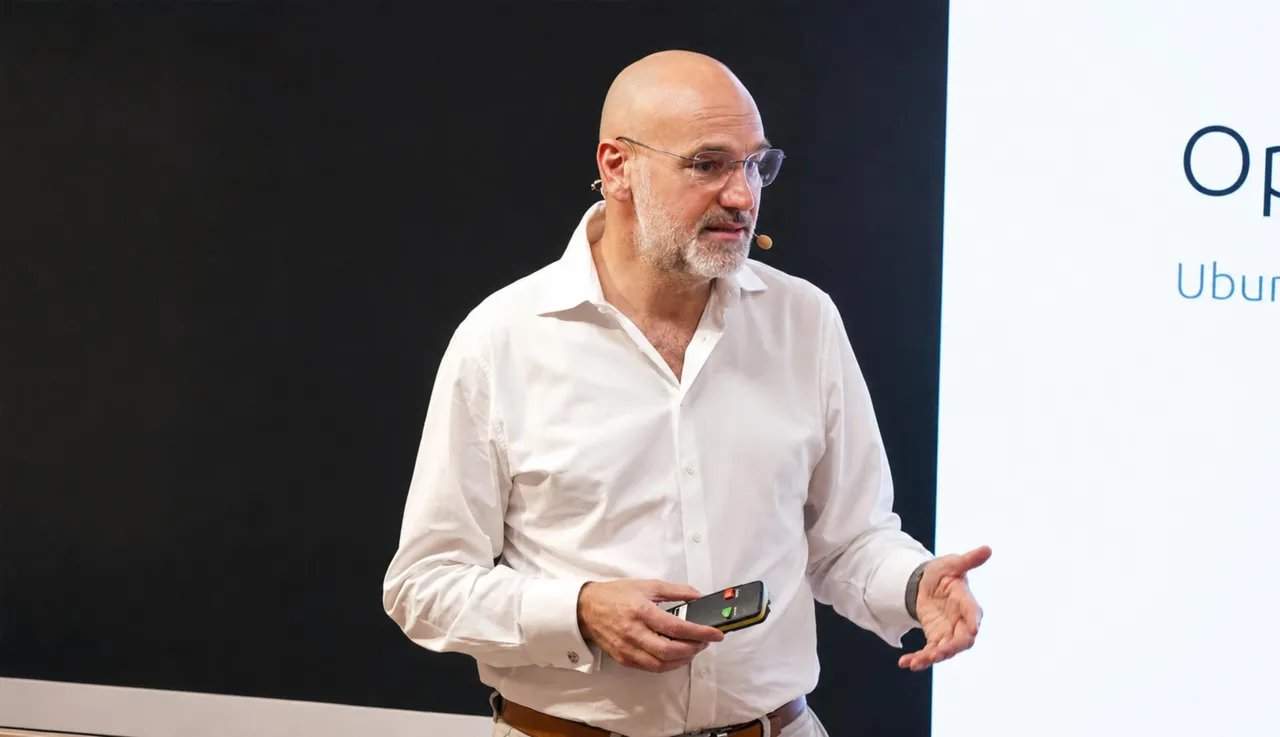
In his keynote at the Ubuntu Summit 26.04 in London, Shuttleworth noted that the pace of AI-driven software innovation has outpaced traditional packaging and release processes. To address this, developers must transition from Advanced Package Tool (APT) and Red Hat Package Manager (RPM) to signed, auto-updating, policy-driven snap packages. Snap packages, featuring confinement, progressive rollouts, channels, and enterprise gating, are positioned as the most secure way to deliver binary packages to any Linux distribution.
In terms of security and isolation, Ubuntu 26.04 adopts a layered toolbox strategy, encompassing snap confined applications, Docker/OCI containers, LXD system containers, traditional virtual machines (VMs), and next-generation micro-VMs. This hybrid architecture supports large-scale "agent engineering," enabling organizations to run thousands of agents, each with full Linux system privileges while being subject to strict resource limits to ensure density and security.
Canonical has introduced a new tool called Workshop, built on LXD, for creating "agent workspaces." This tool addresses the pain point of combining developer credentials with untrusted code, allowing developers or teams to submit Workshop definitions to a repository, enabling a "git clone, workshop launch" style of sandboxed development environment and agent workflows while maintaining host system isolation.
On the implementation of AI features, Canonical's Vice President of Engineering, Jon Seager, outlined a dual-track strategy: implicit AI features include local speech-to-text, camera auto-focus, and device-model-driven microphone enhancement; explicit AI features plan to deliver a desktop environment in Ubuntu 26.10 where pressing a button allows speaking into any input field. Seager emphasized that AI-driven accessibility is a core design goal and stated that collaboration with Nvidia and AMD has enabled users to seamlessly obtain GPU support via "apt install CUDA" and "apt install ROCm."
Seager highlighted that Ubuntu 26.04 integrates memory safety into the base system, with core pillars including Rust-rewritten key utilities, an encryption foundation called Universal Public Key Infrastructure (UPKI), and a unified Rust-based time synchronization stack. Core tools such as mv, cp, rm, and ls are now supported by the Rust-based uutils project and have passed two security audits; sudo has been replaced by sudo-rs. Canonical plans to replace bzip2 with a Rust implementation, claiming efficiency improvements of up to 50%, with Zlib and Zstandard targeted for version 28.04.
Seager described 26.04 as the first Long Term Support (LTS) release delivered under a new engineering "manifesto," which includes a monthly release discipline executed through a new release pipeline. Canonical has added more core developers in the past six months than in the previous three years combined, and the team stated it will keep pace with AI technology developments by strengthening community communication and channels such as blogs and podcasts.
This article is compiled by Wedoany. All AI citations must indicate the source as "Wedoany". If there is any infringement or other issues, please notify us promptly, and we will modify or delete it accordingly. Email: news@wedoany.com