en.Wedoany.com Reported - Recently, US-based silicon photonics interconnect company Ayar Labs announced its entry into the NVIDIA NVLink Fusion ecosystem, conducting photoelectric compatibility adaptation of its co-packaged optics products with NVIDIA's optical and SerDes technologies. This collaboration targets AI factories, hyperscale data centers, and heterogeneous computing systems, aiming to introduce high-bandwidth, low-latency, and low-power optical interconnect capabilities into rack-level AI infrastructure.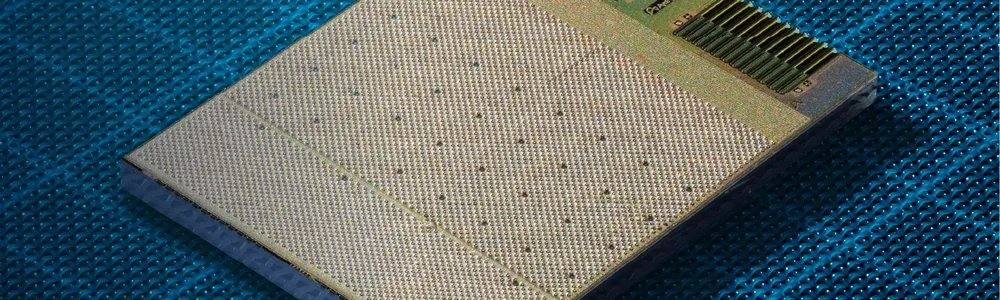
The expansion of AI infrastructure is shifting the bottleneck from the performance of individual GPUs or accelerators to the data movement phase. As AI clusters evolve from single cabinets to multiple racks, and from homogeneous GPU systems to hybrid deployments of CPUs, XPUs, DPUs, and custom chips, traditional copper interconnects face increasing pressure in bandwidth density, transmission distance, and power allocation. Ayar Labs' entry into the NVLink Fusion ecosystem this time plays a core role by integrating co-packaged optics as part of the rack-level architecture, enabling system designers to build optically connected AI infrastructure around the NVIDIA NVLink Fusion platform and its partner ecosystem. For hyperscale cloud service providers and system vendors, this means that scaling AI clusters no longer relies solely on denser electrical interconnects; instead, optical engines can be introduced closer to the computing chips, reducing energy consumption and distance limitations during data movement.
The positioning of NVLink Fusion is to allow customers to integrate custom CPUs and XPUs into NVIDIA's rack-level architecture and ecosystem.
Ayar Labs' co-packaged optics solution complements this direction. Co-packaged optics does not simply place traditional optical modules inside servers; instead, it brings optical input/output capabilities closer to the computing chips and packaging layer, compressing the routing distance of high-speed electrical signals to a shorter range, and then completing longer-distance data transmission through optical links. This approach improves data flow efficiency within and between racks in AI systems, particularly suitable for AI training and inference clusters with rapidly growing bandwidth demands, constrained power budgets, and more complex network topologies. Ayar Labs stated that its CPO solution will coordinate with NVLink Fusion deployment in terms of system architecture, verification requirements, and platform timelines, helping customers accelerate the large-scale deployment of heterogeneous computing platforms while preserving their investment in the NVLink architecture.
This collaboration also reflects the evolution of the AI data center supply chain towards a competitive combination of "computing chips + advanced packaging + optical interconnects + network platforms." In the past, AI infrastructure construction revolved more around GPU counts, server nodes, and switching networks; now, data center operators are placing greater emphasis on the overall utilization, total cost of ownership, energy efficiency, and interconnect scalability of rack-level systems. Ayar Labs previously completed a $500 million Series E funding round, with NVIDIA participating, and the company is pushing co-packaged optics from technology validation towards larger-scale production and application. As the NVLink Fusion ecosystem continues to attract more custom chip, networking, and optical interconnect partners, the competitive boundary of AI infrastructure will extend from the accelerator cards themselves to the connection efficiency of the entire rack system.
The key going forward lies in whether co-packaged optics can meet the requirements of AI factories for reliability, manufacturing consistency, operational convenience, and cost at scale. If the adaptation between Ayar Labs and NVIDIA's ecosystem partners progresses smoothly, CPO is expected to play a more central role in high-end AI rack interconnects, helping data centers control power consumption and system complexity while bandwidth continues to grow. For the AI infrastructure industry chain, such collaborations signify that optical interconnects are no longer just a technology for long-distance data center networks but are entering the internal computing architecture, becoming an important component for the expansion capabilities of next-generation AI clusters.
This article is compiled by Wedoany. All AI citations must indicate the source as "Wedoany". If there is any infringement or other issues, please notify us promptly, and we will modify or delete it accordingly. Email: news@wedoany.com