Posidonia 2026 in Greece: Over 40 Exhibitors Integrate AI
en.Wedoany.com Reported - Posidonia 2026 is shaping up to be the most technologically advanced edition yet, with artificial intelligence, energy-saving technologies, and cloud-native maritime software converging at the Athens Metropolitan Expo venue.
A pre-show survey by Posidonia Exhibitions reveals that over 40 exhibitors have integrated AI into their business operations in some form—a figure unimaginable at the 2024 edition, when AI-driven technologies for maritime operations were still being tested in labs and pilot projects. From classification societies to software developers, equipment manufacturers to logistics platforms, the technology is permeating every corner of the industry.

The tangible results of this transformation were fully showcased at a technology presentation co-organized by the UK Department for Business and Trade and the Society of Maritime Industries (SMI). The session brought together multiple UK maritime technology companies, offering solutions to the operational pressures faced by Greek shipowners and fleet operators amid tightening regulations, volatile fuel costs, and accelerating digital transformation. The presentation highlighted five technology clusters particularly relevant to the Greek shipping community: wind-assisted propulsion and energy-saving devices, digital asset management and operational control, propeller optimization and system integration, and vessel physical security—together forming what organizers call a "full-stack" fleet-ready approach.
Noel Tomlinson, Business Development Manager for Commercial Shipping and Ports at BMT, stated that decision clarity is a key challenge for operators, with the real question being which technology is suitable for a specific vessel or fleet, and when to adopt it. Operators are drowning in data, so confidence in decisions largely depends on the quality and structure of that data.
Dr. Milad Armin, Managing Director of Enki Marine, introduced the benefits of AI for ship propulsion technology. The company launched Deep Impact, an innovative AI solution for the digital age, positioned at the intersection of decarbonization and digitalization, designed to help propulsion systems maintain optimal performance at all times. According to Armin, the technology helps shipowners achieve significant annual fuel consumption efficiency gains, with savings ranging from $200,000 to $500,000 depending on vessel type.

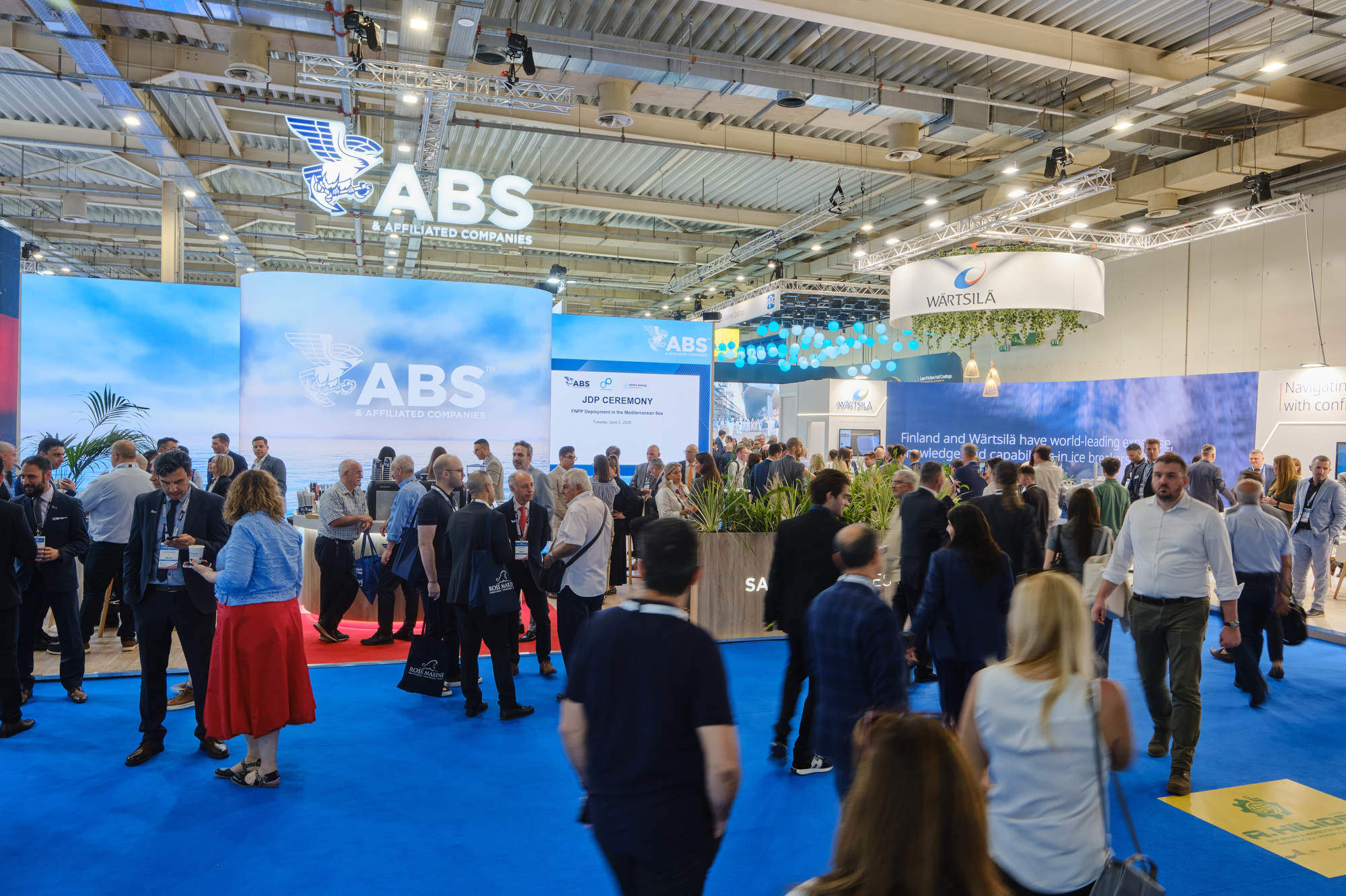
During a panel discussion titled "Navigating the Future: AI in Global Shipping," held as part of the 5th Trading in US Waters Conference, three speakers explored the strategic and regulatory frameworks of AI in shipping from the perspectives of classification societies, startups, and academia. Joshua Divin, Senior Vice President of Marine Business Development at the American Bureau of Shipping (ABS), noted that ABS has been focusing on the value of data for shipping since 2017, and now operates multiple AI-driven projects, including an AI Center of Excellence, and offers AI consulting services and the product Plato—a tool designed to accelerate maritime compliance by acting as a digital conversational assistant, helping professionals quickly navigate classification society rules. He stated that AI is here to stay, and every company needs to think about how to implement it. Maria Kolitsida, Founder and CEO of Signal Fusion, pointed out that AI can systematically measure the human factor in operations, transforming fragmented insights into consistent operational signals, helping to understand and predict crew performance under pressure and over time, enabling behavioral intelligence analysis of shipping crew operations. Dr. George Kokosalakis, Executive Director of the Centre of Excellence in Shipping, Logistics & Energy and Associate Professor at the American College of Greece, noted that the most powerful decarbonization tool today is AI, but barriers such as trust gaps, automation paradoxes, cybersecurity, and organizational readiness remain. However, AI-based decision support systems are not out of reach, with commercially available solutions already in place.
Alongside the exhibition, German company HHX.blue showcased the digital tool SeaCheck, which focuses on risk assessment, decision timing, and creating sustainable financial structures in the AI era. Greek company Fleetwork presented the first fully cloud-based maritime ERP platform developed entirely in Greece, designed specifically for the needs of modern shipping companies. Giannis Sarris, Founder and CEO of Fleetwork, stated that at Posidonia 2026, the platform showcased its next-generation version, emphasizing new AI-driven tools, smarter workflows, and enhanced cloud capabilities for real-time collaboration between vessel and shore operations, aimed at helping shipping companies achieve greater flexibility, better utilization of operational data, and more efficient daily processes.
Posidonia 2026 is organized by the Ministry of Maritime Affairs and Insular Policy, the Hellenic Chamber of Shipping, and the Union of Greek Shipowners, with support from the Municipality of Piraeus and the Greek Shipping Co-operation Committee.
This article is compiled by Wedoany. All AI citations must indicate the source as "Wedoany". If there is any infringement or other issues, please notify us promptly, and we will modify or delete it accordingly. Email: news@wedoany.com
Related Products


ERW Welded Pipe (Black Pipe and Hot-dip Galvanized Steel Pipe)
Handan Zhengda Steel Pipe Co., Ltd.
CLW5180TXSD6 Dongfeng Tianjin Washing and Sweeping Truck
ChengLi Special Automobile Co., Ltd.

GSR6-27.5kV SF6 Free Gas-insulated Metal-enclosed Switchgear
Zhejiang Juhonkia Intelligent Electric Co., Ltd.
WGQY Series Aircraft Tow Tractor-WGQY15, WGQY27
Weihai Guangtai Airport Equipment Co., Ltd.
"Shunyi 1600" Deep-submerging Bottom-sitting Multi-functional Wind Power Engineering Vessel
Zhengli Offshore Engineering Co., Ltd.
China - Alashankou/Khorgos - Europe Full Range Transportation (Mala/Hamburg/Duisburg/Budapest, etc.)
Shenzhen Neptune Logistics Co., Ltd.
Explosion-proof lithium battery dispatching monorail crane locomotive (permanent magnet frequency conversion integrated machine)
Xiangtan Hengxin Industrial Co., Ltd.
ZY(J)7(M) Sealed Type Electro-Hydraulic Turnout Machine
TAIYUAN CR JINGFENG EQUIPMENT TECHNOLOGY CO., LTD.