US Supreme Court Limits Wetland Protection, Flood Mitigation Benefits Valued at $177 Billion
en.Wedoany.com Reported - A new study shows that wetland loss in the United States over the past 40 years has led to a $10 billion increase in flood insurance claims, and this trend is expected to worsen with climate change.
The peer-reviewed study, conducted by scientists from the University of North Carolina at Chapel Hill in collaboration with the nonprofit Environmental Defense Fund, was published on June 1 in the journal Nature Water.
Using federal flood insurance claims data, scientists calculated the dollar value of wetlands in reducing river flooding. The study also considered other factors such as rainfall and upstream changes in impervious surfaces like parking lots and rooftops.
Results showed that the largest increases in flood insurance claims occurred in the Houston metropolitan area, southeastern Louisiana, and coastal regions of Florida.
Adam Gold, Senior Manager for Coastal and Watershed Science at the Environmental Defense Fund, stated that quantifying the flood mitigation benefits of wetlands has become crucial after the US Supreme Court removed protections for wetlands under the Clean Water Act. He said, "Wetlands provide benefits to people, and protecting them is very important."
Wetlands reduce flood severity by storing water, slowing water flow, and decreasing runoff. In 2023, the US Supreme Court, in the case of Sackett vs. EPA, narrowed the scope of the Clean Water Act, redefining wetlands to include only areas with a continuous surface water connection to other water bodies. This ruling removed protections for millions of acres of wetlands that experience intermittent flooding or have hydrological connections below ground. The study estimates that the flood mitigation benefits of these unprotected wetlands are valued at $177 billion.
North Carolina's share of mitigation benefits from these unprotected wetlands is $4.6 billion. The study noted that between 1985 and 2023, the state lost at least 52,000 acres of wetlands.
These figures may be underestimated, as the study focused only on flooding along rivers and streams, excluding coastal and tidal inundation. Researchers also did not account for losses not covered by the National Flood Insurance Program, which insures only one-third of expected annual flood losses. Therefore, the actual economic benefits of wetlands in preventing floods may be higher.
Gold indicated that the value of existing wetlands in reducing flood risk may no longer be protected, and recent efforts to roll back wetland protections at the federal and state levels could indeed have a significant impact on downstream communities.
Researchers found that wetland loss and resulting floods disproportionately affect communities of color and low-income communities. These residents often live in low-lying areas prone to repeated flooding and cannot afford flood insurance due to poverty. The study stated that market prices typically do not reflect the economic losses from converting wetlands to other land uses, but these costs are borne by the public.
Portia Osborne, Executive Director of the National Association of Wetland Managers, said that while wetland loss has been accelerating in recent years, it is difficult to pinpoint its actual impact, making it particularly important to assign a dollar value to this benefit.
The Carolina Wetlands Association, a nonprofit based in Cary, North Carolina, has begun monitoring unprotected wetlands in the Carolina Bays region. The association is about to restore wetlands along Stony Run, a stream near Dunn in Harnett County. During Hurricane Matthew in 2016, a dam on this stream failed, resulting in one death. Rick Savage, the association's Executive Director, said nearby wetlands were severely disturbed, and they are working to restore them to a better state.
Gold expressed hope that policymakers will use this study to consider the economic impacts of wetland loss. He said, "Wetlands are extremely important ecosystems, not only for their intrinsic value but also for the vital benefits they provide. Once all benefits are fully accounted for, protecting them will make more sense than allowing further degradation."
This article is compiled by Wedoany. All AI citations must indicate the source as "Wedoany". If there is any infringement or other issues, please notify us promptly, and we will modify or delete it accordingly. Email: news@wedoany.com
Related Products


G.652.D Wavelength-extended Non-dispersion Shifted Single-mode Optical Fiber
HONGAN GROUP CO., LTD.
Jiujiang Pinggang 125MW Subcritical Gas Power Generation Project
Capital Engineering & Research Incorporation Limited
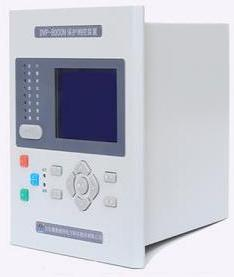
Microcomputer Protection and Substation Automation
Beijing Agent Devote Power Technology Development Co., Ltd.
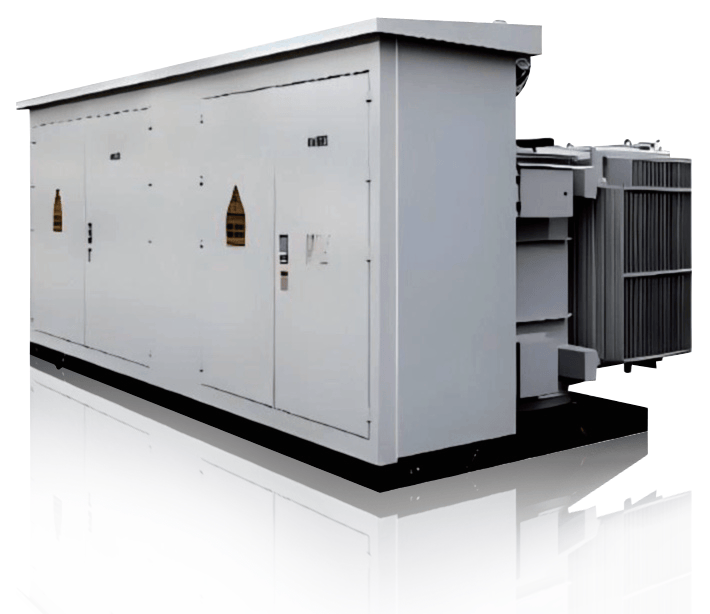
H-40.5/0.4~1.14kV New Energy Power Generation Dedicated High Voltage/Low Voltage Prefabricated Substation
XJ (Xiamen) Intelligent Power Equipment Co., Ltd.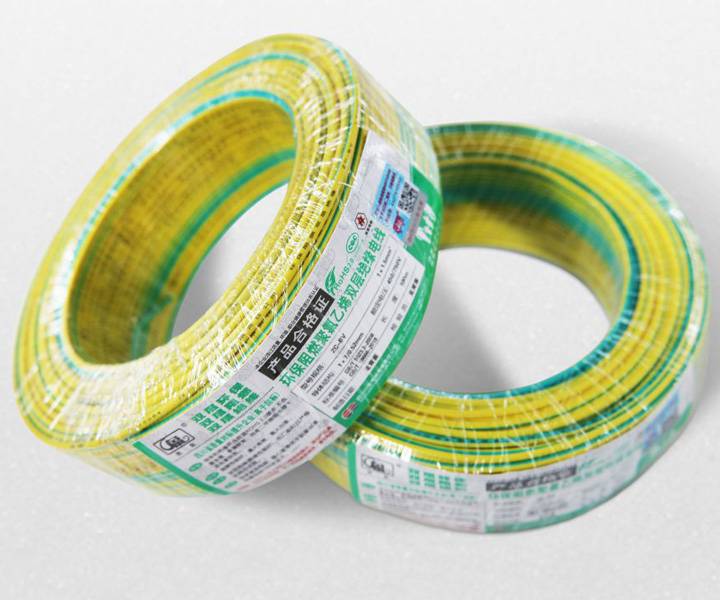
Environmentally Friendly Flame-retardant PVC Double-layer Insulated Wire
Sichuan Chndo Cable Co., Ltd.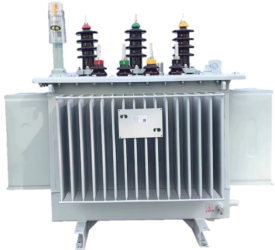
Oil-immersed Amorphous Alloy Core Distribution Transformer
Pinggao Group Smart Electric Co., Ltd.

Pneumatic high-pressure wear-resistant ball valve
Zhejiang Deca Control Valve Meter Co., Ltd.