EPFL Develops Chip-Scale Ultrafast Laser with 147-Femtosecond Pulse Width
en.Wedoany.com Reported - Researchers at the Swiss Federal Institute of Technology Lausanne (EPFL) have successfully integrated an ultrafast laser onto a photonic chip, achieving 147-femtosecond ultra-short pulse output with a single pulse energy of 1.05 nanojoules, comparable to the performance of benchtop femtosecond lasers. This breakthrough aims to address the long-standing issues of bulkiness and high cost associated with ultrafast lasers. EPFL notes that despite over two decades of effort, traditional ultrafast lasers remain largely confined to bulky optical table systems.
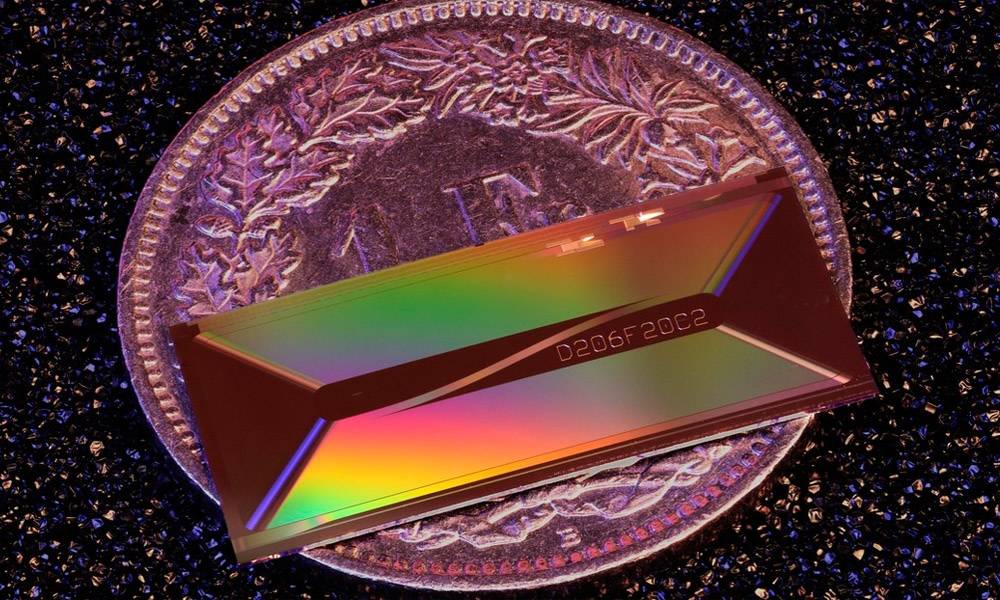
In a paper published in the journal Nature on June 3, 2026, the EPFL team led by Professor Tobias J. Kippenberg reported the first integrated ultrafast laser with performance comparable to benchtop femtosecond lasers. Professor Kippenberg stated that achieving high-pulse-energy femtosecond lasers on a chip has been regarded as the "holy grail" of integrated photonics for over two decades, and their results demonstrate that this can be accomplished through a clever architecture previously overlooked by the integrated photonics community. The research team adopted a laser design known as the "Mamyshev oscillator," which places a nonlinear waveguide between two optical filters within the resonator, each filter allowing only a different segment of the spectrum to pass. When a strong pulse passes through the waveguide, it broadens to a wider color range, enabling part of the light energy to pass through both filters simultaneously and continue circulating, while weak light is filtered out due to insufficient broadening. Zheru Qiu, co-first author of the paper, noted that this design does not require any components that are difficult to fabricate on erbium-doped silicon nitride chips.
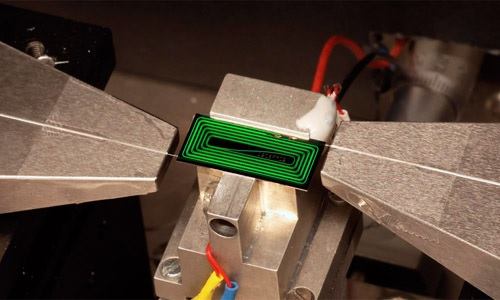
On the chip, the 42-centimeter-long laser resonator can be folded into a space the size of a match head, far smaller than fiber-based lasers. Since these photonic chips can be manufactured at the wafer scale like computer chips, more than 1,000 laser resonators can be produced at once, paving the way for lower-cost ultrafast lasers in sensing, spectroscopy, and metrology. Zheru Qiu stated that with kilowatt-level peak power, the chip can drive demanding applications that have long relied on large, expensive laboratory lasers. This achievement is expected to enable portable and low-cost tools for detecting pollutants, revealing hidden defects, and medical diagnostics, as well as paving the way for compact optical atomic clocks needed for future communication and navigation systems.
This article is compiled by Wedoany. All AI citations must indicate the source as "Wedoany". If there is any infringement or other issues, please notify us promptly, and we will modify or delete it accordingly. Email: news@wedoany.com
Related Products



Industrial and Commercial Point-Type Gas Detector
Jinan Benan Technology Development Co., Ltd.

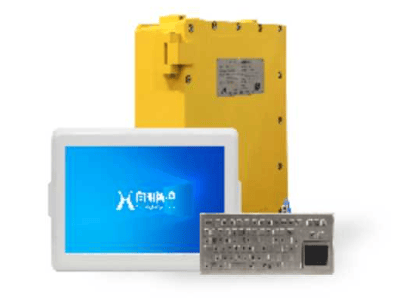
KJD127(A) Mining Explosion-Proof and Intrinsically Safe Computer
Taiyuan Xiangming Intelligent Control Technology Co., Ltd.
One-Stop Steward Service for the Entire Logistics System Integration Chain
Zhongding Intelligent (Wuxi) Technology Co., Ltd.