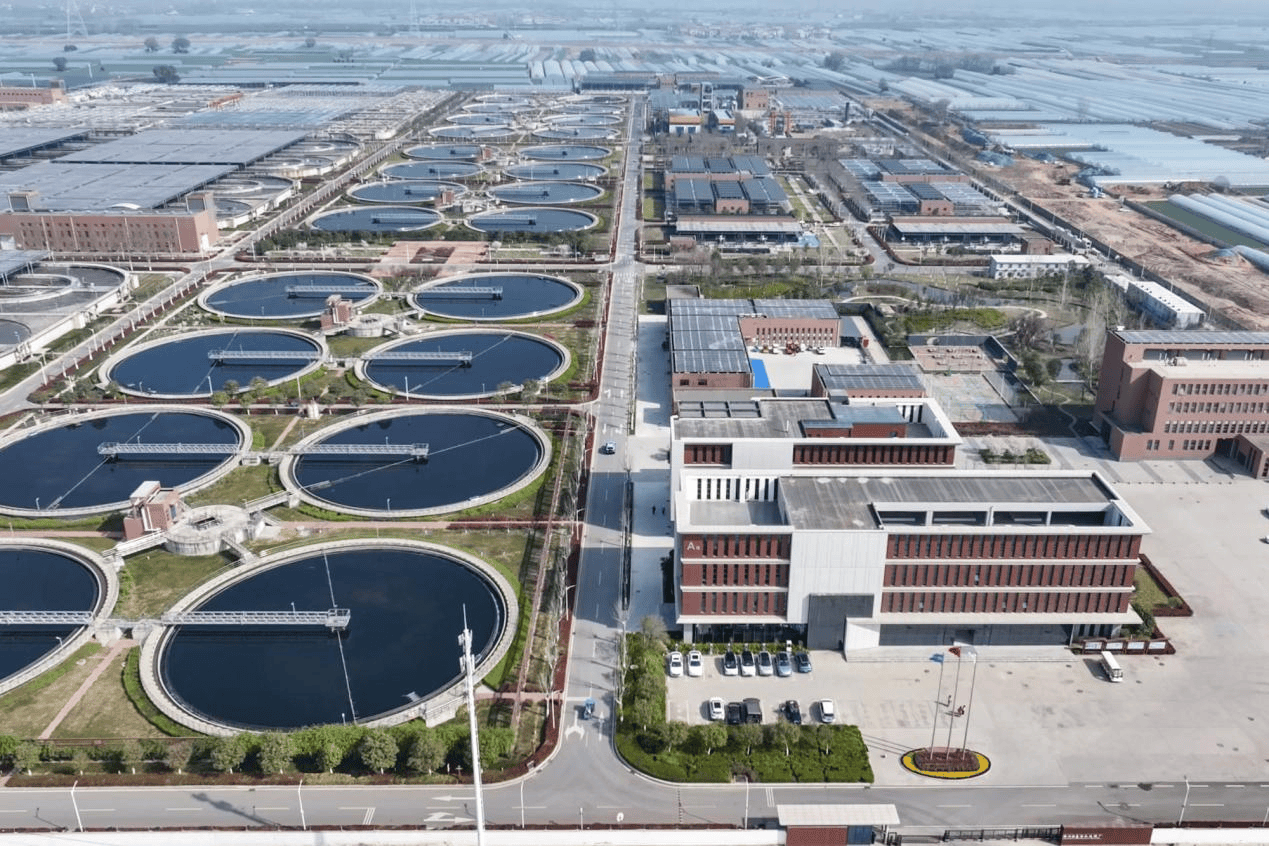
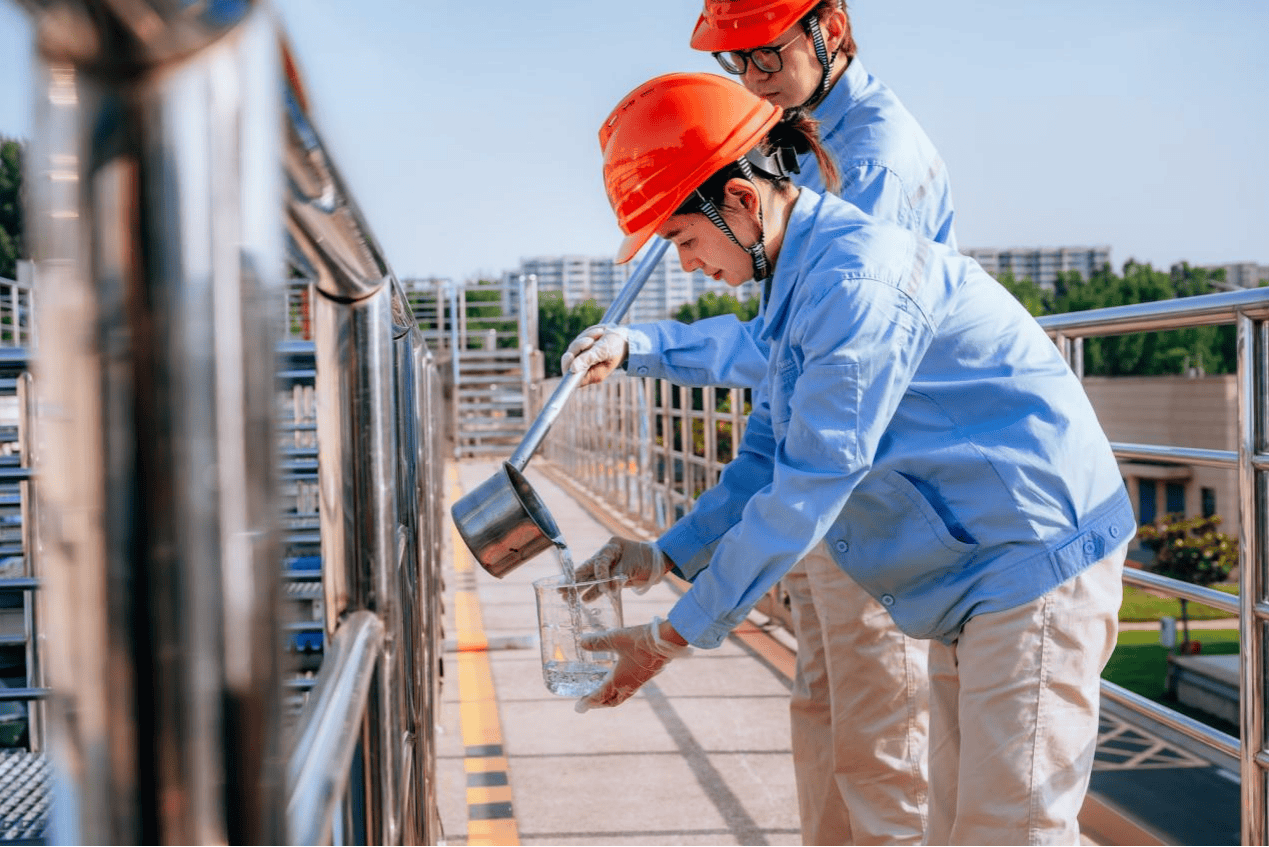
en.Wedoany.com Reported - The eight existing wastewater treatment plants in the main urban area of Zhengzhou treat approximately 2.5 million tons of wastewater and about 3,600 tons of sludge daily, facing immense treatment pressure. By advancing the intelligent, resource-oriented, and green transformation of its wastewater treatment system, Zhongyuan Environmental Protection Co., Ltd. has enabled the main indicators of treated reclaimed water to meet the Class III water standard, with an annual average chemical oxygen demand (COD) of 10 mg/L and total phosphorus (TP) of 0.05 mg/L, far below the 50 mg/L and 0.5 mg/L required by the Grade A standard of the "Discharge Standard of Pollutants for Municipal Wastewater Treatment Plant" (GB18918-2002).
The Zhengzhou New District Wastewater Treatment Plant of Zhongyuan Environmental Protection Co., Ltd. has deployed photovoltaic algae-cleaning robots that automatically remove algae along the edges of sedimentation tanks. At the Matougang Water Branch Company, a large screen in the central control room automatically adjusts aeration rates based on ammonia nitrogen concentrations in the biological treatment tanks to control microbial growth rates. Since last year, over ten artificial intelligence technologies have been applied to Zhengzhou's wastewater treatment processes within one year, including an automatic grit and screen transport system, a sludge settling ratio intelligent detector, and a hyperspectral water quality intelligent monitoring system.
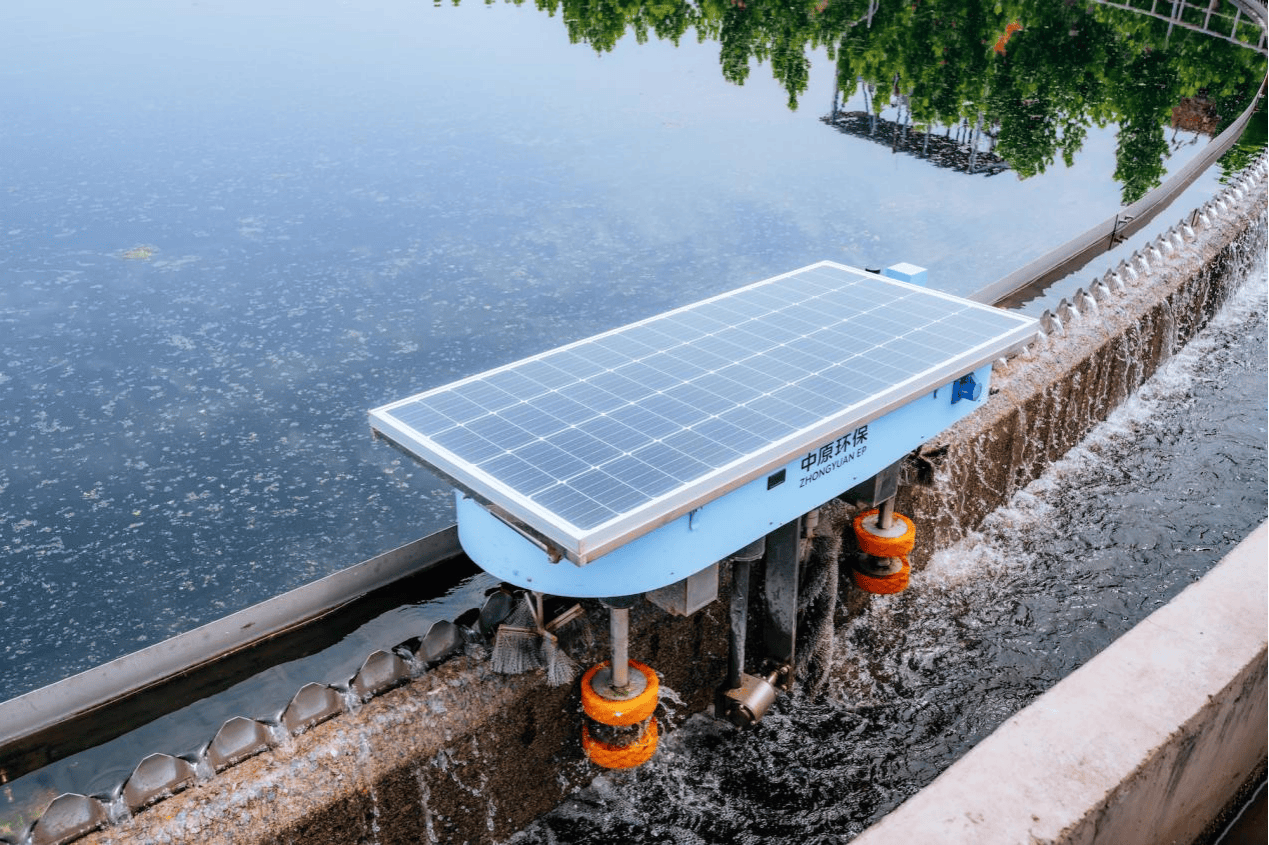
To accelerate the implementation of AI projects, Zhongyuan Environmental Protection Co., Ltd. established an independent innovation platform in 2023—the Zhongyuan Ecological Environment Technology Innovation Center (Henan) Co., Ltd.—increasing R&D investment to 5% of revenue and promoting technology application through market-oriented means. Gao Aihua, General Manager of the center, stated that the self-financing model has stimulated the innovation enthusiasm of technical personnel. Taking the photovoltaic algae-cleaning robot as an example, this product addresses industry pain points such as high safety risks, intense labor, and high labor costs in manual algae cleaning, and has sold over 70 units across more than ten wastewater treatment plants in Zhejiang, Henan, and Guangdong provinces.
The Zhengzhou New District Wastewater Treatment Plant employs processes such as "multi-mode A2/O biological treatment," "high-efficiency sedimentation tank + V-type filter," "activated coke adsorption + disinfection," and "anaerobic digestion + drying + pyrolysis gasification," producing nearly one million tons of reclaimed water and 1,300 tons of sludge daily. The main indicators of the reclaimed water have reached the Class III water standard, and it is used for landscaping, daily industrial water, and river channel flow replenishment. A relevant official from the plant stated that further purification of the reclaimed water can be used for equipment condensation in AI computing centers, with pilot tests already completed. In sludge treatment, the plant innovatively adopts sludge pyrolysis gasification technology to convert it into standard-compliant flower fertilizer, refractory bricks, and building materials.
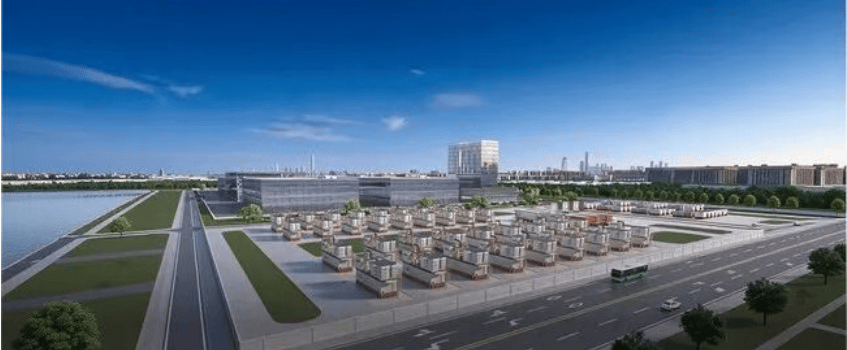
Multiple wastewater treatment plants in Zhengzhou have installed distributed photovoltaic panels and box-type energy storage equipment. The photovoltaic power generation devices enable self-consumption of electricity, reducing energy consumption by 20%. On Longhu Financial Island in Zhengdong New District, an energy station extracts energy from reclaimed water flowing out of the wastewater treatment plant to regulate the temperature of 2.79 million square meters of buildings on the island. The reclaimed water, with a constant temperature of 25 degrees Celsius in summer and 15 degrees Celsius in winter, allows the energy station to save over 30% in energy consumption compared to traditional air conditioning. By employing "source-grid-load-storage" technology, intelligent energy storage devices dynamically adjust electricity usage during peak and off-peak periods, saving costs. Additionally, recovered kitchen waste liquid is added to anaerobic fermentation tanks to increase biogas production. Biogas power generation and photovoltaic power generation are integrated into the grid through energy storage equipment, achieving green electricity substitution.
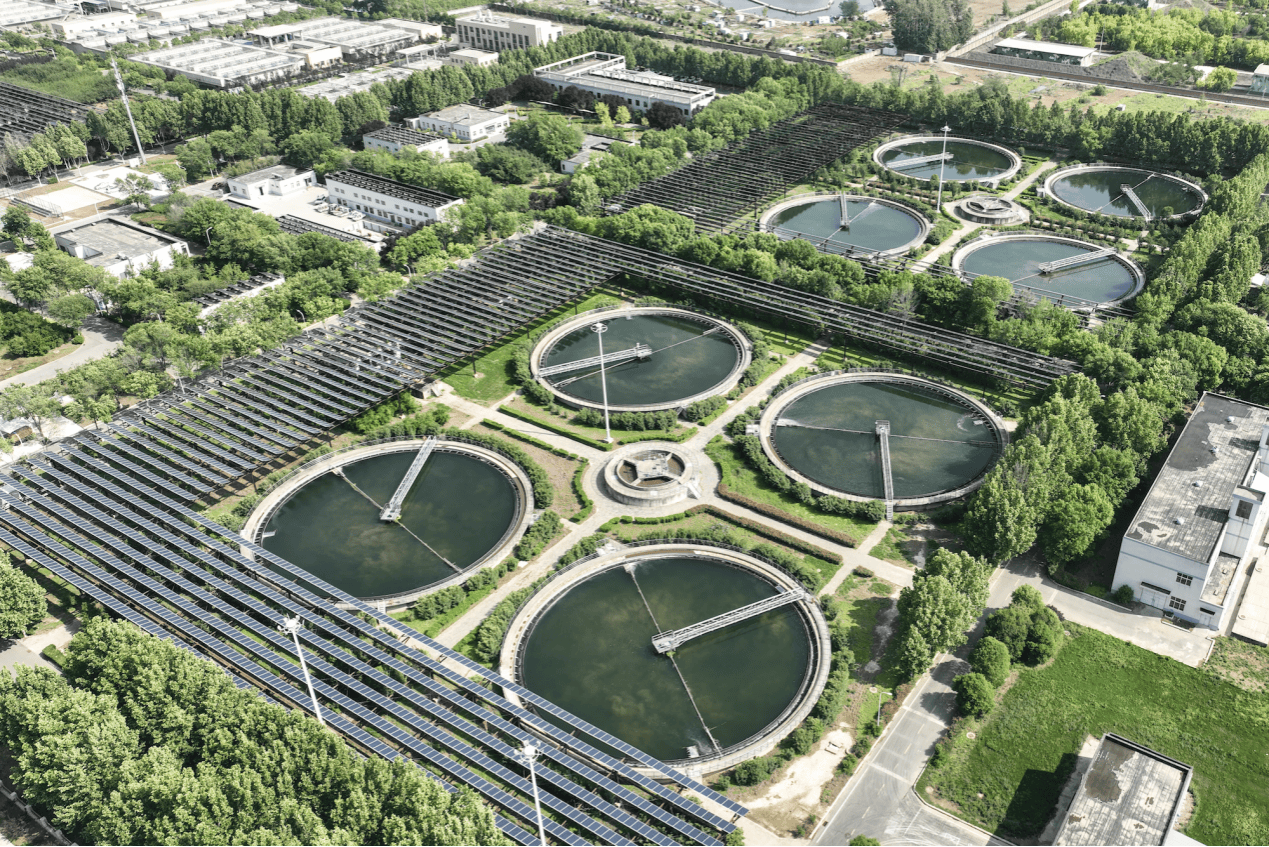
Some wastewater treatment plants have been built as semi-underground or fully underground facilities, with above-ground sections developed into theme parks, increasing recreational spaces while achieving a certain degree of "carbon neutrality." A person in charge of energy storage equipment at Zhongyuan Environmental Protection Co., Ltd. stated that through a comprehensive green and low-carbon transformation, wastewater treatment plants can become odorless, noiseless, and lush "near-zero-carbon parks," reducing NIMBY issues.
This article is compiled by Wedoany. All AI citations must indicate the source as "Wedoany". If there is any infringement or other issues, please notify us promptly, and we will modify or delete it accordingly. Email: news@wedoany.com