en.Wedoany.com Reported - The Hall Street Pier project in Nelson, British Columbia, Canada, was completed in the summer of 2024. The project aims to address the fragmentation of the waterfront caused by industrial development a century ago, reconnecting the city center with the shores of Kootenay Lake. Located on former industrial land used for logging, mining, and shipping, the municipality decided to replace old facilities with a new pier. Designed by Calgary's MBAC (designer) and Nelson's Stanley Office of Architecture (SOA, architect of record), the project had a budget of CAD 4.5 million and covers an area of approximately 330 square meters.
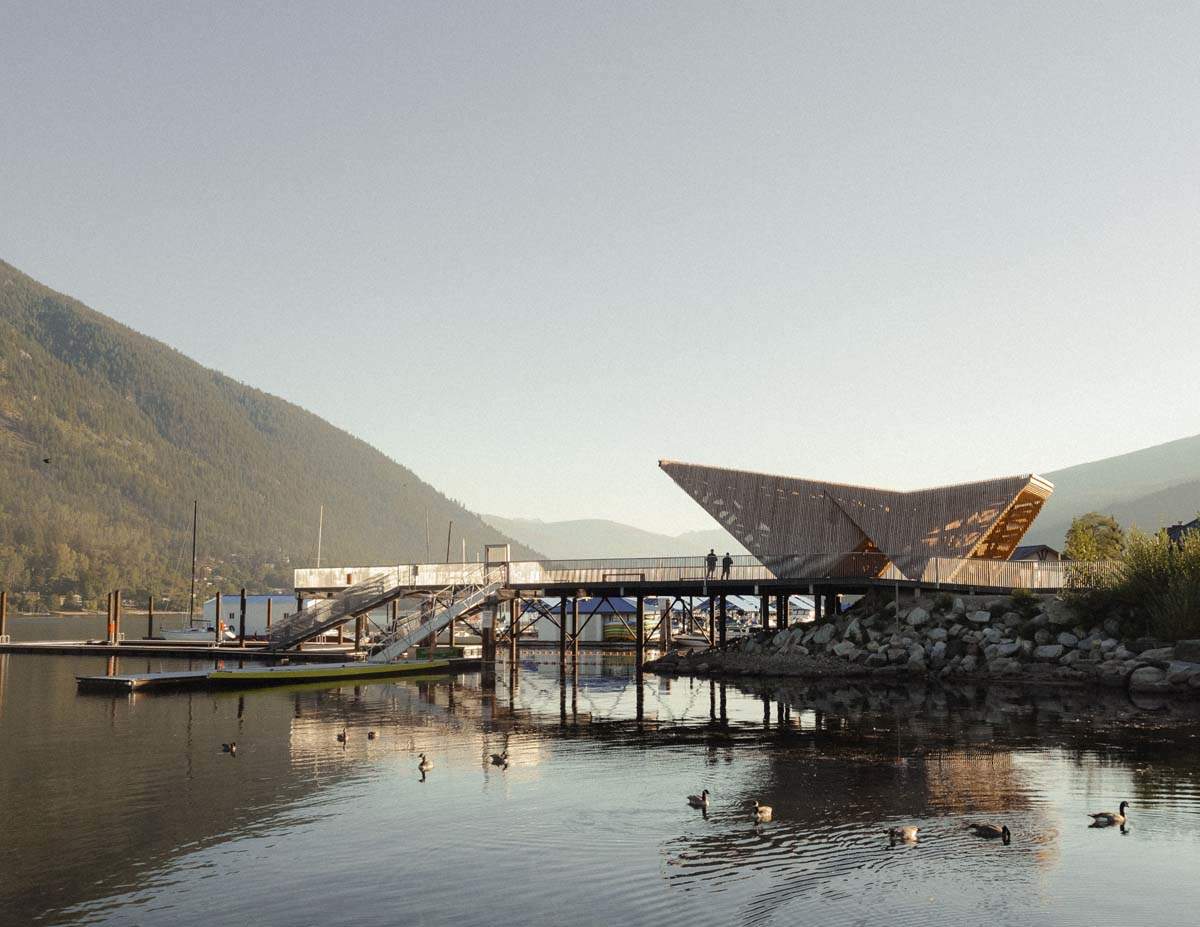
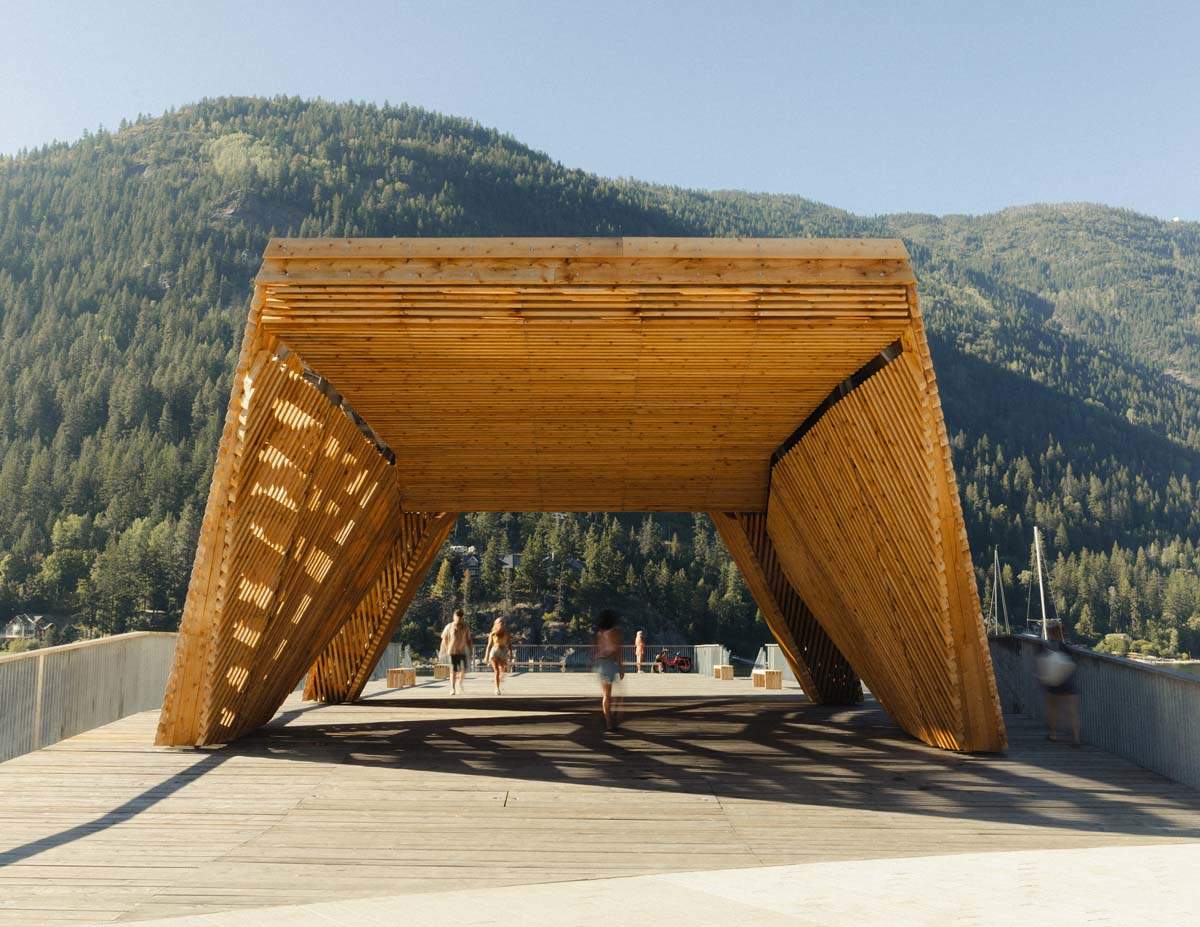
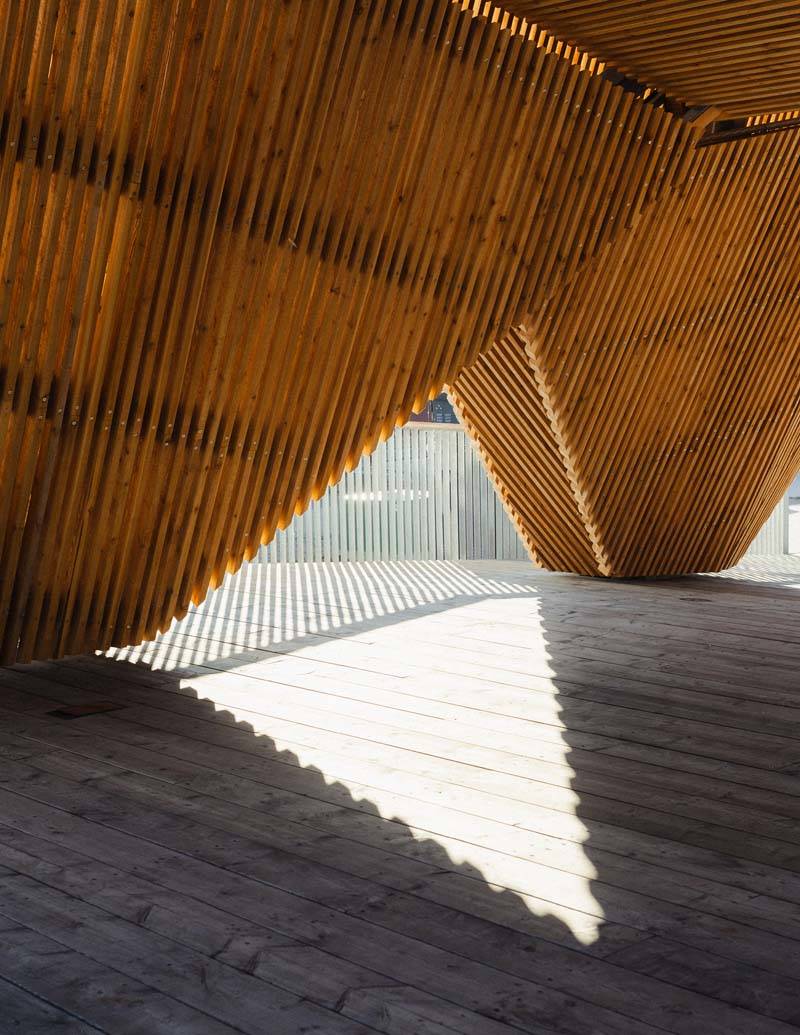
The two core structures of the project design are a glass pavilion and a wooden canopy. The glass pavilion houses the Nelson Museum's racing boat, Ladybird, built in 1922 and briefly holding a world record in 1933. The pavilion maintains museum-grade temperature and humidity, with a mirrored ceiling allowing visitors to observe the installation structure of a Liberty V-12 aircraft engine inside the compartment. The wooden canopy is designed to serve as a visual landmark and provide shelter for public events. Its design incorporates steel structure, heavy timber joists, and wood cladding, achieving complex connections through precise construction drawings.
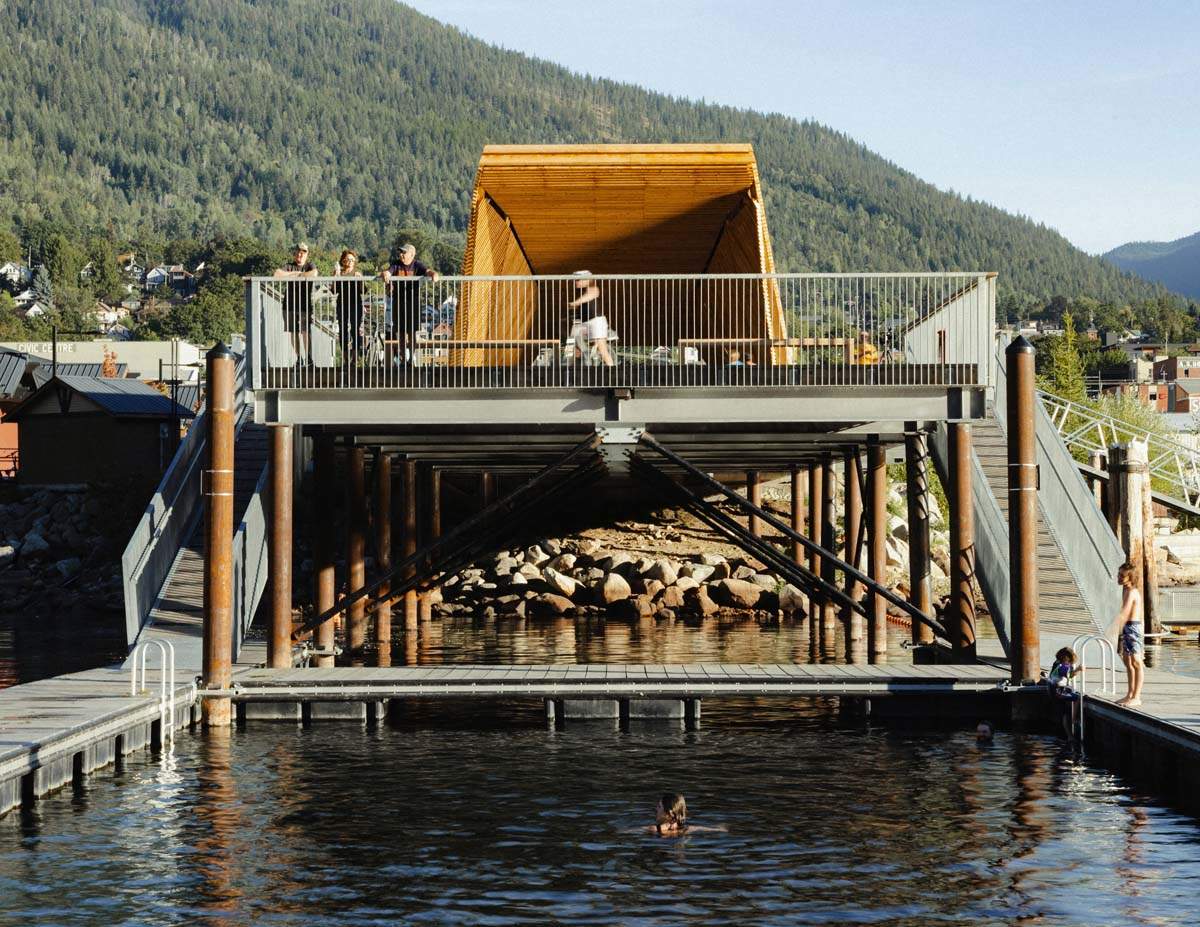
The project faced challenges of rising costs and supply chain disruptions caused by the pandemic. The general contractor was North Mountain Construction, with steel structure fabricated and installed by Apex Precision Fabrication, and wood cladding handled by Flat Rock Contracting. Flat Rock stated that the construction drawings provided clear guidance for most on-site cutting work. The project took five years and received key support from former Mayor John Dooley. Upon completion, the pier became a public space for swimming, gathering, fishing, and boating, showcasing the collaborative efforts of local designers, suppliers, and manufacturers.
The project involved meticulous planning in areas such as the steel-wood connections of the wooden canopy, the precision mechanical engineering of the pavilion, and the lighting design. The construction approach demonstrated high-precision coordination between steel structure, heavy timber, and engineered wood panels. Project documents indicate that the Ladybird pavilion has an enclosure area of approximately 41 square meters, and the canopy covers about 260 square meters. The client was the City of Nelson, with the architectural design team including Matthew Stanley, Marc Boutin, and others.

This article is compiled by Wedoany. All AI citations must indicate the source as "Wedoany". If there is any infringement or other issues, please notify us promptly, and we will modify or delete it accordingly. Email: news@wedoany.com