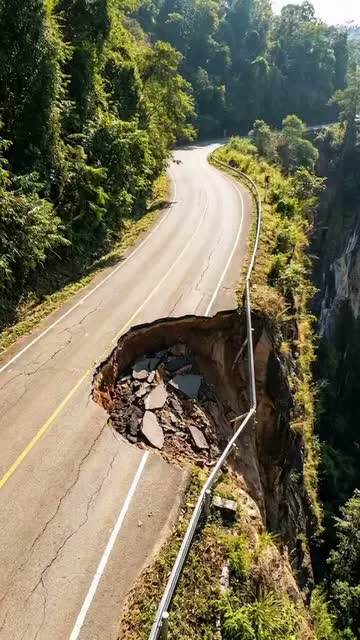
U.S. Congressional Committees Pass 2026 Water Resources Development Act
en.Wedoany.com Reported - The U.S. House of Representatives and Senate committees have each passed their respective versions of the Water Resources Development Act of 2026 (WRDA 2026), which has now been submitted for full consideration by both chambers.
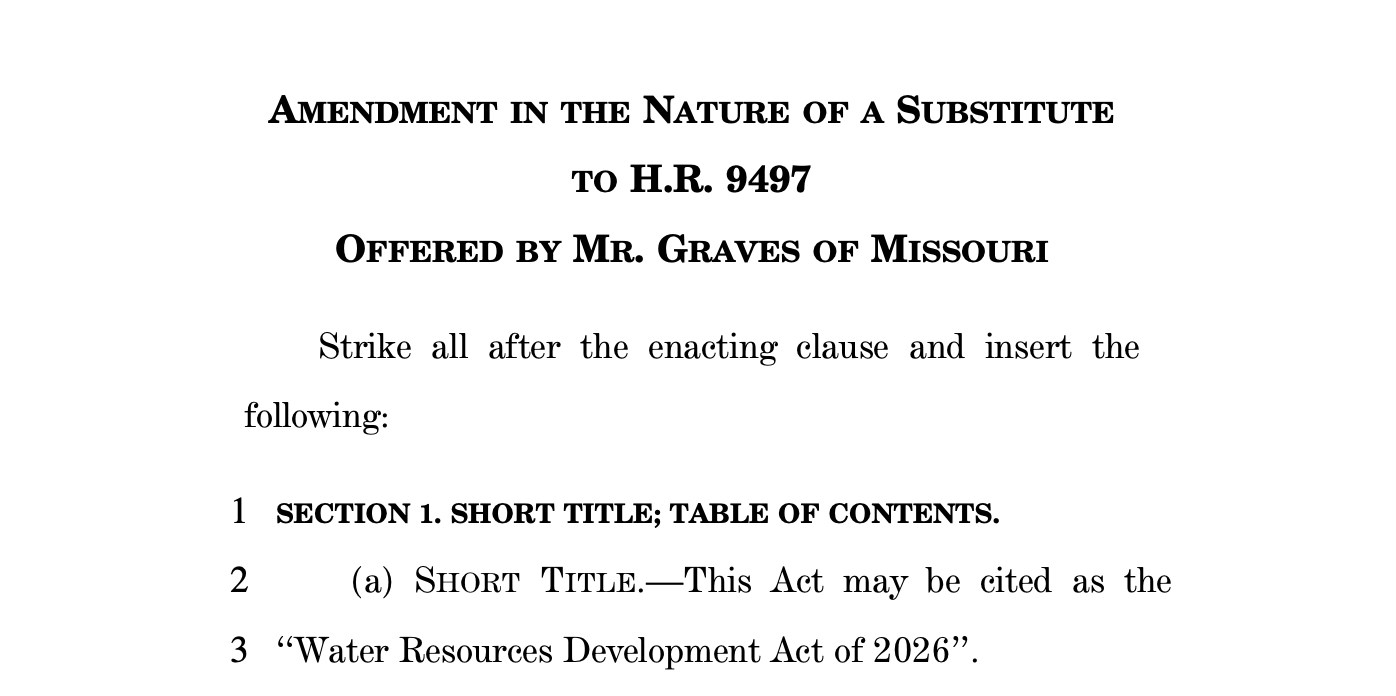
The House Transportation and Infrastructure Committee (T&I) unanimously voted on July 14 to pass H.R. 9497, which addresses funding and policy matters related to ports and harbors, national inland waterways, flood and storm risk management, the environment, and other water infrastructure areas.
Committee Chairman Sam Graves (R-MO) stated that WRDA 2026 not only builds and maintains safe waterways, flood control facilities, and other water infrastructure for the United States but also streamlines processes at the U.S. Army Corps of Engineers, improves project delivery, and empowers local stakeholders.
Committee Ranking Member Rick Larsen (D-WA) noted that waterway infrastructure impacts the entire nation. He emphasized that WRDA 2026 continues the committee's biennial effort to improve water infrastructure nationwide, promote economic growth, ensure communities can afford the professional services of the Army Corps of Engineers, and build resilient infrastructure in the context of frequent storms.
The House version of WRDA 2026 authorizes 133 new feasibility studies, including 14 projects already reviewed by the Corps. A key provision in the bill is the establishment of the Office of Inland Navigation Construction Management, led by a new Inland Navigation Project Manager who reports directly to the Deputy Commanding General for Civil Works and Emergency Operations. This office is responsible for developing and maintaining inland waterway project management plans, overseeing inland waterway construction and major modification projects and their funding, and providing progress updates at each meeting of the Inland Waterways Users Board, with all projects developed in accordance with the Corps' Capital Investment Strategy (CIS).
The bill also proposes establishing the Office of Water Supply, Water Conservation, and Drought Resiliency, the Office on Technical Assistance and Community Outreach, and the Office on Alternative Delivery Methods.
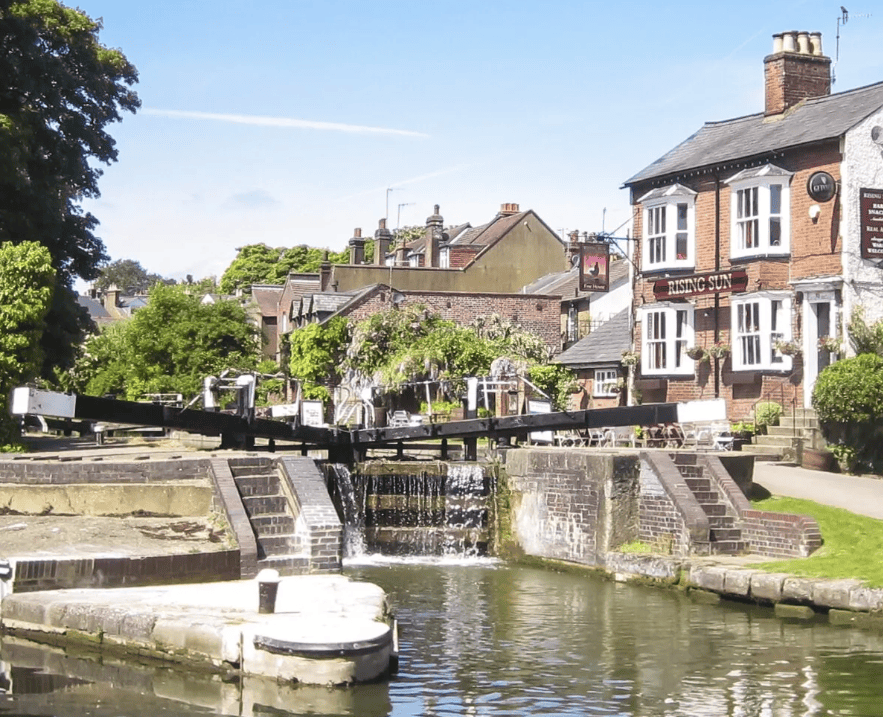
The provision for the Office of Inland Navigation Construction Management aims to address significant issues in the Corps' delivery of new locks and dams on the system, such as the Kentucky Lock and Chickamauga Lock on the Tennessee River, both of which have experienced severe cost overruns and delays.
Tracy Zea, President and CEO of Waterways Council Inc. (WCI), praised the House T&I Committee members for directing the Corps to establish an office focused on inland navigation within the WRDA bill. Zea stated that given the modernization of inland waterway lock and dam infrastructure over the past 28 years (1997-2025) has only completed three projects with significant cost overruns and schedule delays, WCI initiated and advanced this idea to improve project delivery efficiency and accountability.
A white paper released by WCI in February called for a new approach to delivering major projects, not advocating for individual Corps districts to independently study, design, contract, and manage major lock projects, but rather calling for a central office responsible for executing major inland waterway infrastructure projects from start to finish. The House T&I Committee's draft WRDA 2026 lists this office as the first provision.
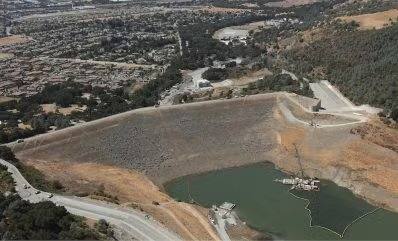
In addition to the new office, the House version includes provisions to enhance Corps accountability to Congress, strengthen flood and coastal storm risk management, and reauthorize the High Hazard Potential Dam program under the Federal Emergency Management Agency's National Dam Safety Program.
The Senate Environment and Public Works Committee (EPW) unanimously passed its version of WRDA 2026 on July 17. EPW Committee Chairman Shelley Moore Capito (R-WV) and Ranking Member Sheldon Whitehouse (D-RI) praised the bipartisan support for the measure and its relevance to their respective states. The Senate version would authorize 15 new water resources projects and 61 project feasibility studies.
Both bills will be submitted for full consideration by the House and Senate. If passed, the two bills will then be reconciled in a conference committee.
Related Products


Pure Polyurethane Wall Panel BD-AEF-PIR-01
Baodu International Engineering Technology Co., Ltd.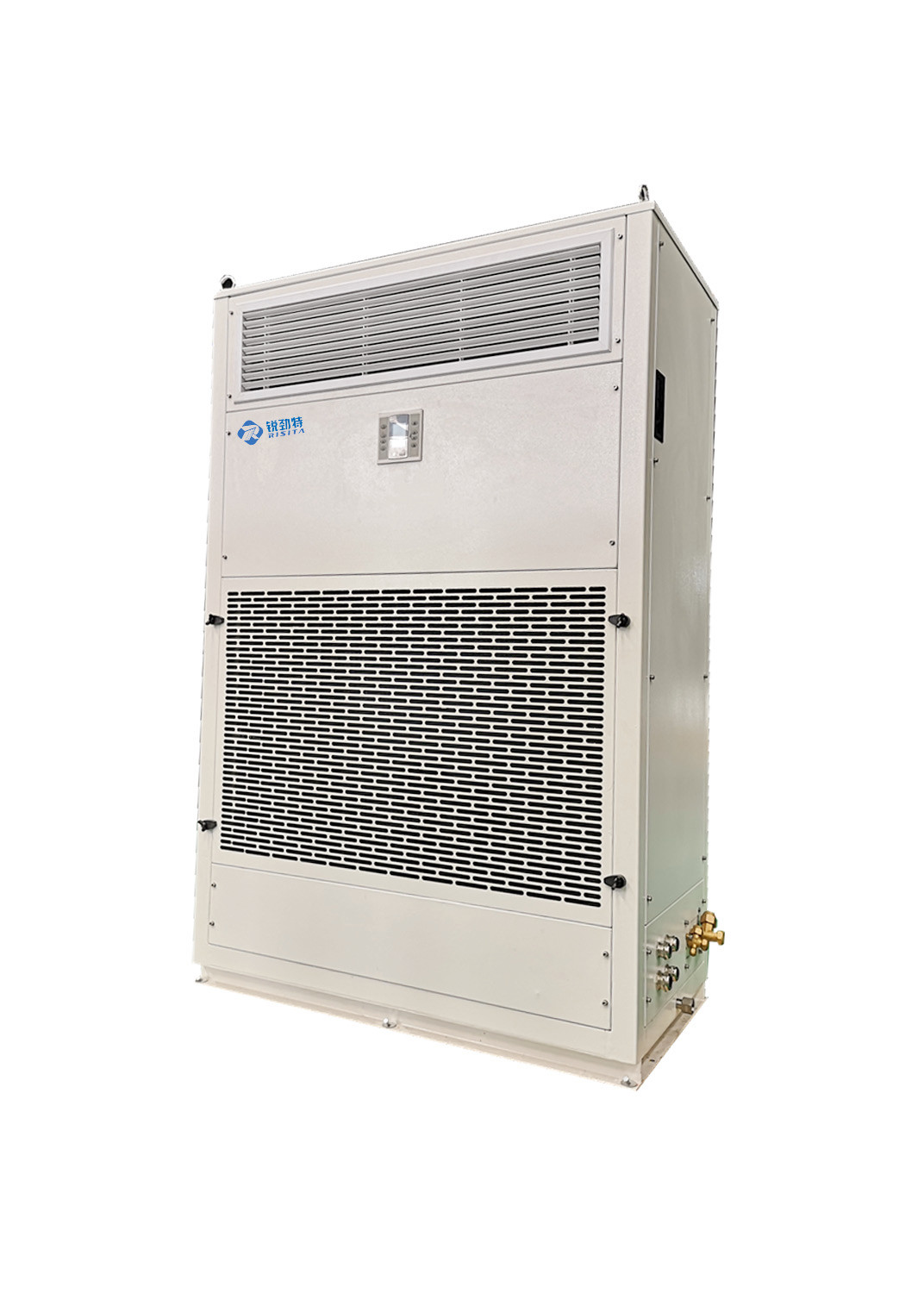
RISITA explosion-proof air conditioning
Guangdong RISITA Air Conditioning Equipment Co.,Ltd.

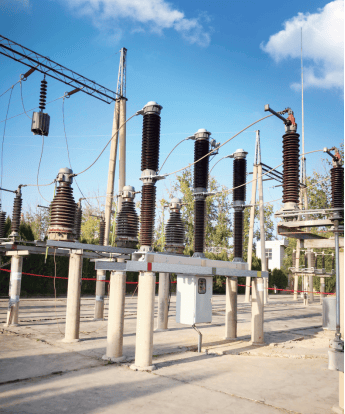
145kV Porcelain Column Type Sulfur Hexafluoride Circuit Breaker
TBEA ZONFA Shanghai High Voltage Switchgear Co., Ltd.
YHTank8400N Solvent-Free Liquid Epoxy Coating
JIANGSU YUNHU NEW MATERIAL TECHNOLOGY CO., LTD.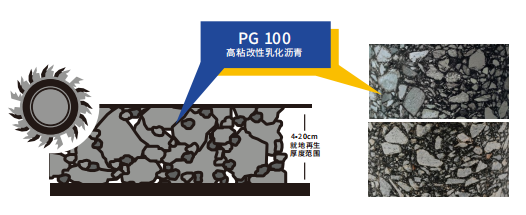
High-toughness in-Situ Cold Recycling Technology for Original Structural Layers
Central Fortune Creation Technology Group Co., Ltd.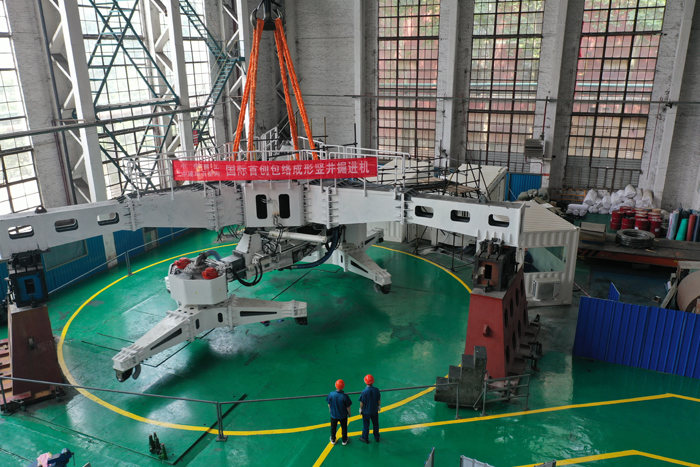
CITIC Heavy Industries Tunneling Equipment Tunnel Engineering Shield Machine
CITIC Heavy Industries Co., Ltd.


West China Xiamen Hospital of Sichuan University
Wuhan Huakang Century Clean Technology Co., Ltd.