en.Wedoany.com Reported - On June 6, Qingdao TGOOD Electric Co., Ltd., a Chinese power equipment company, launched the "Computing-Power Island," a high-voltage AC/DC prefabricated substation for computing power centers, in Qingdao, Shandong. Positioned as the world's first high-voltage AC/DC prefabricated substation for computing power centers, the product addresses power supply bottlenecks in AI large model training, inference, and high-density intelligent computing center construction, aiming to reshape the energy foundation of data centers with domestically produced power equipment and a computing-power collaborative system.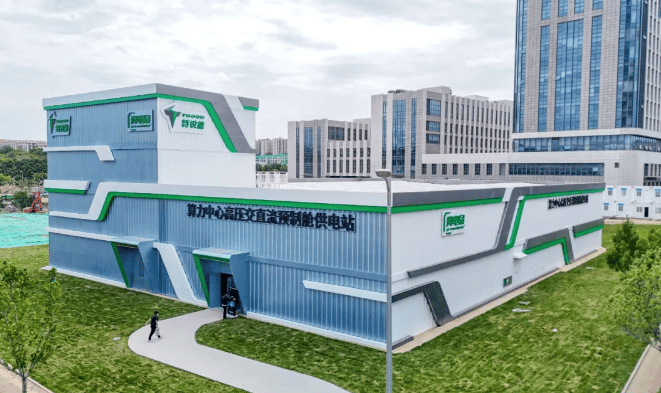
The core innovation of the "Computing-Power Island" lies in compressing the traditional multi-stage AC power distribution chain of data centers into a power supply architecture featuring high-voltage direct input, DC direct supply, and prefabricated integration. The product can directly connect to 110 kV or 220 kV high-voltage grids. After passing through high-voltage solid-state equipment and a DC bus, it supplies 800V DC power directly to computing equipment in the data center. TGOOD integrates modules such as transformers, GIS, switchgear, solid-state transformers, and relay protection into a prefabricated cabin system. Over a hundred functional modules of the entire substation can be prefabricated and jointly debugged in the factory, reducing on-site civil engineering and installation work by approximately 70% and 80%, respectively, and compressing the overall substation delivery cycle to about 150 days. For intelligent computing parks that are accelerating their deployment, this means that substation construction can better align with the phased commissioning, elastic expansion, and high-density deployment pace of computing cabinets, mitigating the constraints that the traditional 12-to-18-month cycle of conventional substations imposes on the launch of computing projects.
Cost reduction data focuses on three indicators: through deep coordination of source, grid, load, and storage, the electricity cost per AI computing token can be reduced by 30%; combined with modular integration and prefabricated delivery, overall substation construction costs can be reduced by 20%; and unattended intelligent operation and maintenance can cut O&M labor costs by approximately 40%.
The computing-power collaborative platform is a key differentiator of this product from ordinary substations. TGOOD integrates capabilities such as green electricity forecasting, energy storage smoothing, and intelligent optimization of grid power flow into the system, incorporating wind and solar power output, grid peak-valley loads, energy storage status, and computing task priorities into unified scheduling. During periods of high green electricity generation, the system can increase the load of elastic tasks like data cleaning and model pre-training, enhancing local consumption of new energy. During peak grid loads or fluctuations in wind and solar power, it stabilizes bus power supply through energy storage, supercapacitors, and load regulation. Its TPS power supply architecture supports direct connection of wind and solar power to the 800V DC bus, reducing losses from multi-stage AC/DC conversion. With integrated direct-mounted energy storage and dynamic grid-forming technology, the overall green electricity utilization rate of the project can reach 85% to 90%. In terms of high reliability, the product adopts N+1 and 2N full-link redundancy designs, combined with hybrid energy storage voltage stabilization and millisecond-level fault self-healing technology, improving power supply reliability from 99.995% in traditional solutions to 99.9998%, supporting scenarios with extremely high requirements for continuous power supply, such as supercomputing and AI large model training.
This time, TGOOD has transferred its experience in high-voltage DC for charging, power electronics, silicon carbide modules, and prefabricated substations to the computing power center scenario. The product achieves an efficiency of 98.5% and can adapt to current mainstream 60 kW to 100 kW liquid-cooled computing cabinets. According to the company's plan, its self-developed high-voltage solid-state transformer product is scheduled to complete grid-connected demonstration operation by 2027, and will subsequently target upgrade needs for megawatt-level ultra-high-density AI computing clusters. As the construction of the East-West Computing Transfer Project, computing power hubs, and zero-carbon data centers enters the engineering phase, competition in computing power centers is extending from chips and cabinets to grid access, green electricity consumption, energy storage scheduling, and full-cycle operation and maintenance. The power supply foundation will become a key variable in the cost and reliability of AI infrastructure construction.
This article is compiled by Wedoany. All AI citations must indicate the source as "Wedoany". If there is any infringement or other issues, please notify us promptly, and we will modify or delete it accordingly. Email: news@wedoany.com