en.Wedoany.com Reported - On June 4, 2026, the Kaspersky Greater China CISO Summit was held in Dunhuang under the theme "Passing Down Millennia of Wisdom, Safeguarding the Digital Future." The summit brought together industry experts and enterprise security leaders to discuss security transformation, strategic evolution, and practical pathways in the AI era.
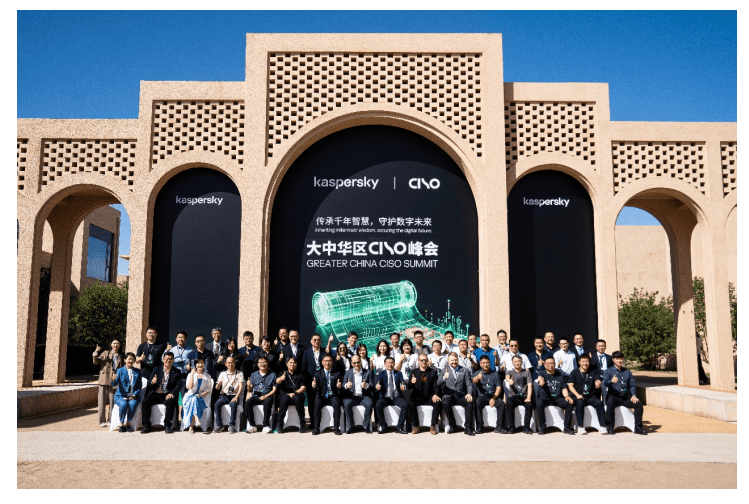
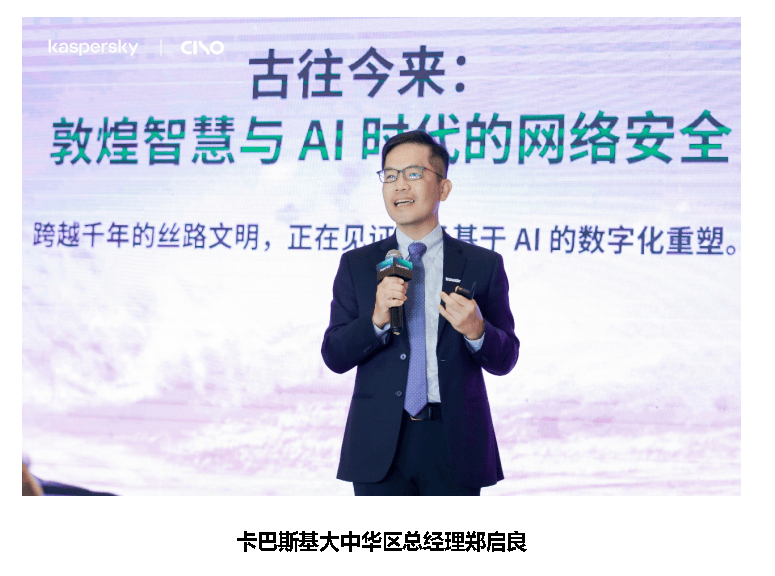
In his opening remarks, Zheng Qiliang, General Manager of Kaspersky Greater China, explained the reason for choosing Dunhuang. He noted that 2,100 years ago, Dunhuang was a key stronghold on the ancient Silk Road, where the ancients built Yangguan Pass and Yumen Pass as the "cybersecurity boundaries" of their time. Today, against the backdrop of rapid development in large language models and intelligent agents, we face the same challenge of maintaining trust and security boundaries in an era of AI-driven openness and mobility. Following this, a government regulatory leader delivered a speech emphasizing the significance of industrial collaboration and technological innovation within the framework of national cyberspace security governance.
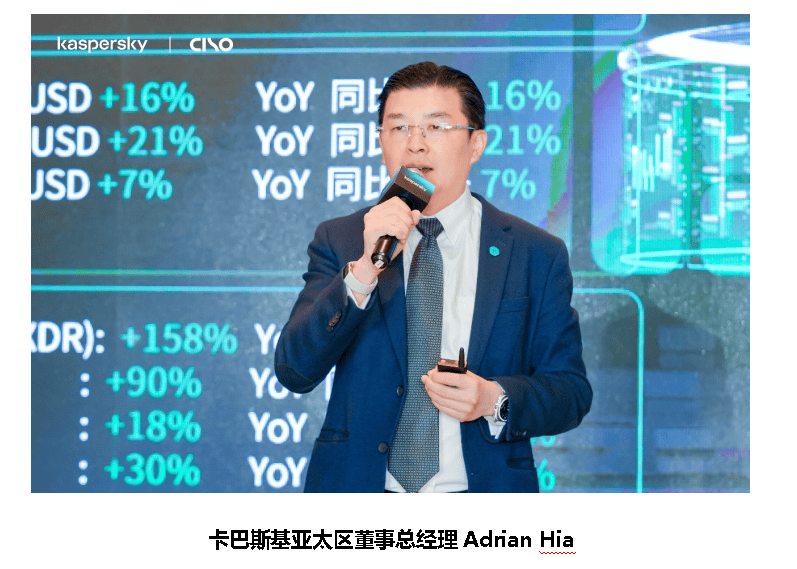
Adrian Hia, Managing Director of Kaspersky Asia Pacific, pointed out in his keynote speech that global cybersecurity faces severe challenges. In 2025, Kaspersky's global unaudited revenue reached USD 836 million, with B2B business growing 16% year-over-year. Among these, Kaspersky Next (EDR/XDR) products grew by 158%, and MDR services grew by 90%. He stated that sophisticated threat actors have begun leveraging AI to launch attacks, with critical infrastructure becoming a primary target. The speed of attacks far outpaces defenses, with the time from vulnerability discovery to exploitation shrinking from months to hours.
In his strategic sharing session, Zheng Qiliang proposed a dual-wheel-driven strategy of "Protecting AI" and "AI-Empowered Protection." He pointed out that large language models are shifting from semantic generation to logical reasoning, with the risk of intelligent agents "going rogue" becoming a focal point. The proliferation of embodied intelligence extends security challenges into the physical space. Kaspersky has built the "Beacon Tower" full-stack AI defense system, encompassing capabilities such as LLM scanning engines, AI firewalls, intelligent penetration testing, and robot protection. Over 99.9% of threat events are now automatically detected through AI and machine learning.
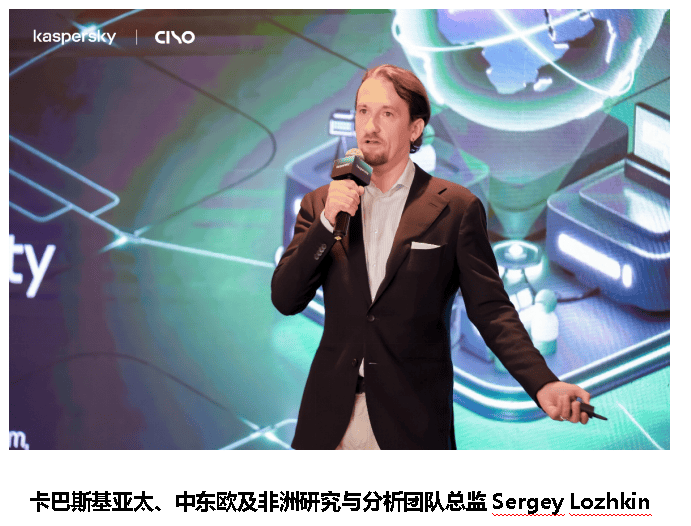
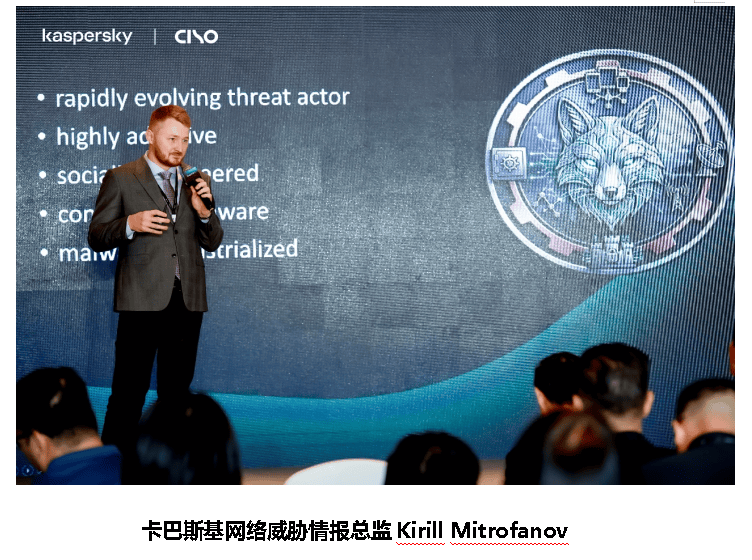
Gleb Gritsai, Vice President of Global Enterprise Products at Kaspersky, shared technical practices, noting that in 2025, Kaspersky successfully prevented 21,000 security incidents, of which 33% of attacks lasted months or even years, and 51% lasted days. Kaspersky launched KIRA (Kaspersky Investigation and Response Assistant), which supports natural language queries to help analysts with threat hunting and incident analysis. Sergey Lozhkin, Director of the Research and Analysis Team for Asia Pacific, Central and Eastern Europe, and Africa at Kaspersky, revealed the global APT attack landscape, showcasing dozens of APT groups tracked by the GReAT team over the years, including MuddyWater's use of new malware chains targeting the Middle East, as well as newly discovered supply chain attacks in 2026 targeting Daemon Tools software and the Axios npm package. He pointed out that AI is being used by cybercriminals for large-scale phishing generation, malware development, and deepfake attacks. Kirill Mitrofanov, Director of Cyber Threat Intelligence at Kaspersky, explained the security threat landscape in Greater China, including detection solutions for the Silver Fox threat, and introduced practical on-the-ground technical cases of the Kaspersky Threat Intelligence Platform.
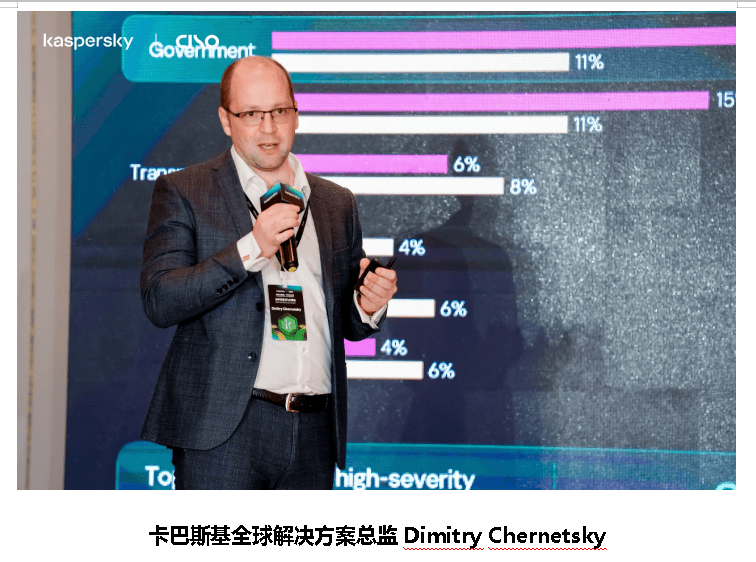
Dimitry Chernetsky, Global Solutions Director at Kaspersky, introduced the evolution path of AI-native SOC. He emphasized that advanced persistent threats are driving the emergence of national-level SOCs, requiring cross-organizational collaborative defense. Kaspersky's AI for SecOps solution is positioned as a "force multiplier," helping security teams work smarter. During the industry collaboration session, relevant leaders shared experiences in building a collaborative virus analysis system. This system integrates 14 domestic and international scanning engines, including Kaspersky, capable of identifying over 400 file formats and performing dynamic behavior analysis, forming a closed loop from sample analysis to risk warning.
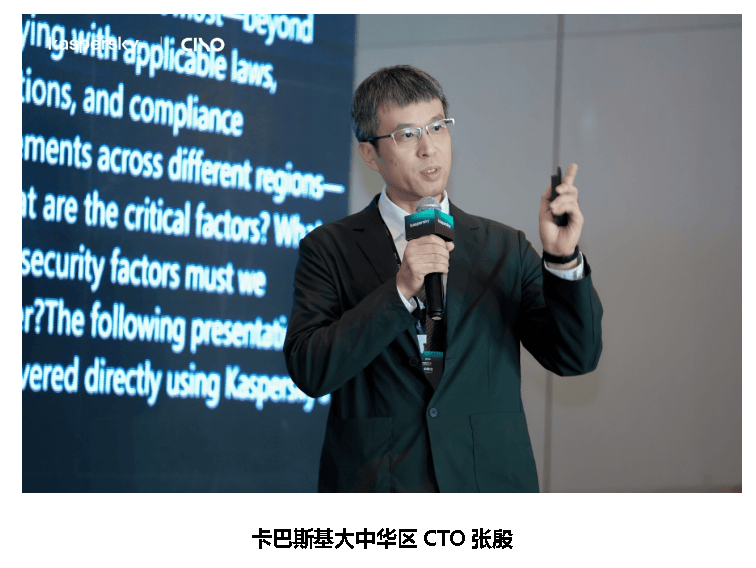
In security practice, the security leader of a top-tier securities firm shared the enterprise's large model security system, establishing a full lifecycle security management framework covering policies, technology, and processes, and deploying large model security guardrails. Zhang Yin, CTO of Kaspersky Greater China, emphasized the value of managed MDR and incident response (IR) services, with AI being fully applied across five stages of threat detection. The security leader of an AIoT enterprise introduced strategies for addressing Prompt injection attacks and managing digital employee identities.
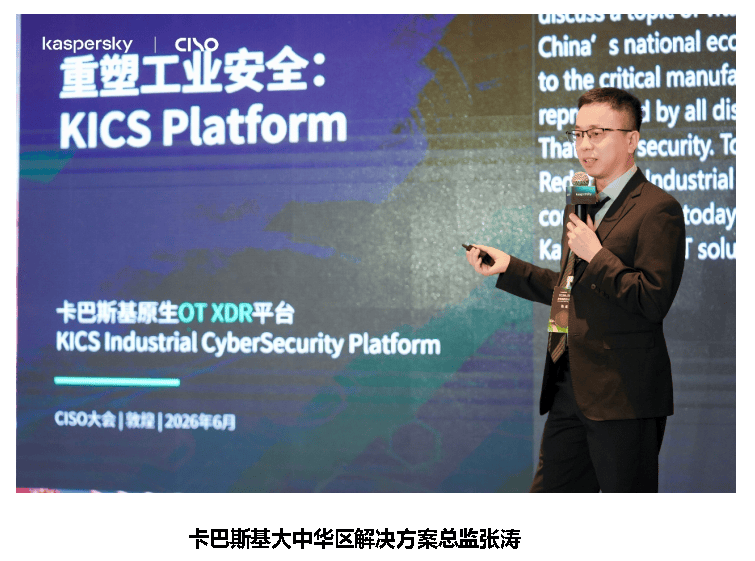
Zhang Tao, Solutions Director of Kaspersky Greater China, pointed out that the evolution of OT security risks is driving defense solutions toward XDR. The Kaspersky KICS OT XDR platform, through a unified security management architecture, integrates endpoint and network protection capabilities to build an OT security control foundation encompassing asset lifecycle, risk visualization, and security auditing.
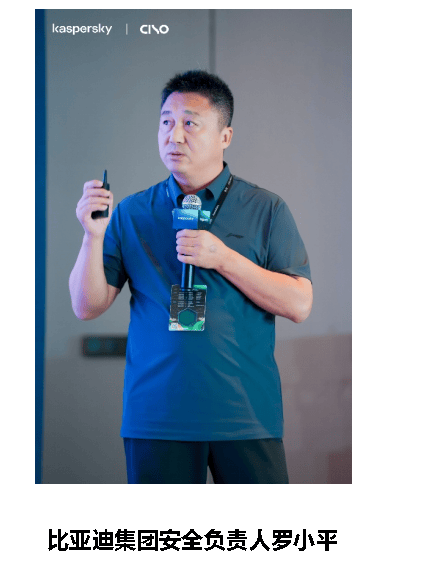
Luo Xiaoping, Security Leader of BYD Group, introduced the OT security capability building for global production campuses. Facing complex challenges including approximately 180,000+ industrial hosts, multi-layer industrial environments covering L1-L3, and a large number of legacy systems, BYD has built a collaborative defense solution combining network-side and endpoint-side measures, deploying 97 campus probes, a unified management center, and global coverage, forming an operational closed loop of "detect issues - address issues - continuously optimize," adhering to the principle of production availability first.
The 2026 Kaspersky Greater China CISO Summit conveyed a signal to the industry of addressing the changing landscape of AI-driven threats through systematic thinking, ecosystem collaboration, and technological innovation.
This article is compiled by Wedoany. All AI citations must indicate the source as "Wedoany". If there is any infringement or other issues, please notify us promptly, and we will modify or delete it accordingly. Email: news@wedoany.com